8 Packing Mistakes That Make Airports Miserable — And the One Checked-Bag Calculation That Changes Everything
We may earn money or products from the companies mentioned in this post. This means if you click on the link and purchase the item, I will receive a small commission at no extra cost to you ... you're just helping re-supply our family's travel fund.
5. Packing medications in a checked bag
The airport stress that most travelers attribute to crowds, delays, and security lines is frequently self-inflicted packing stress. The bag that’s three inches too large for the overhead bin, the liquids that flag at security, the laptop buried under four layers of clothing — all of these are choices made before you arrived at the airport, and all of them are fixable with about ten minutes of planning. Here are the eight mistakes that cause the most problems.
The 8 Mistakes — And How to Fix Them
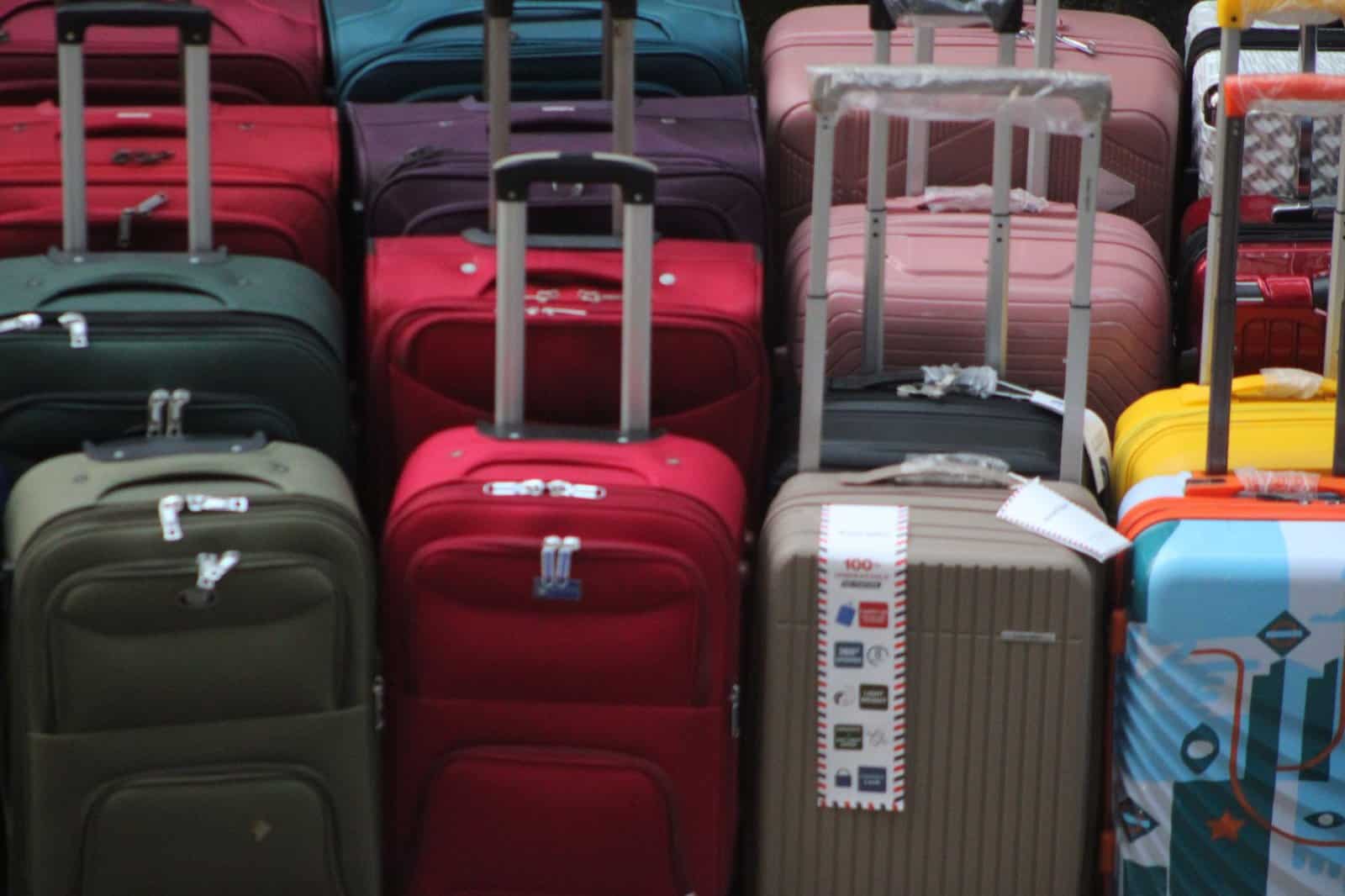
1. Packing liquids incorrectly for TSA
The 3-1-1 rule (3.4 oz or less, 1 quart-sized clear bag, 1 per passenger) has been in effect since 2006, yet TSA still confiscates liquids daily from travelers who pack them wrong. The most common errors: packing the quart bag inside another bag requiring it to be dug out, packing containers slightly over 3.4 oz that don’t pass, and forgetting that the rule applies to creams, gels, and pastes as well as liquids. Pack the quart bag in the outermost zipper of your carry-on for immediate access at the bin.
2. Not measuring your carry-on against the actual airline’s gauge
“Carry-on size” varies by airline, and the variation matters at the gate. American’s carry-on limit is 22 x 14 x 9 inches. Spirit’s is 22 x 18 x 10 inches — larger, counterintuitively. United is 22 x 14 x 9 inches. The bag sold as “carry-on size” at a luggage store may be sized for the most permissive airline. Measure your bag against the specific airline’s published dimensions before assuming it’s compliant.
3. Burying your laptop in your bag
Laptops must come out of the bag at standard TSA checkpoints (not PreCheck). If your laptop is buried under clothing, packing cubes, and a charger tangle, you’re creating a search-and-excavate moment that slows both you and the line. Pack your laptop in the outermost sleeve or compartment, immediately accessible without disassembling the bag’s contents.
4. Wearing complicated shoes through security
Boots with multiple buckles, shoes with thick soles that trigger the machine, lace-up oxfords that require 90 seconds to remove and replace — these are personal choices but they have collective costs at the security line. TSA PreCheck doesn’t require removing shoes. Without it, slip-on shoes make the security experience meaningfully faster for everyone.
5. Packing medications in a checked bag
If your checked bag is delayed, lost, or misrouted, your medications go with it. All prescription medications and anything time-sensitive should be in your carry-on or personal item. TSA permits medications in quantities exceeding 3.4 oz in carry-on bags — liquid medications are exempt from the 3-1-1 rule when declared at screening.
6. Overpacking for a carry-on that costs more to gate-check than a checked bag would have
Gate checking is the worst of both worlds: you lose the convenience of having your bag in the cabin, you wait for it at the jetway on arrival, and on some carriers you pay a fee. The traveler who stuffs a marginal carry-on to its absolute limit and then gets gate-checked would have been better served by checking the bag at the ticket counter (at a known cost) than discovering at the gate that there’s no bin space.
7. Not weighing the bag before leaving the house
Overweight checked bag fees — $100 on most US carriers for a bag exceeding 50 lbs — are entirely avoidable with a $15 luggage scale. The person who gets to the airport with a 58-pound bag and pays $100 to check it overpaid $100 for a piece of equipment that costs less than 20 minutes of that fee.
8. Packing valuables or expensive items in checked bags
Jewelry, cameras, laptops, and cash should never go in checked bags. Airlines’ liability for lost or stolen items from checked bags is limited to $3,800 domestically and $1,780 for international travel under the Montreal Convention. Electronics and valuables are frequently explicitly excluded from carrier liability even within those limits. If the item is irreplaceable or expensive, it flies in the cabin with you.
The Checked Bag Calculation That Changes How Most People Pack
Most travelers try to avoid checked bags on principle. The math on whether that’s right depends on the trip. For a 7-night trip with a checked bag fee of $40 each way, you’re paying $80 total. Compare that against: $0 checked bag fee if you hold an airline credit card that waives it, or $0 if you have elite status. The checked bag decision is really a question of whether you hold the right card and what your time at baggage claim is worth relative to gate checking stress. For trips of five nights or more with real clothing needs, checking a bag is frequently the right answer — and knowing the exact fee before you arrive at the airport removes all the drama.