7 Ways to See Caddo Lake’s Cypress Swamp Before the Fall Color Fades
We may earn money or products from the companies mentioned in this post. This means if you click on the link and purchase the item, I will receive a small commission at no extra cost to you ... you're just helping re-supply our family's travel fund.
Caddo Lake fall color does not look like anything else in Texas. The lake holds what Texas Parks and Wildlife has described as the largest bald cypress forest in the world, roughly 25,000 to 27,000 acres of flooded timber draped in Spanish moss, and in November those trees turn rust, copper, and burnt orange. The show is short, usually peaking in the first couple of weeks of the month and fading as the needles drop later in November.
The lake straddles the Texas-Louisiana line northeast of Marshall, in a corner of East Texas that feels closer to the Deep South than to the Hill Country. It is a maze of bayous, sloughs, and channels rather than one open body of water. In 1993 it was designated a Wetland of International Importance under the Ramsar Convention, a global treaty for protecting key wetlands.
Seeing it well means getting on the water or close to it. Here are seven ways to do that before the color fades.
7 Ways to See the Caddo Lake Fall Color
1. Take a Guided Boat Tour From Uncertain
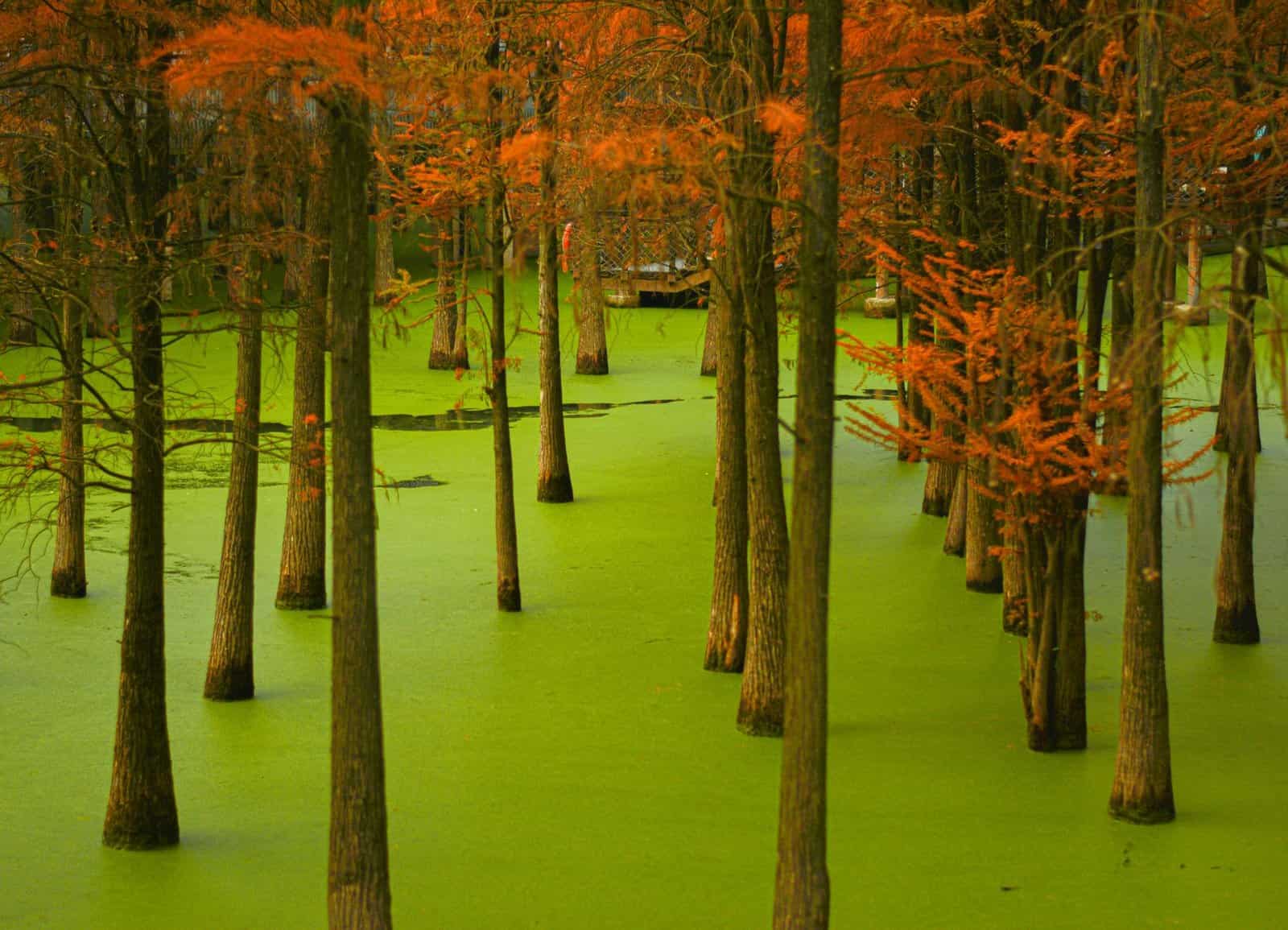
Uncertain, a lakeside town of fewer than 100 residents, is the hub for boat tours. Local operators run pontoon and flat-bottom boat tours through the cypress channels, usually lasting one to two hours. Guides know which bayous have the best color that week, how to navigate the boat roads marked by numbered posts, and where to find herons, egrets, turtles, and alligators.
A guided tour is the best option for a first visit, because Caddo’s channels are confusing and easy to get lost in. Prices vary by operator and group size, but public tours often run roughly $30 to $50 per adult, with private charters costing more. Book ahead for November weekends.
2. Paddle the State Park’s Marked Trails
Texas Parks and Wildlife has mapped paddling trails on Caddo Lake, with routes that range from short loops to longer journeys through cypress channels. Caddo Lake State Park, near Karnack, is the main access point for many of them.
Paddling gives you a quiet, close-up view of the trees, with knees poking up from the water and moss hanging overhead. Download a trail map before you go and carry a GPS or phone app with offline maps. The channels look alike, and markers can be hard to spot among the trees.
3. Rent a Canoe or Kayak at Saw Mill Pond
If you are new to paddling or do not have your own boat, Caddo Lake State Park rents canoes and kayaks, typically at Saw Mill Pond, a sheltered area connected to Big Cypress Bayou. It is a calm place to start, with cypress trees close to the launch.
From Saw Mill Pond, you can paddle a short loop or venture into the bayou. Ask park staff about current conditions and where the color looks best. Wear a life jacket and avoid paddling in high wind.
4. Stay in a CCC Cabin
The Civilian Conservation Corps built cabins and other structures at Caddo Lake State Park in the 1930s, using local timber and stone. Several historic cabins remain available to rent, along with campsites and screened shelters.
Staying overnight puts you at the lake for sunrise and sunset, when the cypress glow and mist often rises off the water. Cabins book up quickly for November weekends, so reserve early through the Texas State Parks reservation system.
5. Visit the Caddo Lake National Wildlife Refuge
The Caddo Lake National Wildlife Refuge occupies land that was once the Longhorn Army Ammunition Plant, a site that manufactured explosives from World War II through the Cold War. Since its transfer to the U.S. Fish and Wildlife Service, the refuge has been restored as habitat for wildlife.
The refuge has trails, wildlife drives, and access to parts of the lake shore. It is a good place for birding and seeing bottomland hardwood forest, which also takes on fall color. Check the refuge website for current access, since some areas close for hunting seasons or management.
6. Ride a Riverboat on Big Cypress Bayou in Jefferson
Jefferson, a historic town about 15 miles west of the lake, was once a major river port connected to the Red River and New Orleans by steamboats. Big Cypress Bayou runs through town toward Caddo Lake.
Riverboat tours from Jefferson take visitors along the bayou through cypress and hardwood forest, often with guides who explain the town’s steamboat era. It is a relaxed way to see fall color from the water, and you can combine it with Jefferson’s historic downtown, antique shops, and bed-and-breakfasts.
7. Photograph Sunrise From the Docks
Some of the best views of Caddo Lake come at dawn, when the sun rises through the cypress and fog drifts over the water. Public docks and boat ramps in Uncertain and at the state park give you a place to set up a tripod without a boat.
Arrive before sunrise, dress warmly, and use bug spray even in November. The light changes quickly, so plan to shoot for 30 to 45 minutes. If you have a boat or guide, morning tours offer even better angles.
When Caddo Lake Fall Color Peaks
Bald cypress is one of the few conifers that loses its needles each year. In fall, the needles turn from green to rusty orange and copper, then drop. Texas Parks and Wildlife has reported that the trees typically show their best color in the first two weeks of November, though timing varies with weather.
Cooler nights and dry weather tend to bring out stronger color. Warm, wet falls can produce more muted shades. By late November, many trees have lost much of their color, and by December, the cypress are mostly bare, though the moss and the lake remain beautiful.
The Swamp’s Wildlife
Caddo Lake supports a huge variety of wildlife. Look for:
- Great blue herons, great egrets, and other wading birds.
- Wood ducks, mallards, and other waterfowl arriving for winter.
- Bald eagles, which winter at the lake in small numbers.
- Turtles sunning on logs during warm afternoons.
- American alligators, which are present but less active in cooler weather.
- Beavers and river otters along quieter channels.
Give alligators plenty of space and never feed wildlife.
Threats to the Lake
Caddo Lake faces challenges. Giant salvinia, an invasive floating fern, can cover large areas of water, block sunlight, and choke native plants. State agencies and local groups work to control it, including with weevils that eat the plant.
Water levels, development, and pollution are also concerns. When you visit, clean, drain, and dry boats and gear before moving to other waters, and follow all regulations. The future of the lake depends on everyone who uses it.
Where to Stay and Eat
Options include the state park cabins and campsites, cabins and lodges in Uncertain and along the shore, and bed-and-breakfasts and inns in Jefferson. Marshall, about 20 miles away, has chain hotels and more dining options.
Uncertain has a few restaurants and stores, and Jefferson has a wider range of restaurants, including Southern and Cajun-influenced menus. Catfish is a regional favorite.
Fishing the Cypress in Fall
Caddo Lake is also one of the best-known fishing lakes in East Texas, with largemouth bass, crappie, catfish, and chain pickerel. Fall can be a productive season as water cools. Many guides in Uncertain offer fishing trips that double as sightseeing, so you can work the cypress edges for bass while watching the color. You will need a Texas fishing license on the Texas side and should know which state’s waters you are in, since the lake crosses into Louisiana.
Getting There
Caddo Lake is about 2.5 to 3 hours east of Dallas and about 30 minutes from Shreveport, Louisiana. From Interstate 20, take exits near Marshall and follow state highways north to Karnack and Uncertain.
What to Pack for a Fall Visit
- Layers for cool mornings and warm afternoons.
- Rain gear, since East Texas fall weather can change quickly.
- Insect repellent, which is still useful in early November.
- A waterproof bag for phones and cameras on the water.
- Binoculars for birds and wildlife.
- Snacks and water, as services are limited.
Combining Caddo Lake With East Texas Towns
A fall weekend at Caddo pairs well with nearby towns. Jefferson’s historic district has more than a hundred historic buildings, antique stores, and ghost tours. Marshall, known for its Wonderland of Lights holiday display that typically begins in late November, adds another stop. Karnack is the hometown of Lady Bird Johnson, who grew up near the lake and later championed wildflowers and highway beautification as first lady.
A Note on Navigation
If you go out on your own, remember that Caddo’s boat roads are marked with posts, but channels branch constantly and stumps lurk just below the surface. Go slowly, stay on marked routes, and turn back with plenty of daylight left.
The Bottom Line
Caddo Lake in fall is one of the most striking sights in Texas: a cypress swamp turned copper and orange, reflected in dark water. The window is short, usually early to mid-November, so go soon. Book a tour or paddle the trails, stay overnight if you can, and catch the color at sunrise before the needles fall.