What Actually Happens at US Customs When You Come Home — and Why So Many Americans Get Flagged
We may earn money or products from the companies mentioned in this post. This means if you click on the link and purchase the item, I will receive a small commission at no extra cost to you ... you're just helping re-supply our family's travel fund.
You’ve made it. Two weeks abroad, passport full, bags stuffed with gifts, cheese, olive oil, and a bottle of local something that may or may not make it through. You land, you follow the signs, and suddenly you’re standing in a long line at US Customs, watching a uniformed officer page through someone else’s bag, wondering whether the jar of honey you bought at a Sicilian market is going to end your evening.
Here is everything you actually need to know about what happens when you come home — including what to declare, what gets you flagged for secondary inspection, and why Global Entry might be the best $120 you ever spend.
The Customs Declaration: What You Must Declare

The $800 Duty-Free Exemption
Each US citizen returning from most international destinations is entitled to bring home $800 worth of goods duty-free. This is your personal exemption — it applies per person, including children. A family of four returning together has a combined exemption of $3,200. Items above $800 are not automatically confiscated; they’re subject to a modest duty (typically 3-10% on most goods), which is often not as dramatic as people fear.
What counts toward the $800:
- Anything you purchased abroad, including gifts for other people
- Repairs made to items you brought with you (if the repair cost exceeds the exemption)
- Items mailed ahead to yourself (with some exceptions)
- The fair market value — not what you paid. A “gift” worth $600 counts toward your exemption regardless of how it was obtained.
What doesn’t count (and you can bring freely):
- Personal effects you took with you and are bringing home (your laptop, camera, worn clothing)
- Items purchased duty-free at airport shops within the exemption limits
Everything Else You Must Declare
The customs declaration form asks whether you’re bringing in any of the following — and if the answer is yes, you must declare them (declaring does not mean they’ll be confiscated):
- Any food items — fruits, vegetables, meats, cheeses, packaged foods
- Soil, plants, cut flowers, seeds
- Animal products or byproducts
- Currency or monetary instruments over $10,000 (this includes cash, traveler’s checks, money orders — not credit card limits)
- Medications in quantities beyond personal use (traveling with 6 months of a prescription drug triggers scrutiny)
- Commercial quantities of any merchandise
The golden rule: when in doubt, declare it. CBP officers see “declared but cleared” every day. They are not trying to catch honest people — they’re trying to find people who are concealing things. Declaring an item that turns out to be allowed costs you nothing but 30 seconds of conversation. Not declaring something you’re unsure about costs you a significant fine if they find it.
What Triggers Secondary Inspection
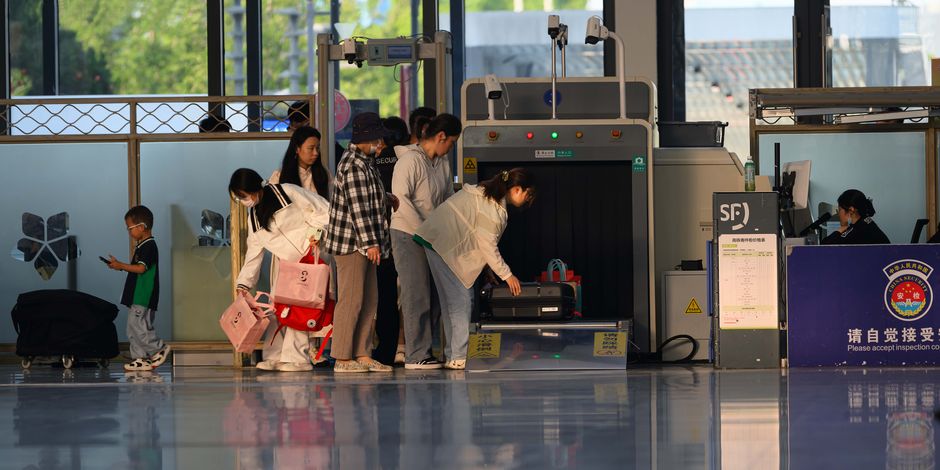
The Secondary Inspection Room: What It Is
Secondary inspection is a more thorough examination conducted in a separate area by CBP officers. It is not an accusation of wrongdoing — it is an additional screening. The vast majority of people who go through secondary inspection are cleared and leave without incident.
What Can Send You to Secondary
- Random selection: 10-15% of returning travelers are selected for additional screening with no specific reason required. CBP uses risk-based algorithms but also genuine random sampling.
- Prior entry flags: if you were selected for secondary in a previous entry, your record flags you for additional attention on future returns
- Travel from high-risk countries: returning from countries with elevated drug trafficking, biosecurity, or security alerts
- Unusual travel patterns: very short trips to distant countries, frequent international travel without clear professional explanation
- Currency behavior: carrying large amounts of cash (even below $10,000) can trigger questions
- Discrepancies in declarations: if your declared purchases don’t match what officers see in your bags, or if receipts in your luggage don’t match declarations
What Secondary Inspection Actually Involves
CBP officers are generally professional and courteous in secondary. They will ask you to accompany them, review your declaration, and may inspect your luggage. They have legal authority at the border that they do not have elsewhere — specifically, they can search your luggage, phone, laptop, and other devices without a warrant. This is established law (the “border search exception” to the Fourth Amendment) and has been repeatedly upheld.
You cannot refuse a border search. You can, however, ask for a lawyer if officers are alleging a crime rather than conducting a routine inspection. Being polite, cooperative, and straightforward is the right approach — CBP officers process thousands of travelers and respond well to people who don’t make their job harder.
Global Entry, TSA PreCheck, and NEXUS: Which One to Get
Global Entry: The Best Investment in International Travel
Global Entry ($120, valid 5 years, includes TSA PreCheck) is the program that every frequent international traveler should have. Here’s what it does:
When you land at any US international airport with Global Entry, you bypass the primary customs line entirely. Instead of standing in a 45-minute queue, you walk to a dedicated kiosk, scan your passport, submit a fingerprint, take a photo, and receive a receipt — then walk straight to baggage claim. The process takes 2-5 minutes.
There is no customs declaration paper form. There is no standing in line behind 200 other returning travelers. You simply walk out.
- Cost: $120 for 5 years ($24/year) — many premium travel credit cards (Chase Sapphire Reserve, Amex Platinum, Capital One Venture X) reimburse this fee entirely
- Application: apply at cbp.gov/globalentry. The application takes 15-30 minutes online.
- Wait time: approval typically takes 2-6 months. An in-person interview at a CBP enrollment center is required before the card is issued. Airports often have Enrollment on Arrival opportunities — check when you return from an international trip if you haven’t had your interview yet.
- Also includes TSA PreCheck for domestic flights at no additional cost
NEXUS: For US-Canada Travelers
NEXUS ($50, also valid 5 years) provides expedited crossing at US-Canada land borders and airports. It also includes TSA PreCheck and global entry-equivalent screening at Canadian airports. If you cross the US-Canada border regularly, NEXUS is exceptional value. Application requires interviews on both the US and Canadian sides.
TSA PreCheck Only: Good, But Incomplete
TSA PreCheck ($85 for 5 years) speeds up your domestic airport security experience significantly — no shoes, no electronics out, expedited lane. But it does nothing for international arrivals customs. If you travel internationally at all, Global Entry is worth the additional $35 for the customs benefit alone.
The Mobile Passport App: Free, Easy, and Unknown
What It Is
Mobile Passport Control is a free official CBP app (available on iOS and Android) that allows US citizens and lawful permanent residents to submit their customs declaration digitally before reaching the customs hall. You fill in your information on the app, submit it after landing, and receive a QR code that allows you to use a dedicated, faster queue at most major US international airports — no enrollment required, no fee, no interview.
Many travelers don’t know this exists. It’s not as fast as Global Entry, but it’s significantly faster than the standard paper form line and takes about 2 minutes to set up before your flight lands.
- Airports supported: JFK, LAX, MIA, ORD, ATL, SEA, and most major international gateway airports
- Works for US citizens, US nationals, and permanent residents
- Download before your flight and complete your declaration while the plane is taxiing
Food Rules That Trip Up American Travelers

What You Cannot Bring In
USDA and CBP jointly enforce agricultural import restrictions. The list of prohibited or restricted items includes most fresh fruits, vegetables, and meat from most countries — not because of customs duty, but because of biosecurity. Bringing a mango from Mexico, fresh pork from Spain, or unprocessed meat from anywhere can result in confiscation and a fine of $300-10,000 for willful violations.
- Fresh fruits and vegetables: generally prohibited from most countries. Commercially packaged and sealed products may be allowed.
- Meat and poultry: fresh, dried, and preserved meat from most countries is restricted or prohibited. Canned meat from most countries is allowed.
- Cheese: hard cheeses, pasteurized cheeses, and commercially packaged cheeses from most countries are generally allowed. Soft, unpasteurized, and raw milk cheeses have restrictions depending on country of origin.
- Alcohol: one liter duty-free per adult. Additional liters are subject to federal duty and state alcohol import regulations.
- Cut flowers: allowed from most countries with restrictions; must be declared for inspection.
Different Exemptions for Different Destinations

Not all international returns are equal for duty-free purposes:
- Standard international return: $800 duty-free exemption per person
- US insular possessions (Puerto Rico, US Virgin Islands, Guam, American Samoa): $1,600 duty-free exemption when returning directly, because these are US territories — though Puerto Rico and USVI customs rules have their own nuances
- Canada and Mexico: subject to the standard $800 exemption for returns by plane; land border returns have different rules depending on frequency and length of trip
Coming home through US customs is, for the vast majority of travelers, a brief administrative exercise — particularly if you have Global Entry. Know what to declare, declare everything in doubt, carry your receipts in an accessible pocket (not buried in your luggage), and smile at the officer. You’ll be home in time for a proper meal before the jet lag wins.