The ‘I’ll Travel When I Retire’ Plan Almost Never Works Out the Way People Imagined
We may earn money or products from the companies mentioned in this post. This means if you click on the link and purchase the item, I will receive a small commission at no extra cost to you ... you're just helping re-supply our family's travel fund.
This article contains affiliate links. If you book travel through our links, we may earn a commission at no extra cost to you.
The conversation goes like this: someone mentions a trip they want to take — somewhere ambitious, or romantic, or long — and they follow it with the phrase that has become a kind of informal American mantra: “I’ll do it when I retire.”
It sounds reasonable. Responsible, even. You finish the work years, you bank the savings, you earn the time, and then you spend it all at once on the travel you’ve been promising yourself. The plan has an appealing logic.
The people who actually retired and tried to execute it have some things to say.
The Deal People Make With Themselves

The deferred travel plan is, at its core, a deal people make with their future selves — a promise that patience now will be rewarded with freedom later. It’s the same psychological structure as any deferred gratification: sacrifice present pleasure for future gain.
The problem is that the future self who is supposed to receive the reward is not the same person who made the deal. She is older. He has different knees. Their relationship has either deepened or corroded or ended entirely in the intervening years. The world the trip was imagined in has changed. The destination may have changed. The body that was going to hike that trail or sleep on that overnight train has been quietly modified by time in ways that weren’t budgeted into the plan.
Financial planners who work with pre-retirement clients report that “travel in retirement” is one of the most commonly listed goals — and one of the most commonly disappointed ones. Not because people don’t try, but because the retirement travel experience consistently fails to match the decades-long anticipation of it.
What the Data Actually Shows About Retirement Travel

Retirement spending research consistently shows that travel expenditures peak in the early retirement years — typically the first five to eight years after leaving work — and decline substantially after that. The decline is driven by a combination of factors: declining health and mobility, the deaths or illnesses of travel partners, increasing caretaking responsibilities for aging parents or spouses, and a simple reduction in the appetite for the logistics of travel that many people discover they didn’t expect.
The traveler who imagined three international trips per year at 65 is often doing one per year at 72 and none at 78. This is not a universal pattern — there are robust and adventurous travelers well into their 80s — but it is the modal outcome.
The research also consistently shows that retirees underestimate healthcare costs and overestimate what travel will actually look like practically. Long-haul flights at 70 are more physically demanding than at 45. International travel with chronic conditions requires insurance and preparation that meaningfully complicates spontaneity. The ease of travel that was assumed turns out to have required the physical resilience of a younger body.
The Health Variable Nobody Fully Prices In

Americans are notably bad at accounting for the probability of health changes when they make long-range plans. This is a documented cognitive pattern — we project our current health state forward indefinitely and are consistently surprised when it changes.
The health variable in retirement travel shows up in several specific ways. Joint issues — hips, knees — are the most common travel limiter, particularly for the cobblestone-street, historic-city travel that forms the backbone of most people’s retirement travel dreams. Rome and Paris are beautiful; they are also intensely physically demanding cities if your knees hurt. The overnight train through the Alps sounds romantic until you think about climbing into an upper berth at 68.
Cardiac conditions, diabetes, chronic respiratory conditions, and the medications that accompany them add complexity and cost to international travel that many people hadn’t planned for. Travel insurance becomes more expensive and more essential simultaneously. Some destinations and some itineraries become functionally unavailable.
None of this means retirement travel is impossible — millions of people do it successfully. It means the trip you imagined at 40 may require significant modification by the time you’re able to take it, and some modifications change the trip enough that it’s not the trip you were waiting for.
The Partner Problem

One of the less-discussed complications of deferred travel plans is what happens when the plan involves two people and those two people have had 30 years to develop separate ideas about what the trip actually looks like.
The couple that agreed at 35 to “travel Europe when we retire” has been building two completely separate mental itineraries for three decades. One of them imagines slow-travel in small French towns, reading in cafes, drinking wine at lunch. The other imagines hitting major museums and historic sites in a systematic sweep of capitals. One wants to travel for months at a time. The other wants two weeks, maximum. One is comfortable with moderate discomfort. The other has specific hotel requirements that didn’t exist in 1995 when the deal was first made.
This incompatibility often doesn’t surface until the trip is actually being planned, at which point it generates conflict that the couple interprets as a problem with the trip rather than a problem with the 30-year-old agreement that both parties updated separately without consulting each other.
Marriage counselors who work with retirees report this pattern frequently: the retirement travel plan that turns out to require an actual conversation between two people who assumed they’d been on the same page.
Why the Money Is Never Quite What You Expected

Financial advisors are cautiously specific on this point: retirement travel is consistently more expensive than pre-retirement projections suggest, for reasons that are structural rather than spendthrift.
The main driver is comfort needs that increase with age. The person who stayed in hostels at 25 and budget hotels at 35 finds that at 65, a bad mattress means three days of back pain, and a noisy hotel means a week of disrupted sleep that ruins the rest of the trip. The accommodation budget that was planned at 40 doesn’t cover what the body actually requires at 65.
The second driver is flexibility premium. Retirees travel without the rigid constraints of work schedules, which sounds like an advantage and is in many ways — but the ability to travel at any time of year doesn’t automatically translate to traveling at the cheapest time. Many retirees avoid peak season but also avoid the most physically demanding weather seasons, which narrows the off-season savings windows significantly.
The third driver is the healthcare overlay. Travel with medical conditions requires insurance products — specifically international medical coverage, medical evacuation coverage, and cancel-for-any-reason provisions — that add 10 to 15 percent to trip costs and are simply non-optional for travelers over 65 with chronic conditions.
The Energy Gap Nobody Warns You About

This is the one that surprises people most. Retirees who finally take the trips they’ve been deferring often report a specific and unexpected problem: they’re tired in a way they didn’t anticipate.
Not just physically tired, though that’s real. Cognitively tired. Travel is cognitively demanding — the navigation, the language barriers, the constant novelty, the decision-making in unfamiliar environments. At 35, this cognitive demand is stimulating and exciting. At 70, after a lifetime of cognitive work, it can be simply exhausting. The same Rome that would have been thrilling at 40 can feel relentless at 72: the heat, the crowds, the need to be constantly alert and oriented and managing.
The retirees who travel most successfully in their later years tend to be the ones who built a travel practice throughout their lives rather than banking it all for retirement. They have the cognitive and logistical patterns down; the travel is familiar enough to not be exhausting. The people attempting Europe for the first time at 70, after a lifetime of deferral, are trying to build those patterns at the least optimal moment.
The People Who Made It Work — What They Did Differently
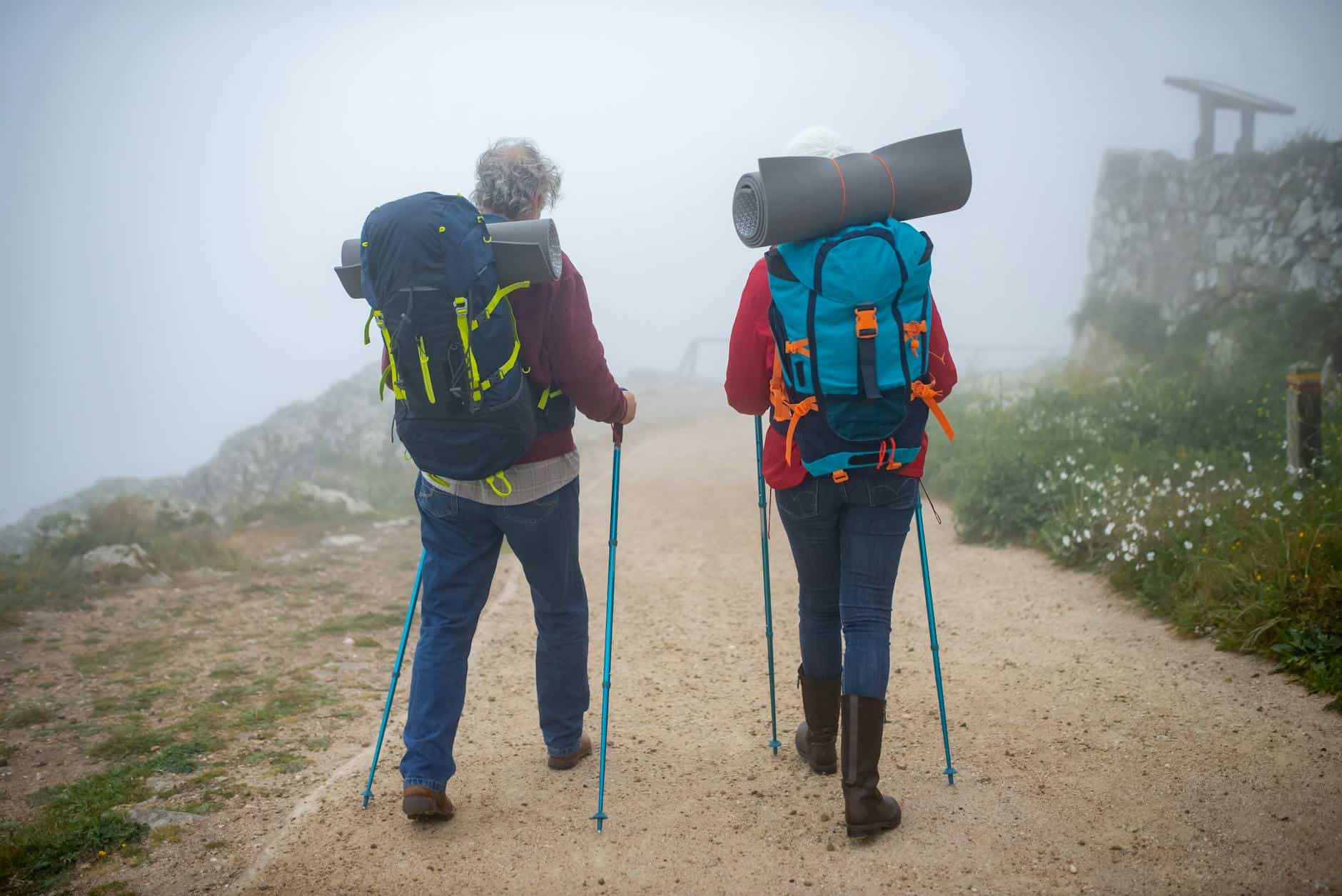
This is not a counsel of despair. There are people who travel beautifully and abundantly in retirement, and the pattern among them is remarkably consistent.
They started earlier. Not necessarily with the big trips — those may indeed happen in retirement — but with some version of travel throughout their lives. They built the habits, the comfort with logistics, the tolerance for things going wrong, the physical conditioning of walking through cities. By retirement, travel is not an unfamiliar mode they’re attempting for the first time; it’s a practiced one they’re doing with more time and resources.
They planned realistically about bodies and energy. They chose destinations that worked with their physical reality rather than against it: cities with flat terrain or good transit, trips with rest days built in, cruises that handle logistics so mental energy can be conserved for experience.
And they traveled while they could, rather than waiting for some future condition that never quite arrives. The “when I have more money” or “when the kids are out of the house” or “when we both finally retire” conditions kept shifting. The people who traveled well in retirement are often the ones who stopped waiting for perfect conditions and traveled imperfect ones.
What the Deferred Trip Costs You in the Meantime

There is a cost to deferred travel that is rarely calculated: the experiences themselves that don’t happen. The parent who didn’t take the trip to Ireland before their own parents died. The couple who waited until retirement to see Patagonia and then discovered that one of them had a knee replacement making that trek impossible. The person who deferred travel for twenty years and found, when the time finally came, that they’d lost the specific hunger for it that had made it feel so vital in their 30s.
None of this argues for irresponsible travel spending or for ignoring the real demands of building a life. But the “I’ll do it when I retire” plan is a gamble — a bet on health, partnership, money, and desire all remaining available and compatible in a future that neither you nor anyone else can fully predict.
The people who seem most at peace with their travel lives are not generally the ones who banked it all and spent it at the end. They’re the ones who found ways to take some version of the trips throughout — not always the big ones, not always the expensive ones — and arrived at retirement with memories already accumulated rather than a list of promises to themselves waiting to be redeemed.