The Outer Banks Built Its Entire Economy on Weekly Rental Houses. Flexible Booking Platforms Just Rewrote the Rules
We may earn money or products from the companies mentioned in this post. This means if you click on the link and purchase the item, I will receive a small commission at no extra cost to you ... you're just helping re-supply our family's travel fund.
For most of the last half century, a vacation on North Carolina’s Outer Banks meant one specific transaction: you booked a house, Saturday to Saturday, for a full week, because that was the only unit of time the area’s rental economy sold. That rigid weekly structure shaped everything from local retail hours to how families planned their entire summer around a single fixed turnover day. It is now breaking apart, and the reasons are not really about the beach at all. They’re about what national booking platforms and shifting traveler expectations have done to a rental model that had not changed in generations.
The End of the Saturday-to-Saturday Monopoly
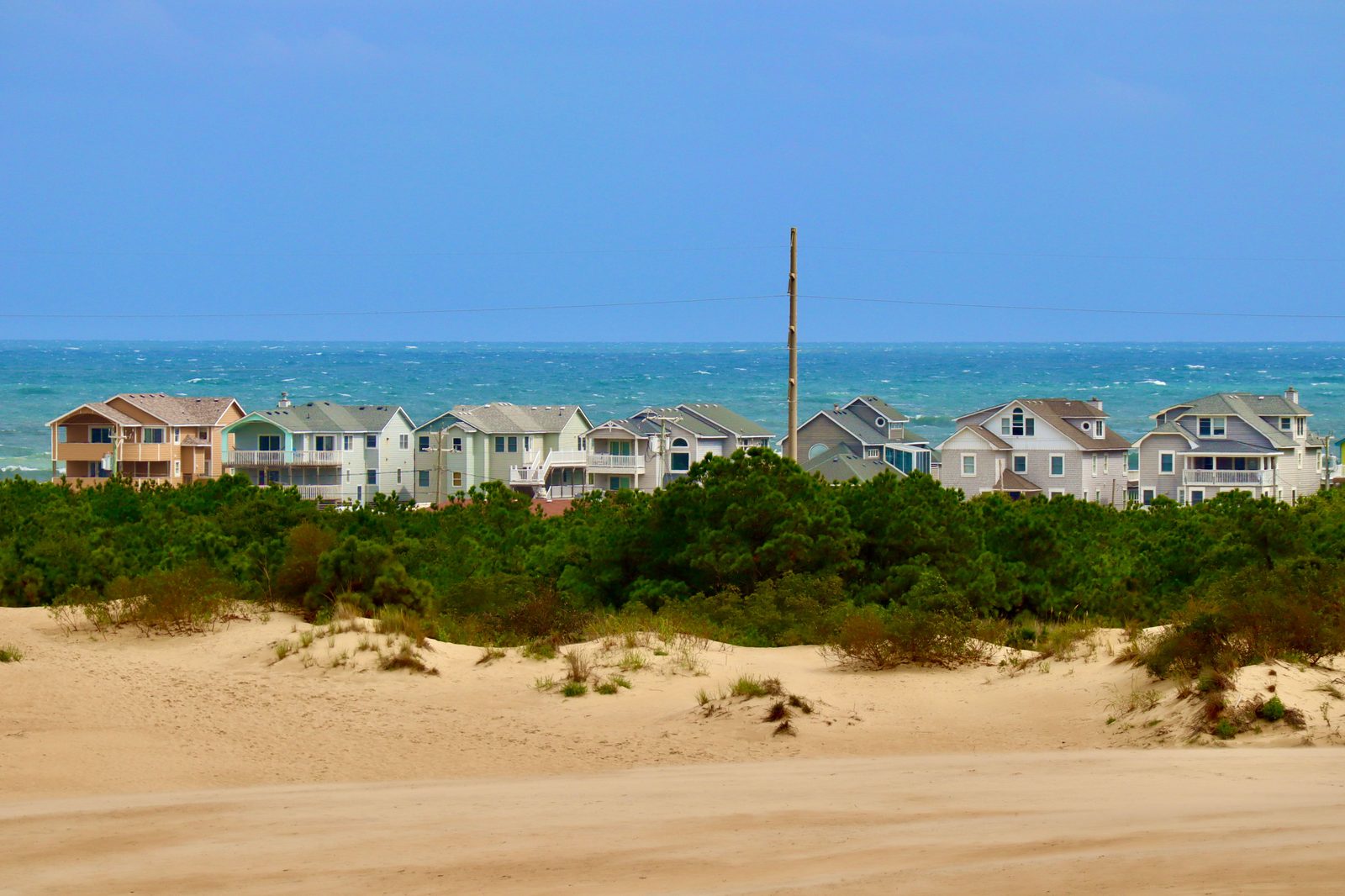
Outer Banks property managers have begun actively adapting to what the industry now calls flex stays, shorter and more variably scheduled bookings that break away from the traditional full-week, Saturday-turnover model, according to industry discussion tracked on LinkedIn from property management professionals in the region. This is a direct response to competitive pressure from national short-term rental platforms that normalized booking any set of nights, any day of the week, for travelers everywhere else in the country. Once a traveler could book a Tuesday-to-Friday stay in Charleston or Nashville with three clicks, the Outer Banks’s traditional weekly-only model started to look like an inconvenience rather than a tradition, and local property managers who resisted the shift risked losing bookings to more flexible competitors.
The area has also seen a wave of new boutique hotel development specifically positioned as an alternative to the giant rental-house model that has defined Outer Banks lodging for decades, according to a PR Newswire announcement from late 2024 covering new hotel openings across the region. That diversification matters because it gives visitors, particularly couples and smaller groups who never wanted an eight-bedroom rental house in the first place, a lodging option that did not meaningfully exist on the Outer Banks a decade ago.
Slower Bookings and a Regulatory Squeeze
The 2026 season has added a second layer to the disruption: bookings have actually slowed. Axios reported in June 2026 that as Outer Banks reservations softened, travelers from markets like Richmond were finding real last-minute deals on properties that would have been booked solid a few years earlier. Slower demand combined with a wave of new short-term rental regulation, detailed in a town-by-town compliance guide published in 2026, has put real pressure on property owners who built their finances around the assumption that Outer Banks rental demand would keep climbing indefinitely. Individual towns across the Outer Banks have adopted different short-term rental rules covering everything from occupancy limits to permitting, meaning a property owner managing units in multiple towns now has to track a genuinely fragmented regulatory landscape rather than one uniform regional standard.
- The traditional Saturday-to-Saturday weekly rental model, standard for decades, is being displaced by flexible, shorter-stay bookings
- A wave of new boutique hotels opened across the region starting in late 2024
- 2026 bookings slowed enough that last-minute deals became common for regional travelers
- Short-term rental regulations now vary town by town across the Outer Banks
What This Means for a Visitor Planning a Trip
For travelers, the practical upshot is genuinely good news after decades of rigid planning requirements. A family that wants a four-night trip instead of a full week now has more legitimate options than at any point in Outer Banks rental history, and softer 2026 demand means better negotiating leverage on rate, especially for anyone booking closer to the actual travel date rather than the traditional habit of reserving a house a full year in advance. The tradeoff is a lodging landscape that requires more research than it used to. Where the old system meant calling one of a handful of long-established rental agencies and picking from their weekly inventory, the current system spans national platforms, boutique hotels, and property managers all operating under different town regulations, which rewards travelers willing to compare across categories rather than defaulting to whatever their family always booked.
What Flexible Booking Actually Changed on the Ground
For decades, the Outer Banks rental economy ran almost entirely on a Saturday-to-Saturday cycle, a structure that shaped everything from grocery store staffing schedules to traffic patterns on the two-lane highways connecting the barrier islands, since nearly every renter arrived and departed on the same day each week. The shift toward flexible check-in days, driven by rental platforms competing for bookings against hotels that had always offered nightly flexibility, broke that uniform cycle, spreading arrivals and departures across the week and forcing property management companies and local vendors to rethink staffing models built around a single changeover day.
The change has been broadly welcomed by visitors, who get more flexibility in trip length and midweek pricing that is often meaningfully cheaper than weekend rates, but it has created real friction for the cleaning and maintenance crews who service these houses, since a rolling schedule of different turnover days across hundreds of properties is logistically harder to staff than one predictable Saturday surge. Local property managers have had to build more sophisticated scheduling systems just to keep up, a quiet but significant operational shift underneath what looks, from the renter’s side, like a simple convenience upgrade.
The shift has also changed how vacation rental owners think about pricing and marketing their properties. Weekly-only rentals used to compete almost entirely on house size and beachfront proximity, since the rental period was fixed and identical across the market. With flexible check-in and variable-length stays now common, owners increasingly compete on midweek discounting, shorter luxury stays, and amenities that appeal to smaller groups rather than the large extended-family gatherings that defined the traditional Outer Banks week-long rental. That shift in the customer base, fewer giant multi-generational family reunions, more shorter trips from couples and small groups, is gradually reshaping what kind of houses get built and renovated along the Outer Banks going forward.
Local towns along the Outer Banks, including Nags Head, Duck, and Corolla, have had to adjust occupancy tax collection and short-term rental registration systems to keep pace with the more varied booking patterns as well, since municipal budgets built around predictable Saturday-driven tourist tax revenue now have to account for a steadier, more evenly distributed flow of visitor spending across the week rather than one concentrated weekly surge.
The deeper story is one that has played out in beach and mountain destinations across the country: a regional rental economy built around one rigid, locally controlled model gets restructured once national platforms make flexibility the default expectation everywhere else. The Outer Banks did not choose this shift so much as get pulled into it, and the towns now writing short-term rental ordinances are essentially trying to retrofit local control onto a system that increasingly runs on national platform logic instead.