Tennessee Gained 80,000 Residents in a Single Year. A Huge Share of Them Picked Chattanooga Over Nashville for One Simple Reason
We may earn money or products from the companies mentioned in this post. This means if you click on the link and purchase the item, I will receive a small commission at no extra cost to you ... you're just helping re-supply our family's travel fund.
Tennessee’s population grew by roughly 80,000 people in 2024 alone, driven by record net migration into the state, and Chattanooga’s metro area was projected to reach 437,000 residents by the end of that year, according to figures cited in a regional cost-of-living breakdown covering Chattanooga’s growth. Nashville gets most of the national headlines about Tennessee’s population boom, the bachelorette parties, the music industry relocations, the constant construction cranes downtown. But a meaningful share of the people actually moving to Tennessee are choosing Chattanooga instead, and the reason boils down to a gap in cost that has become too large for a lot of people to ignore.
The Nashville Premium, in Real Numbers
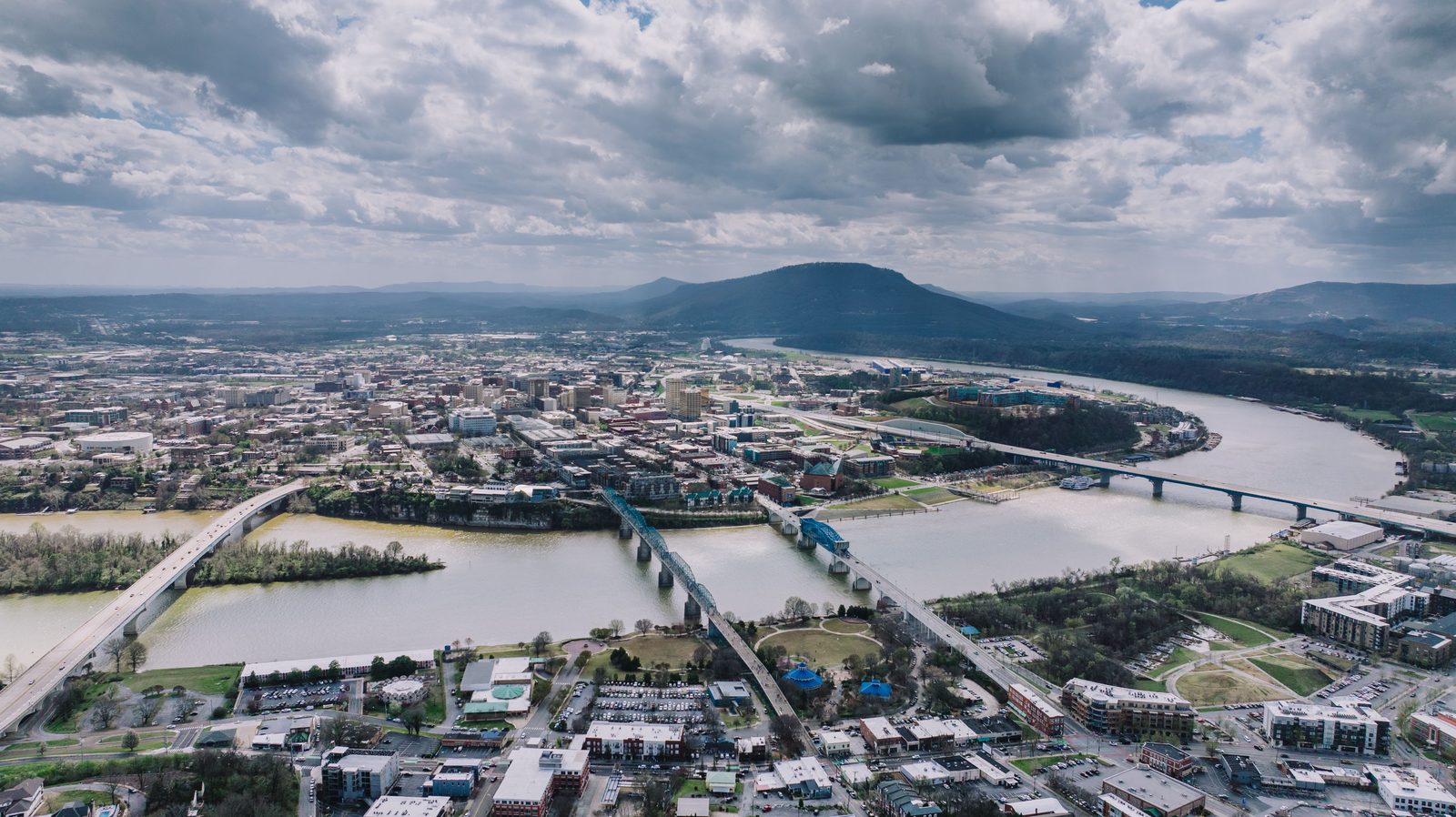
Chattanooga’s cost of living runs meaningfully below the national average in most categories despite recent increases, according to a 2026 cost breakdown from Joe Leffew Properties, while Nashville’s housing market has climbed into territory that rivals coastal cities in some neighborhoods. A one-bedroom apartment in Chattanooga’s city center runs about $2,349 a month, compared to $1,742 outside the center, according to Wise’s cost-of-living data, which also reports an average monthly net salary of $5,382 in the city, figures that put Chattanooga’s affordability well ahead of Nashville’s downtown core on a straight rent-to-income comparison.
Tennessee’s lack of a state income tax applies equally to both cities, so that is not the differentiator. What actually separates them is the base cost of housing and everyday goods, combined with a fundamentally different scale of city. Nashville has spent the last decade absorbing corporate relocations, an NFL and NHL market’s worth of sports infrastructure, and a tourism boom that has pushed commercial and residential rents upward across the board. Chattanooga, roughly two hours southeast, never had that same gravitational pull toward becoming a national boomtown, and its housing stock simply has not been bid up to the same degree.
Who Is Actually Making the Move
Relocation guides aimed at newcomers, including a 2026 essential-tips guide from Mike Kelly Homes and a complete relocation guide from Joe Leffew Properties, both describe a similar profile of newcomer: remote workers who no longer need to live near a specific employer, retirees looking for a lower cost of living without leaving the Southeast, and young families priced out of Nashville, Atlanta, or Charlotte who found Chattanooga offered comparable outdoor amenities, whitewater access, mountain biking trails, and a walkable downtown, at a fraction of the housing cost.
- Tennessee gained approximately 80,000 residents in 2024 through record net migration
- Chattanooga’s metro area was projected to reach 437,000 residents by the end of 2024
- A one-bedroom apartment in downtown Chattanooga runs about $2,349 a month versus $1,742 outside the center
- Average monthly net salary in Chattanooga sits around $5,382
The Tradeoff Nobody Advertises
Chattanooga’s affordability advantage comes with real tradeoffs that relocation guides tend to underplay. The job market is smaller and less diversified than Nashville’s, with fewer corporate headquarters and a narrower band of high-paying industries beyond healthcare, insurance, and the city’s growing tech and startup scene. The airport has far fewer direct flights than Nashville’s. And Chattanooga’s population growth, while real, is happening at a fraction of Nashville’s scale, which means the city’s restaurant and cultural scene, while genuinely good for its size, does not match Nashville’s density of options.
What Chattanooga Offers That Nashville Increasingly Can’t
Nashville’s population and cost-of-living boom over the past decade has pushed median home prices and rents to levels that increasingly resemble larger coastal cities, while Chattanooga, roughly two hours southeast, has remained meaningfully cheaper across nearly every category, housing, dining, and general cost of living, while still offering the mountain scenery, outdoor recreation access, and a genuinely walkable downtown that Nashville’s newer arrivals often say they were originally looking for before prices there climbed out of reach. Chattanooga’s revitalized riverfront, its extensive greenway and mountain biking trail network, and its municipal fiber internet system, among the fastest and most affordable in the country, have given it a specific appeal to remote workers who need reliable connectivity without Nashville-level housing costs.
The city’s own history makes the turnaround more striking. Chattanooga was infamously labeled the dirtiest city in America by federal air quality officials in 1969, a reputation the city has spent more than five decades actively working to overturn through pollution controls, downtown investment, and a rebranding strategy that leaned hard into outdoor recreation and technology infrastructure. The current wave of Tennessee transplants choosing Chattanooga over Nashville is, in a real sense, the payoff of that decades-long repositioning finally reaching a broader national audience at the exact moment Nashville’s affordability advantage started disappearing.
The migration pattern is visible in local real estate data, where Chattanooga’s home prices have risen substantially over the past several years but remain well below Nashville’s, even as both cities have benefited from the broader Sun Belt migration trend pulling residents out of higher-cost states. Local officials have been explicit that they see the current wave of interest as validation of a strategy the city committed to decades ago, investing in outdoor recreation infrastructure and internet connectivity long before either was fashionable, a bet that is now paying off as remote workers specifically seek out mid-sized cities offering quality of life without big-city costs.
Employers have followed the workers. Several logistics, healthcare, and technology companies have expanded or relocated regional operations to Chattanooga specifically citing the availability of talent willing to relocate there for quality-of-life reasons, a feedback loop where population growth attracts employers, and new employer presence in turn attracts more workers, the same virtuous cycle that fueled Nashville’s boom a decade earlier and that Chattanooga’s civic leaders are explicitly trying to replicate at a more sustainable pace.
What Chattanooga is betting on, and what its growth numbers suggest is working, is that a large enough share of people moving to Tennessee are optimizing for cost and quality of life over job market breadth and cultural density. For a remote worker or a retiree, that tradeoff is straightforward. For someone chasing a specific career industry concentrated in Nashville, it is not, and that split in priorities is exactly what is now sorting Tennessee’s biggest wave of newcomers in recent history between its two most talked-about cities.