Kodiak, Alaska Has About 13,500 People and Roughly 3,500 Bears. The Math on That Ratio Runs the Whole Island
We may earn money or products from the companies mentioned in this post. This means if you click on the link and purchase the item, I will receive a small commission at no extra cost to you ... you're just helping re-supply our family's travel fund.
Kodiak Island is the second-largest island in the United States, a 3,588-square-mile stretch of mountainous, salmon-rich terrain in the Gulf of Alaska, and it is home to roughly 13,500 people spread across the city of Kodiak and six remote Alaska Native villages, according to Kodiak College’s community overview. It is also home to an estimated 3,500 Kodiak bears, the largest brown bear subspecies on earth, giving the archipelago a human-to-bear ratio that would be almost unthinkable anywhere else in the country and that shapes essentially every aspect of how the island functions, from building codes to fishing schedules to how kids get taught to walk to school.
A Bear Population Isolated for 12,000 Years
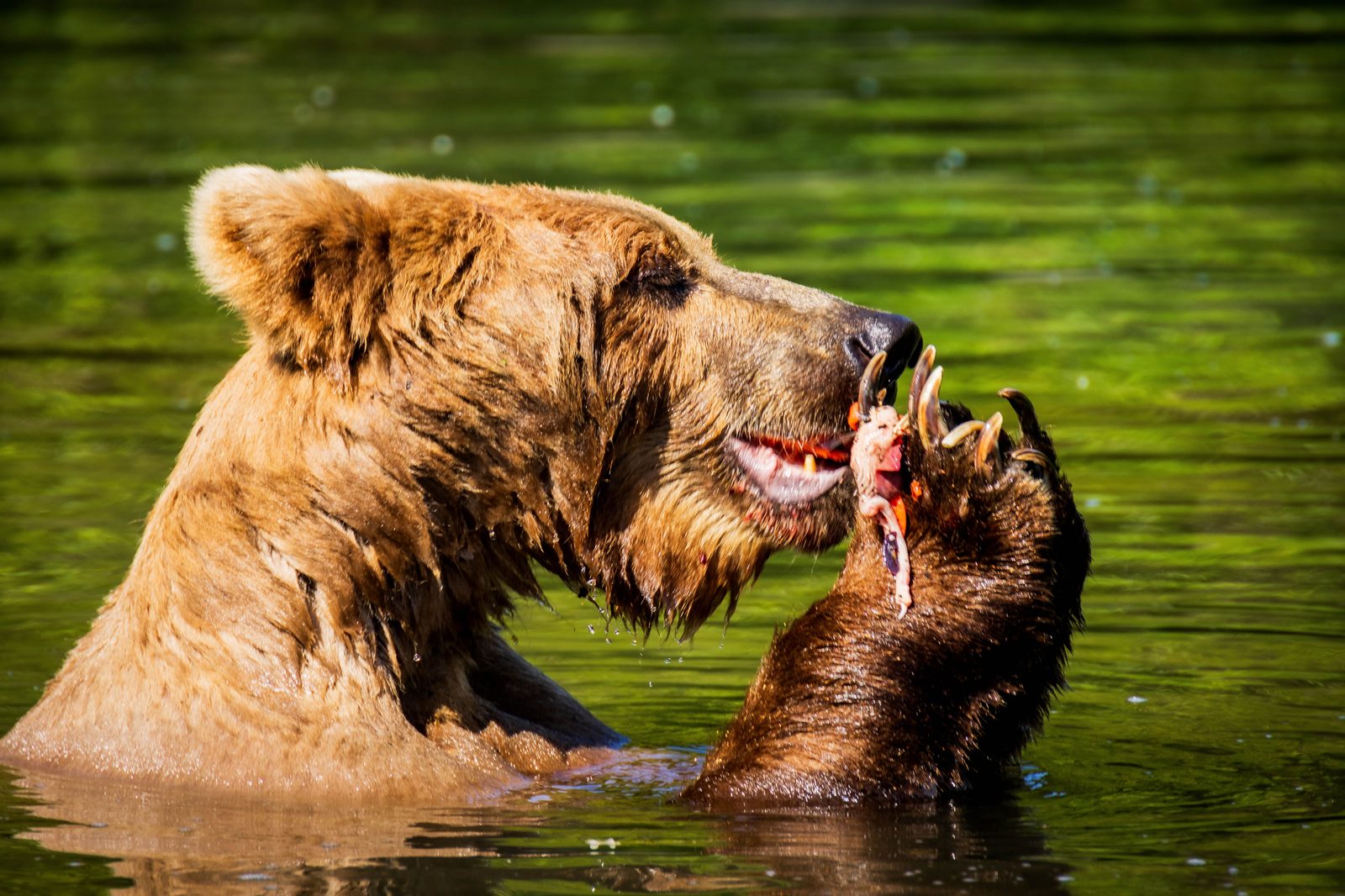
Kodiak bears, classified as their own subspecies of brown bear, Ursus arctos middendorffi, have been isolated on the Kodiak Archipelago for approximately 12,000 years, cut off from mainland brown bear populations by open saltwater since the end of the last ice age, according to the Alaska Department of Fish and Game’s official bear fact sheet. That isolation, combined with an essentially unlimited supply of Pacific salmon running through the archipelago’s streams every summer and no competing bear populations to fight for territory, produced the largest brown bears on the planet, rivaling polar bears for the title of largest land carnivore. Males can weigh up to 1,600 pounds. The bear density on Kodiak, about 0.7 bears per square mile archipelago-wide and considerably higher along salmon streams during the summer run, is the highest of any brown bear population on earth.
Roughly 90 percent of Kodiak Island falls within the Kodiak National Wildlife Refuge, established in 1941 specifically to protect this bear population and its habitat, which means the vast majority of the island’s landmass is functionally bear territory that the human population of roughly 13,500 has organized itself around rather than the other way around.
A Fishing Port That Happens to Share the Island With the World’s Biggest Bears
Kodiak is not primarily a tourist town. It is the largest commercial fishing port in Alaska and one of the top three fishing ports in the entire United States by volume, according to Kodiak College, an economy built on salmon, halibut, crab, and groundfish rather than on bear-watching visitors. The bears are a fact of daily life for Kodiak’s fishing and cannery workforce rather than a managed tourist attraction the way they might be in a place built specifically around wildlife viewing. Locals coexist with the bears through a combination of caution, bear-proof trash storage, and simply accepting that a bear might be on the trail behind your house on a given morning.
- Kodiak Island: 3,588 square miles, the second-largest island in the United States after the Big Island of Hawaii
- Human population: approximately 13,500 across the archipelago’s city and six Alaska Native villages
- Kodiak bear population: approximately 3,500, isolated for roughly 12,000 years
- Only one recorded human death from a Kodiak bear attack in the past 75 years
Coexistence That Actually Works, Statistically
What makes Kodiak’s human-bear ratio remarkable is not just its scale but how rarely it produces conflict. Only one person has been killed by a bear on Kodiak in the past 75 years, with an injury occurring roughly once every other year, according to the Alaska Department of Fish and Game, a safety record that reflects both the bears’ behavior, they are naturally food-focused on salmon rather than aggressive toward humans, and decades of careful management by state and federal wildlife agencies. Regulated hunting takes about 180 bears a year under a permit system so competitive that around 5,000 resident hunters apply annually for roughly 496 available permits, while non-resident hunters must pay a guide between $10,000 and $21,000 for a chance at one of the world’s most sought-after big-game hunts.
A Fishing Economy That Runs Independent of Tourism
Unlike most small island communities that depend heavily on visitor spending, Kodiak’s economy is anchored almost entirely by commercial fishing rather than tourism. The port consistently ranks among the top fishing ports in the country by volume and value of catch, processing salmon, halibut, and Pacific cod that supply markets across the country, an industry that predates any organized tourism infrastructure and would continue regardless of whether a single visitor ever set foot on the island. That economic independence shapes the entire visitor experience: Kodiak was never built to cater to tourists, which means there is no manufactured version of the island’s identity being sold, only the real working town, bears and fishing boats included.
That authenticity comes with real friction for anyone expecting resort-style convenience. Lodging options are limited, ferry and flight schedules are subject to Alaska’s famously unpredictable weather, and bear viewing generally requires booking with a licensed guide rather than simply wandering out to look, since Kodiak brown bears are genuinely dangerous animals living in genuinely wild terrain, not a managed wildlife park exhibit. The tradeoff is a version of Alaska that has not been smoothed over for visitor convenience, which is exactly what draws the relatively small number of travelers who make the deliberate effort to get there.
The bear population itself is a genuine subspecies found nowhere else, the Kodiak brown bear, among the largest bears in the world, having evolved in isolation on the archipelago for thousands of years without competition from grizzlies on the mainland. Local wildlife management treats the bear population as a defining economic and cultural asset rather than a nuisance, with strict regulations around bear viewing, hunting permits, and food storage in residential areas designed specifically to keep the human and bear populations coexisting without the kind of conflict that has led other communities to cull or relocate large predator populations.
For a traveler, Kodiak is reachable by ferry or a short flight from Anchorage, and it offers something almost no other accessible part of the United States can: a working town where bear-viewing is not a staged wildlife park experience but simply a fact of geography, layered on top of a genuinely functioning commercial fishing economy that has nothing to do with tourism at all. It is one of the only places in the country where the wildlife outnumbering the human population by a meaningful margin is not a marketing claim. It is a straightforward demographic fact that the island has built its entire relationship with the land around.