The National Parks With the Longest Wait Times in 2026 — And the Less-Visited Parks Right Next Door
We may earn money or products from the companies mentioned in this post. This means if you click on the link and purchase the item, I will receive a small commission at no extra cost to you ... you're just helping re-supply our family's travel fund.
The national parks most people have heard of receive 70–80% of the total national park visits. Yosemite, Yellowstone, Grand Canyon, Arches, and Rocky Mountain together draw tens of millions of visitors annually to facilities built for a fraction of that capacity. Meanwhile, parks that share the same mountain ranges, the same ecological zones, and in some cases the same visual drama as their famous neighbors see a fraction of the visitors. Here’s the proximity guide to each overrun park and its overlooked neighbor.
The Overcrowded Parks and Their Alternatives
Instead of Yosemite → Sequoia and Kings Canyon
Yosemite Valley requires a timed-entry reservation from May through September that sells out months in advance. Sequoia and Kings Canyon National Parks, 60 miles southeast, contain the world’s largest trees (General Sherman Tree is the largest organism on Earth by volume), the Kings Canyon — a granite canyon as dramatic as Yosemite Valley — and backcountry that rival anything in the Sierra Nevada. Yosemite gets 4+ million visitors annually. Sequoia and Kings Canyon together get under 2 million. The entry system is far less restricted and the experience is less crowded by an order of magnitude.
Instead of Arches → Canyonlands (Needles District)
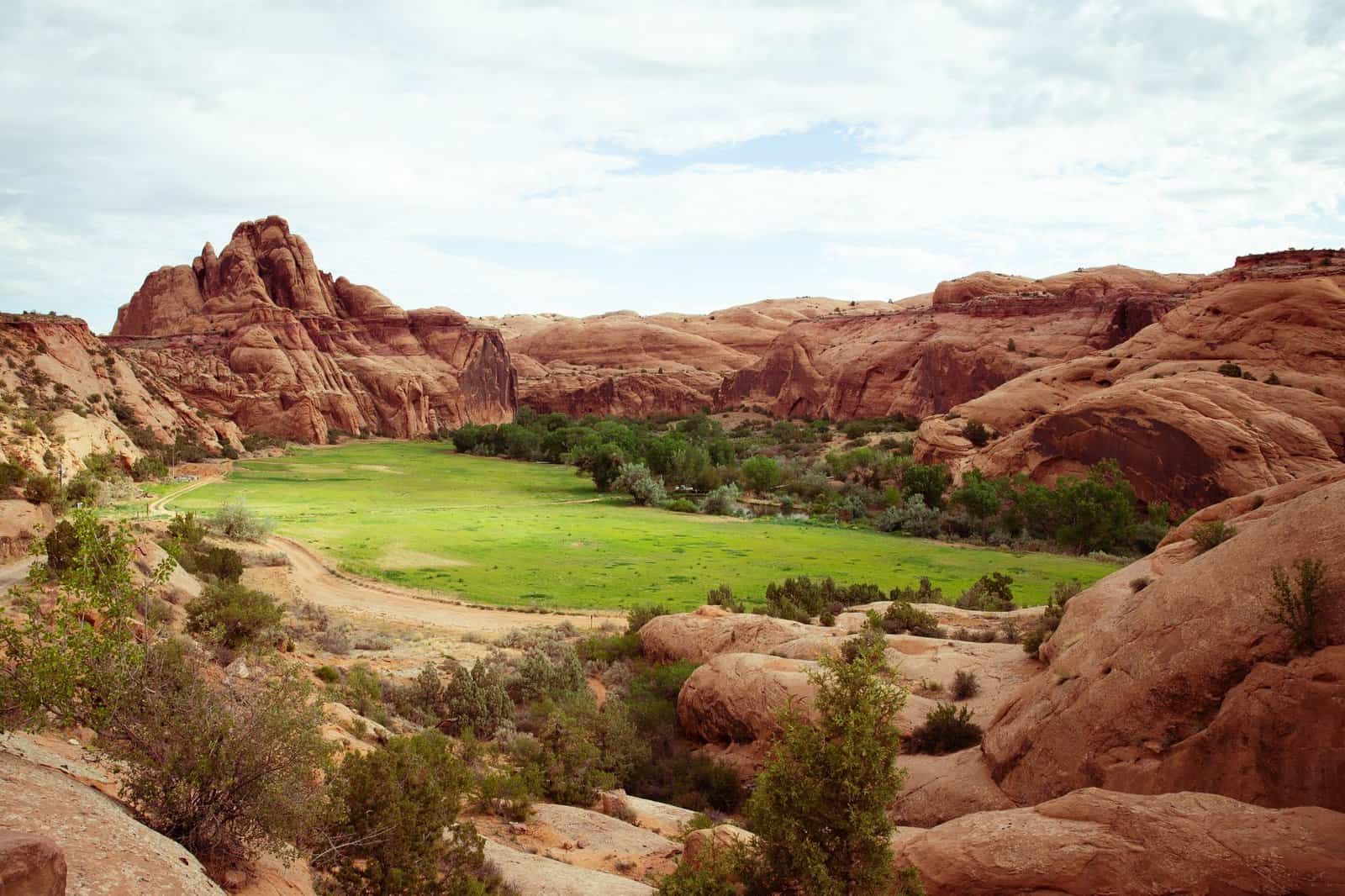
Arches National Park, 5 miles north of Moab, requires advance vehicle reservations April–October and sees continuous crowds. Canyonlands National Park, 40 miles south of Moab, has three distinct districts. The Needles District — 75 miles south — requires a 4WD-capable vehicle for many activities and sees a fraction of Arches visitors. The landscape is different from Arches but equally extraordinary: red and white banded sandstone formations, slot canyons, and wilderness that genuinely feels remote.
Instead of Yellowstone → Grand Teton
This pairing is frequently reversed — people visit Yellowstone and add a day at Grand Teton. But Grand Teton on its own, with the Teton Range rising 7,000 feet from the Jackson Hole valley floor without foothills, is among the most dramatically beautiful mountain scenery in America. It gets crowded too, but fewer reservation restrictions than Yellowstone, and the Jackson Lake area is particularly manageable outside peak summer.
Instead of Rocky Mountain → Great Sand Dunes
Rocky Mountain National Park requires vehicle reservation system access June–October and hosts over 4 million visitors annually. Great Sand Dunes National Park, 150 miles south in the San Luis Valley, has the tallest sand dunes in North America — 700 feet high, backed by 14,000-foot peaks — and sees under 500,000 visitors per year. No reservation system, genuinely uncrowded, and geologically extraordinary: the dunes form because the Medano Creek carries sand from the mountains, deposits it at the base, and the wind builds it upward. You can wade across the seasonal creek at the dune base in late spring and early summer.
Instead of Grand Canyon (South Rim) → Grand Canyon (North Rim) or Zion’s backcountry
The North Rim of the Grand Canyon receives 10% of South Rim visitors, is open May–October, and provides comparable (and in some ways superior) canyon views at 8,000 feet elevation. Alternatively, Zion National Park — which is itself heavily crowded — has a backcountry permit system for the Zion Narrows and Angel’s Landing that rewards advance planning with an experience that the shuttle-riding day hikers never access. The Upper Zion Narrows (day hike, no permit needed for the bottom section) draws 4,000 people a day in summer. The overnight Zion Narrows from the top requires a permit but sees 20–30 hikers per day on the same route.
The US National Park system contains 63 national parks covering every major ecological zone in the country. The parks that make the Instagram feeds receive a disproportionate share of the system’s visitors. Almost every famous park has a genuinely excellent alternative within driving distance that delivers a comparable experience with dramatically fewer people, lower stress, and often no advance reservation requirement. That’s not a compromise — it’s a better trip.
The National Parks Alternatives That Deliver the Same Experience
For Zion: Kodachrome Basin State Park in Utah has hoodoo formations and canyon access in a less-visited Utah landscape. Snow Canyon State Park near St. George has red sandstone formations that rival Zion’s canyon walls at a state park fee level ($10/vehicle) with minimal crowds.
For Yellowstone: The Lassen Volcanic National Park in northern California has active hydrothermal features — mudpots, fumaroles, hot springs — identical in type to Yellowstone’s, accessible from a single highway with no reservation required. Craters of the Moon National Monument in Idaho preserves basaltic lava flows and cinder cones in an otherworldly landscape with a fraction of Yellowstone’s visitor count.
For the Grand Canyon: Black Canyon of the Gunnison National Park in western Colorado has sheer canyon walls reaching 2,722 feet — comparable vertical drama to the Grand Canyon in a canyon narrower and more intimate, with 150,000 annual visitors versus the Grand Canyon’s 6 million.