The Columbia River Gorge Has Over 90 Waterfalls and Gets Millions of Visitors a Year. Here’s What Actually Survives the Crowds
We may earn money or products from the companies mentioned in this post. This means if you click on the link and purchase the item, I will receive a small commission at no extra cost to you ... you're just helping re-supply our family's travel fund.
The Columbia River Gorge has more than 90 waterfalls on its Oregon side, and Multnomah Falls alone draws more than 2 million visitors a year, according to the U.S. Forest Service. That adds up to millions of people crowding a handful of trails and parking lots. Columbia River Gorge waterfalls are spectacular, but the best ones are not always the most famous, and the crowds change what the experience feels like.
Here is what holds up when the lots are full, how to time your visit and which less-visited stops are worth your time.
What Actually Survives the Crowds in the Columbia River Gorge
The Gorge is an 80-mile canyon cut by the Columbia River through the Cascade Range, forming much of the border between Oregon and Washington. Congress created the Columbia River Gorge National Scenic Area in 1986, covering roughly 292,500 acres. The cliffs on the Oregon side hold the densest cluster of waterfalls in the country, fed by creeks that drop from the Cascades through basalt cliffs to the river.
Crowds concentrate along the Historic Columbia River Highway and the stretch of Interstate 40 near Multnomah Falls. The Forest Service has used timed-use permits for the Multnomah Falls corridor in some summers to manage the traffic, and parking lots at other popular sites fill by mid-morning. What survives the crowds are places that require a little effort, patience or an early start.
Multnomah Falls: still worth it, with caveats
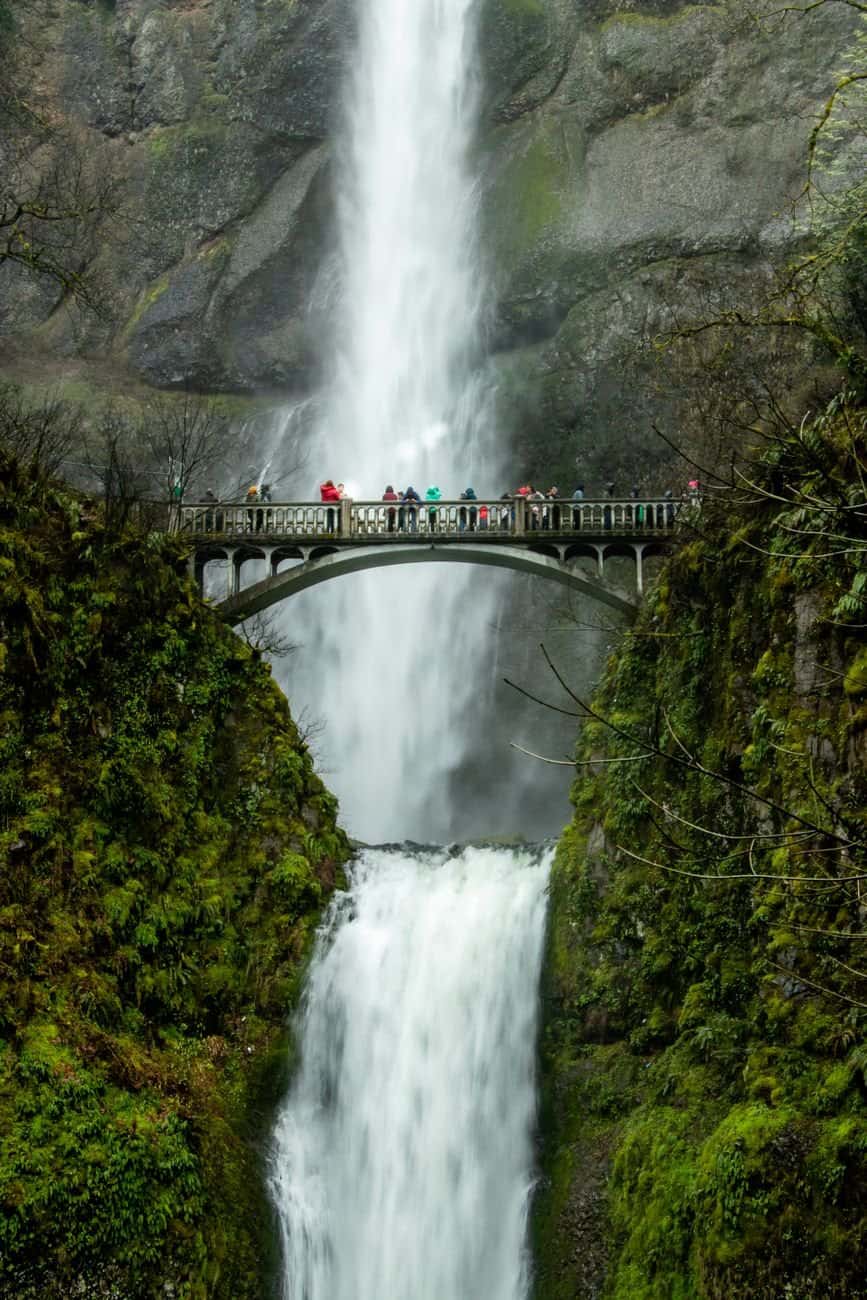
Multnomah Falls, at 620 feet, is Oregon’s tallest waterfall and a two-tier cascade with a stone bridge, the Benson Bridge, over the lower falls. It is just off the interstate, and a lodge and visitor center sit at its base. It is worth seeing for its scale, but it is the most crowded site in the Gorge. To enjoy it, arrive at sunrise or after 5 p.m., come on a weekday and check the Forest Service website for permits or closures. If crowds are too heavy, view it for ten minutes and move on, rather than trying to hike with the throng.
The Waterfall Corridor
Along the Historic Columbia River Highway, which opened in 1916, you can visit a string of falls within a few miles of each other: Latourell, Bridal Veil, Wahkeena, Multnomah and Horsetail. Latourell Falls is a 249-foot waterfall framed by columnar basalt and lichen, with a short trail from a small lot. Wahkeena Falls is a tiered, delicate cascade that begins a trail to Multnomah Falls, an alternative to the stairs. Horsetail Falls is a roadside cascade with a short trail to Ponytail Falls, where the path passes behind the curtain of water.
Less Crowded Stops That Hold Up
The quieter falls require more walking, and they reward visitors with space and solitude.
- Wahclella Falls: A roughly 2-mile round-trip walk along a creek to a falls in a narrow basalt canyon. It is popular but manageable, and the trail is well maintained.
- Elowah Falls: A 289-foot waterfall reached by a short hike near McCord Creek, with views from a footbridge. It is often less crowded than the main corridor.
- Punch Bowl Falls on Eagle Creek: The Eagle Creek Trail was heavily damaged in the 2017 Eagle Creek fire, which burned about 48,000 acres, and has reopened in sections. Check conditions before you plan.
- Starvation Creek Falls: A short walk from a rest area on the interstate, offering a quiet cascade.
- Dry Creek Falls: A moderate hike near Cascade Locks, along the Pacific Crest Trail.
- Bridal Veil Falls: A short walk down to a viewpoint in a state park, with changing conditions.
Washington side
The Washington side of the Gorge has fewer waterfalls but dramatic hikes. Beacon Rock State Park has a 848-foot basalt monolith with a trail to the top on a series of switchbacks and bridges. Hamilton Mountain offers views and a waterfall on the way. Dog Mountain explodes in wildflowers in spring, so the Forest Service uses a permit system on weekends in peak season, which you should check. Cooling off at Panther Creek Falls, a lesser-known waterfall near Carson, is also an option.
Crowd-Proof Strategies
A few habits help you enjoy the Gorge when it is busy.
1. Start early. Be at the trailhead by 7 or 8 a.m., especially on weekends. Many popular lots are full by 10. 2. Go on weekdays, or in the shoulder seasons. Spring has the strongest flows, with snowmelt and rain, and fall brings quieter trails and color. 3. Use public transport where available. A seasonal shuttle runs between Portland and some Gorge sites in summer, and the Columbia Gorge Express has operated for several years. Check current schedules. 4. Choose a loop that links several falls rather than parking at each one. 5. Be flexible. If a lot is full, move on to the next site. 6. Visit in rain or fog. Waterfalls look their best then, and crowds thin.
Permits and closures
The Forest Service has required timed-use permits at certain sites in some summers, and you may need a Northwest Forest Pass or a Oregon State Parks day-use pass to park at some trailheads. The Gorge also has closures due to rockfall, landslides and fire damage, and some trails remain closed years after the 2017 fire. Check the Forest Service and Oregon State Parks websites on the morning of your trip.
What to Know About Safety and Care
- Stay on trails. Slippery rocks near waterfalls have caused injuries and deaths.
- Do not climb on cliffs or go beyond fences.
- Pack out all trash, and leave no trace.
- Bring layers and rain gear, since the Gorge can be windy and wet.
- Carry water, snacks and a map. Cell service is limited in canyons.
- Do not park illegally along the highway or the interstate. Tickets and towing are common.
- Keep dogs leashed, and check rules for specific trails.
Beyond Waterfalls
The Gorge offers much more than falls. Vista House at Crown Point, a 1918 stone observatory on a cliff 733 feet above the river, has sweeping views. The town of Hood River is a hub for windsurfing and kiteboarding, with breweries and orchards in the Hood River Valley. Cascade Locks has the Bridge of the Gods, a steel bridge that carries the Pacific Crest Trail across the river. The Dalles has a historic downtown and a Native heritage center, and the Maryhill Museum of Art on the Washington side is a surprising treasure. These spots can fill a day when waterfalls are crowded.
Columbia River Gorge Waterfalls by Season
Timing changes the Gorge more than almost any other factor.
Spring: peak flow and wildflowers
From March through May, snowmelt and rain make the waterfalls roar, and wildflowers carpet the east end near Hood River and The Dalles. Balsamroot and lupine bloom on the dry hills, including the Eastern Gorge’s Rowena Plateau and Tom McCall Preserve. This is a popular season, and weekends are crowded. If you go, choose weekdays and arrive early. Trails can be muddy, and some close for maintenance after winter storms.
Summer: crowds and permits
Summer is the peak visitor season, and traffic builds on weekends. Water flow falls, and some smaller falls dwindle, though the large ones continue to run. Permits, timed entries and parking restrictions are most likely in these months. The weather is warm, and swimming holes attract visitors, but cold water and strong currents are dangerous. Go early, bring water and carry sun protection.
Fall: color and fewer people
From October into November, the Gorge’s maples and cottonwoods turn gold, and rains return, restoring flow to the waterfalls. Crowds drop, particularly on weekdays, and the light is soft. Fall is considered by many the best time to see the falls without the rush. Weather turns unpredictable, so be prepared for rain, wind and cooler temperatures.
Winter: ice and quiet
Winter can bring ice, snow and freezing rain, which close the Historic Columbia River Highway and some trails. Frozen waterfalls are photogenic, but icy conditions are dangerous. Check road reports, carry traction devices and avoid steep trails when icy. The upside is the quiet and the chance to see Multnomah Falls draped in ice.
Why Crowds Became a Problem
The Gorge is close to Portland, a metro area of about 2.5 million people, and its popularity grew with social media, which spread images of the falls. After the 2017 Eagle Creek fire, closures concentrated visitors in fewer places. Narrow roads, small parking lots and sensitive terrain were not designed for such numbers. The Forest Service and Oregon Department of Transportation have responded with timed permits, shuttles, signage and enforcement, but pressure remains.
The effect on the land
Heavy use causes trail erosion, litter, trampled vegetation and disturbance of wildlife. Social trails shortcut switchbacks and damage hillsides. Rescue teams are called often for injuries and stranded hikers. Some sites have limited access to protect habitat. When you visit, you are part of this effect, so your choices matter.
What helps
- Choose lesser-known sites to spread the load.
- Use transit or carpool to reduce parking pressure.
- Follow signs and fencing, and leave no trace.
- Volunteer or donate to groups such as Friends of the Columbia Gorge, which work on trail maintenance and conservation.
- Share responsibly. When posting photos online, avoid directing people to fragile or closed spots.
A One-Day Plan That Avoids the Worst
If you have only a day, try this approach. Start at sunrise or soon after at Latourell Falls, then continue east to Bridal Veil and Wahkeena, hiking the short trails before the crowds arrive. Visit Multnomah Falls briefly and keep going. By midmorning, drive to Wahclella Falls or Elowah Falls for a longer hike, with lunch in Cascade Locks. In the afternoon, drive to Hood River for a brewery visit or a walk along the waterfront. If you have time, finish at Vista House for sunset.
A two-day version
On the second day, explore the Washington side: hike Hamilton Mountain or the Beacon Rock trail, then picnic at Bonneville Dam’s visitor center, where fish ladders and a hatchery are on view. Or head east to the Dalles and Maryhill for a different landscape of dry hills and river bluffs.
The Takeaway
The Columbia River Gorge has more than 90 waterfalls, and the experience depends on how and when you visit. Multnomah Falls is a must-see for a short stop, and the quieter falls along the corridor and farther afield are the ones that survive the crowds. Go early, check permits and closures and treat the place gently.