Scottsdale Arizona Stopped Being Affordable Around 2020. The People Who Built It Are Still There, Renting.
We may earn money or products from the companies mentioned in this post. This means if you click on the link and purchase the item, I will receive a small commission at no extra cost to you ... you're just helping re-supply our family's travel fund.
Scottsdale’s median home price sat around $450,000 as recently as 2019. By early 2026 it had crossed $939,000, according to housing market data — more than doubling in roughly six years. That’s not a slow drift. That’s a specific, dateable break, and the people who can point to exactly when it happened are the golf course groundskeepers, restaurant staff, and municipal workers who service a city they can no longer afford to live in.
What actually happened in 2020 and 2021
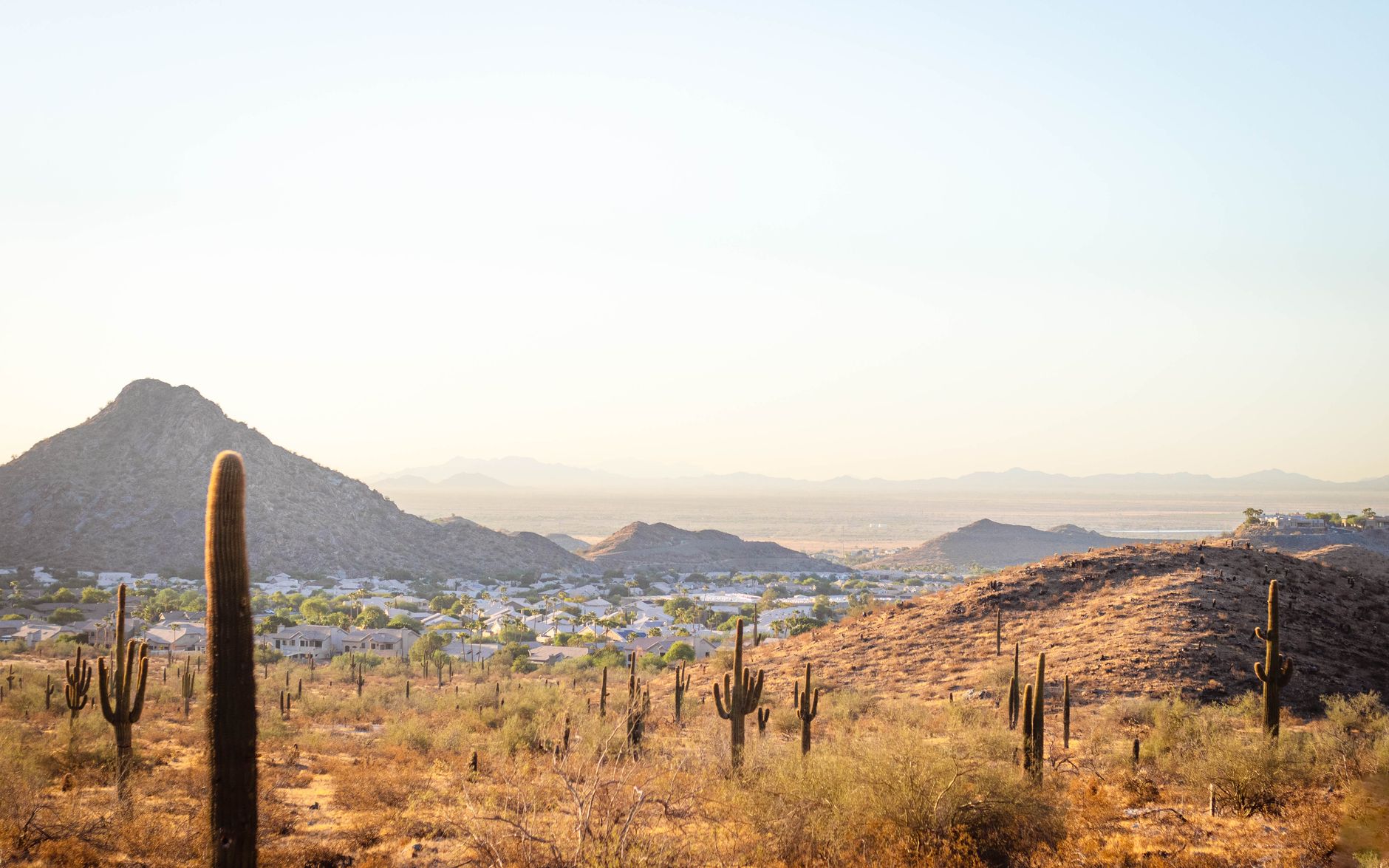
Scottsdale had always been expensive by Phoenix-metro standards — it built its identity on golf resorts, spring training baseball, and a downtown built for tourists with money to spend on turquoise jewelry and margaritas. But it was expensive the way a nice suburb is expensive, not the way a supply-constrained coastal city is expensive. That changed when remote work made it possible for high earners in California, and increasingly people from colder states entirely, to relocate somewhere with 300 days of sun and no state income tax pressure comparable to California’s. Arizona’s income tax tops out far below California’s, and Scottsdale offered the amenities without big-city density.
The city had also spent decades restricting new housing supply through low-density zoning meant to preserve desert views and golf-course sightlines. That’s a defensible planning choice when your population is stable. It’s a fuse when 15,000 remote-capable households show up in eighteen months looking for exactly the kind of single-family home the zoning was built to protect. Prices didn’t rise gradually — they jumped in discrete steps as bidding wars became normal, and by the time the market cooled slightly in 2023 and 2024, the new baseline had permanently reset.
Who actually keeps Scottsdale running
Scottsdale’s resort and hospitality economy needs a large hourly workforce — housekeeping, kitchen staff, groundskeepers, lifeguards, valet — and that workforce increasingly commutes in from Mesa, Apache Junction, or further, because a $939,000 median home price makes local housing mathematically impossible on service wages. This is the same dynamic playing out in resort towns nationally, from Aspen to Key West, but Scottsdale’s version is unusual because it isn’t a small mountain town with a captive seasonal workforce — it’s a city of over 240,000 people, large enough that you’d expect it to have solved this by now.
The numbers that tell the story
- Median home price roughly doubled between 2019 and early 2026
- Scottsdale’s 2025 Housing Needs Assessment was commissioned specifically because the city recognized a widening gap between local wages and local housing costs
- Neighboring Phoenix and Mesa have absorbed much of the workforce priced out of Scottsdale proper
- Old Town Scottsdale rents have climbed alongside home prices, squeezing even higher earners
The city commissioned a formal Housing Needs Assessment specifically to confront this, which is itself telling — you don’t study an affordability crisis you don’t have. The assessment’s existence is an admission that the city government sees what residents already know: the workforce that keeps Scottsdale’s restaurants, resorts, and municipal services running is no longer able to live inside the city they serve.
What this means if you’re visiting
How this compares to the rest of the Phoenix metro
Scottsdale’s price surge wasn’t isolated — Phoenix and its broader metro area experienced some of the fastest home price growth in the entire country during the same 2020-2022 window, driven by the same remote-work migration pattern playing out across dozens of Sun Belt cities simultaneously. What makes Scottsdale distinct within that broader Phoenix story is how much further it had to climb and how much its existing luxury resort economy amplified the effect — a $450,000 starting point that doubled produces a categorically different city than a $250,000 starting point in a more working-class Phoenix suburb that also doubled.
Local real estate agents describe a bifurcated market now — ultra-luxury properties in north Scottsdale near the McDowell Sonoran Preserve continuing to set records, while more modest homes near the city’s southern border with Tempe and Phoenix see comparatively more normal appreciation. That split mirrors what’s happened nationally in many high-demand markets: the affordability crisis isn’t uniform across a city, it’s concentrated hardest in exactly the segment that used to be attainable for middle-income buyers, while the luxury tier simply gets more luxurious.
Scottsdale’s school district and municipal government have both cited recruitment challenges tied directly to housing costs, a problem playing out simultaneously in teacher and police officer housing task forces across dozens of high-cost U.S. cities. The city has explored accessory dwelling unit reforms and targeted workforce housing incentives, following a policy playbook increasingly common in expensive resort and tech-hub cities nationally, though these measures typically take years to meaningfully affect a housing market that reset as quickly as Scottsdale’s did between 2020 and 2022.
For visitors, the silver lining of Scottsdale’s price surge is a genuinely elevated hospitality product — resorts have continued investing heavily in amenities and renovations to justify premium nightly rates, which means the experience at the top end has arguably never been better, even as the city’s affordability for everyone who isn’t visiting has arguably never been worse.
None of this is visible from a resort pool. Scottsdale still delivers exactly what it promises to visitors — championship golf courses, a walkable Old Town, world-class spas, and some of the best fine dining in the Southwest. The strain shows up in longer commute times for staff, in service industry turnover that any local will complain about if you ask, and in a broader Phoenix metro area where the suburbs that used to be “the affordable option” have started climbing too. Scottsdale isn’t unique in this pattern, but it’s a particularly clean case study because the timeline is so specific: a city that was expensive-but-livable in 2019 became something categorically different within about two years, and it never fully reset back.