The Rural Midwest Isn’t Growing Evenly—Jobs and Colleges Reveal Which Counties Are Pulling Ahead
We may earn money or products from the companies mentioned in this post. This means if you click on the link and purchase the item, I will receive a small commission at no extra cost to you ... you're just helping re-supply our family's travel fund.
Rural Midwest counties are not shrinking or growing as a block. They are splitting. According to the U.S. Department of Agriculture’s Economic Research Service, 51 percent of nonmetro counties across the country lost population between July 2020 and June 2024, and decline was common across the Dakotas, Nebraska, Kansas, Illinois and Iowa. Yet other counties in the same states grew quickly, and the difference usually comes down to jobs, access to a metro area and anchors such as colleges.
This article looks at what separates the rural Midwest counties pulling ahead from those falling behind, using public data and a few examples, and at what that means for visitors and movers.
Which Rural Midwest Counties Are Pulling Ahead
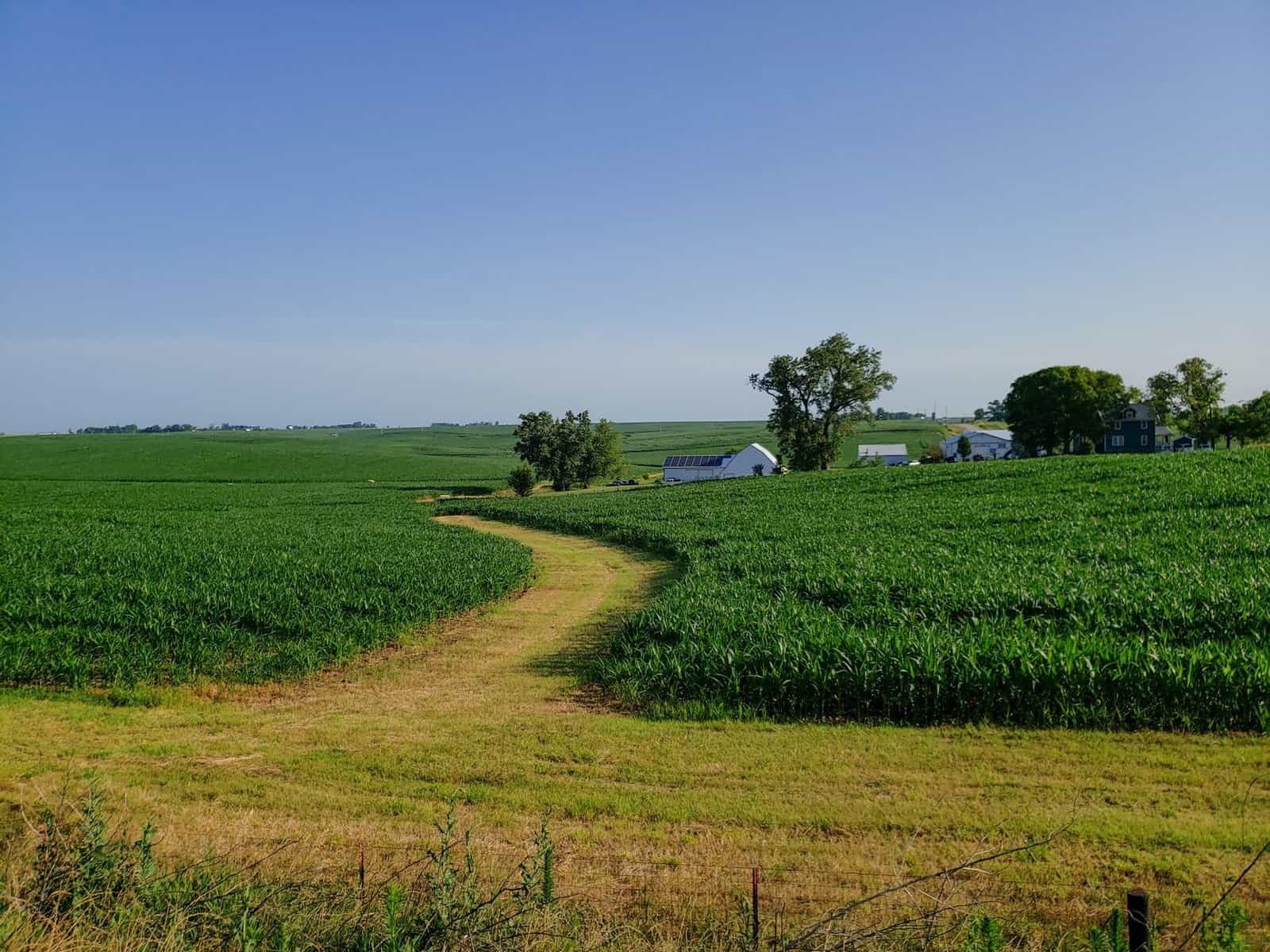
Across the country, rural population has risen overall since 2020, but the growth has relied on net migration and has not been even. The Economic Research Service reports that growth between 2020 and 2024 was concentrated in nonmetro counties next to metro areas and in recreation counties, while most other nonmetro counties lost people. In the Midwest, growth was common in the northern parts of Minnesota, Wisconsin and Michigan and in the Missouri Ozarks, while many counties in the Great Plains and Corn Belt shrank.
Those patterns show up in individual county numbers. The Census Bureau’s county estimates give a sense of the range. Dallas County, Iowa, the western suburban county of Des Moines, grew from about 99,700 residents in 2020 to about 115,300 in 2024, an increase of more than 15 percent, which local reporting identified as the fastest growth in the Midwest. Miami County, Kansas, on the edge of the Kansas City area, rose from about 34,200 to about 35,700. In contrast, Lincoln County, Nebraska, which contains the railroad town of North Platte, fell from about 34,700 to about 33,300. Alexander County, Illinois, at the southern tip of the state, dropped from about 5,200 to about 4,600.
The first factor: access to a metro area
The simplest predictor of growth is distance from a city. Counties within commuting range of metro areas, such as Des Moines, Kansas City, Indianapolis and Minneapolis, receive people who want more space and lower housing costs and who can still reach jobs. Hamilton and Boone counties near Indianapolis led Indiana’s growth. This pattern shows that many rural counties that grow are not remote at all. They are exurbs.
The second factor: a real job base
Counties with a diverse set of employers, such as health care systems, manufacturing plants, food processing and logistics, tend to hold or gain people. The Economic Research Service notes that employment in many nonmetro counties in the Upper Midwest has increased in recent years. Meatpacking and food processing have long drawn workers, including immigrants, to towns in Iowa, Nebraska, Minnesota and Kansas, and they have kept some counties growing even as their native-born populations aged. Those jobs are often demanding and lower paid, and the communities they support face housing and school pressures.
Counties that rely mostly on farming, with fewer farms and larger operations, tend to lose people as consolidation reduces the number of farm families. Without other employers, young people leave for education or work and do not come back.
Where Colleges Fit In
Colleges are the third piece of the puzzle. A university or community college brings students, staff, research dollars, cultural events and a steady demand for housing and services. It also anchors the local economy against swings in farm prices.
The effect is not a guarantee of growth. Coles County, Illinois, home to Eastern Illinois University in Charleston, declined from about 47,200 residents in 2020 to about 46,400 in 2024, a small loss of under 2 percent. Poweshiek County, Iowa, where Grinnell College is located, slipped from about 18,700 to about 18,500. These losses are mild compared with counties such as Wabash County, Illinois, which declined more than 3 percent over the same period without a major university. A college does not turn a shrinking region into a growing one, but it can slow the decline and sustain a downtown.
Growth where colleges meet metros
Where a college is in or near a metro area, the combination can be powerful. Counties around larger universities such as Ames in Story County, Iowa, Columbia in Boone County, Missouri, and Madison in Dane County, Wisconsin, benefit from research, student housing demand and health care. Dane County is a metro example, but it shows how a university and state government can anchor an entire regional economy.
Recreation and Amenity Counties
The northern edges of the Midwest, with lakes, forests and trails, have drawn newcomers who work remotely or retire. The Economic Research Service identified recreation counties as a category with above-average growth. In the Midwest, that includes parts of northern Minnesota, Wisconsin’s Northwoods and Michigan’s northern Lower Peninsula and Upper Peninsula. These counties tend to have seasonal economies, with tourism, second homes and service jobs. Their growth brings challenges, such as housing costs for local workers, similar to those in mountain towns.
What Slows Counties Down
Several forces hold counties back.
- Aging: Many rural counties have more deaths than births, so they depend on migration to grow.
- Out-migration of young adults: Without local opportunities, graduates leave.
- Farm consolidation: Fewer, larger farms support fewer families and businesses.
- Limited housing: Even where jobs exist, a shortage of homes can stall growth.
- Health care and school closures: When hospitals or schools close, families leave.
- Broadband gaps: Remote work depends on good internet.
Signs of a county that is pulling ahead
You can often spot a growing county from the road. Look for new housing developments, a busy main street with open storefronts, a hospital or clinic expanding, new schools, a community college campus and employers advertising jobs. In declining counties, signs include empty storefronts, closed schools and a lack of young families. These are impressions, not data, but they match the numbers.
What It Means for Visitors and Movers
For visitors, uneven growth shapes what you find. Counties with new residents often have better restaurants, breweries, trails and events, while places that are shrinking may have unique historic downtowns but fewer services. Rural travelers should check hours, call ahead for lodging and support local businesses, especially in places that are fighting to stay viable.
For people thinking of moving, the data suggest looking at several measures: commuting distance, local employers, health care, broadband, school quality and housing. A county with a college, a hospital and a diverse set of employers is a stronger bet than one that depends on a single industry.
Where to find data
The Census Bureau publishes annual county population estimates, and the USDA Economic Research Service offers maps and analysis of nonmetro trends. State demographers, such as those in Iowa, Illinois and Michigan, release local reports. Check the date of the data, since estimates are revised.
Looking at Specific Examples
County averages hide a lot, so a few more examples help show the pattern. In Iowa, Dallas County grew rapidly as Waukee and other suburbs of Des Moines expanded, bringing new subdivisions and school districts that struggle to keep up. Not far away, many smaller counties lost residents, such as Sac County in northwest Iowa, which slipped from about 9,800 to about 9,500 between 2020 and 2024. Pocahontas County declined slightly, from about 7,100 to about 7,000.
Nebraska and Kansas
In Nebraska, the state as a whole grew from about 1.96 million to about 2.0 million between 2020 and 2024, but growth was concentrated in the Omaha and Lincoln areas. Lancaster County, where Lincoln and the University of Nebraska are located, rose from about 322,600 to about 332,900. Meanwhile, western counties such as Lincoln County lost people. In Kansas, the state added about 33,000 residents, but many western counties, such as Gove, which fell from about 2,700 to about 2,660, continued to shrink. Miami County, close to Kansas City, grew.
Indiana and Michigan
Indiana saw most of its growth in the Indianapolis area, with Boone and Hancock counties growing more than 3 percent in a single year, according to state reporting. Rural counties in Indiana grew slightly as a group after losing population in the 2010s. In Michigan, estimates show that more than half of counties grew in the most recent year, with northern counties such as Alcona and Midland among those that gained, according to Census tables.
South Dakota
Lincoln County, South Dakota, next to Sioux Falls, grew by more than 12 percent between 2020 and 2023, a pace that reflects the pull of a regional hub with health care and finance jobs. Most of the state’s rural counties farther west grew more slowly or lost people. This is the same pattern again, with the metro edge growing and the interior holding steady or declining.
Why It Matters
Uneven growth shapes schools, hospitals, roads and tax bases. A growing county has to build infrastructure fast, while a shrinking one must maintain what it has with fewer people. Both face political tensions. Growing counties debate zoning and farmland loss. Shrinking counties debate consolidating schools, closing clinics and merging services.
The role of immigration
Immigration has been a major source of growth in several rural Midwest counties. Meatpacking, dairy and manufacturing employers rely on immigrant workers, and in places such as Nobles County in Minnesota and parts of Nebraska and Kansas, newcomers have kept school enrollment and downtown businesses alive. Federal policy on immigration therefore has direct effects on local economies, a factor to watch.
The role of remote work
Remote work allows some people to live far from their employers, and some have chosen small towns with good internet and lower costs. The effect is clearest in recreation areas and places with strong broadband. It has not reversed the overall pattern, but it adds to growth in selected communities.
How to Read Your Own County
If you want to evaluate a specific county, start with the Census Bureau’s estimates and compare 2020 to the latest year. Look at whether growth comes from migration or from births. Check unemployment and job growth from the Bureau of Labor Statistics. See whether the county has a college, a hospital and a broadband provider. Talk to the county’s economic development office and read the local paper. The combination tells you more than any single number.
The Takeaway
The rural Midwest is not one story. Counties near metros, those with strong employers and those with colleges or recreation assets are doing better than those with none of these. Growth is uneven, and the gaps may widen if jobs and housing do not keep pace. Whether you are traveling, investing or considering a move, look at the specific county, not the regional average.