Ruston, Louisiana, Has 22,000 Residents—Yet It Grows More Peaches per Person Than Almost Any Southern Town Its Size
We may earn money or products from the companies mentioned in this post. This means if you click on the link and purchase the item, I will receive a small commission at no extra cost to you ... you're just helping re-supply our family's travel fund.
Ruston, Louisiana built its identity around Louisiana Tech University and a peach farming tradition dating back generations, with the surrounding Lincoln Parish countryside still home to working peach orchards that supply the annual Louisiana Peach Festival, a June event drawing visitors from across the state for a celebration built entirely around a crop most people don’t associate with Louisiana agriculture at all.
The city’s downtown has undergone a genuine, locally driven revival over the past decade, anchored by restored early twentieth-century commercial buildings now housing restaurants and shops that have made Ruston something of a model for small Louisiana city revitalization efforts well beyond the immediate region.
Why Peaches Took Root in North Louisiana
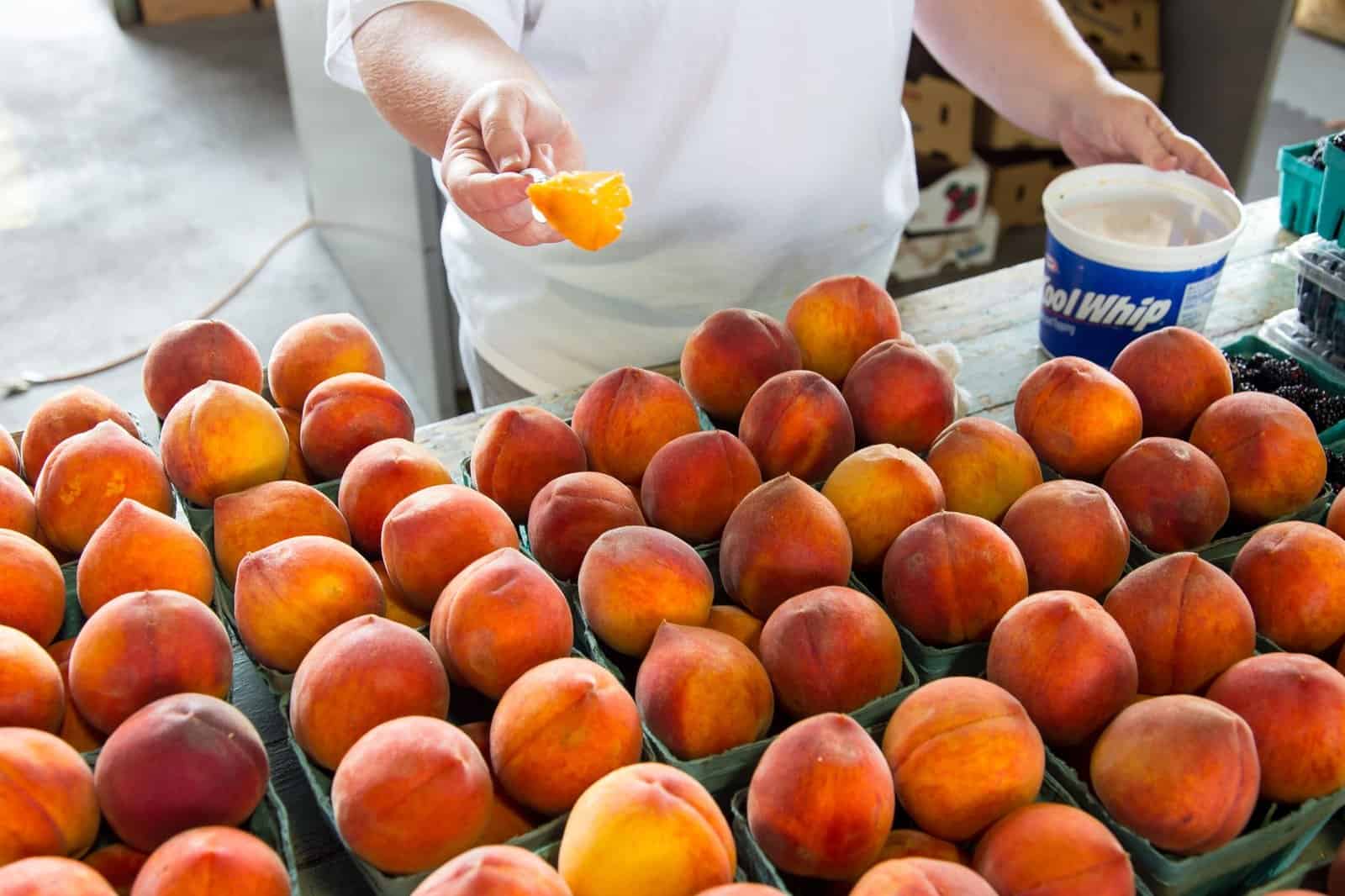
Lincoln Parish’s sandy, well-drained soil turned out to be unusually well suited to peach cultivation, a fact local farmers discovered and began exploiting commercially in the early twentieth century, well before the region had any of the university or tech-industry identity it has since built around Louisiana Tech’s presence in Ruston.
The Louisiana Peach Festival, now in its seventh decade, has grown from a small local agricultural celebration into a genuine regional draw featuring a peach-cooking contest, a parade, and a beauty pageant tradition dating back to the festival’s earliest years, all built around a harvest window that typically runs from late May through July depending on that year’s weather.
Louisiana Tech’s Outsized Role in a Small City
Louisiana Tech University brings an enrollment of several thousand students to a city of just 22,000 residents, giving Ruston a downtown restaurant and bar scene considerably more developed than most towns of comparable size in rural Louisiana, where the local economy typically depends far more heavily on agriculture or oil and gas than on any university anchor.
The university’s growing engineering and computer science programs have also attracted tech-sector employers to open small offices in Ruston specifically to recruit graduates locally, a development city officials have pointed to as evidence that the town is diversifying beyond its historic agricultural base.
Downtown Ruston’s Locally Driven Comeback
A cluster of locally owned restaurants and coffee shops has opened in downtown Ruston’s historic commercial core over the past decade, filling buildings that sat vacant for years after retail activity shifted toward highway-adjacent shopping centers in the late twentieth century, a pattern common to small Southern towns that Ruston has managed to partially reverse.
City officials have specifically credited a combination of historic tax credits, a business-friendly downtown development district, and Louisiana Tech’s steady student population for supporting a level of downtown retail occupancy that has become unusual for a town this size in rural north Louisiana.
What a Visitor Actually Finds Beyond the Festival
Lincoln Parish Park, just outside the city, offers hiking trails and camping around a reservoir lake that gives Ruston a legitimate outdoor recreation draw beyond its agricultural and university identity, a fact that surprises visitors who associate north Louisiana primarily with flat farmland rather than any meaningful outdoor recreation infrastructure.
Ruston’s compact, walkable downtown and relatively low cost of visiting compared to Louisiana’s more heavily marketed destinations like New Orleans or Baton Rouge have made it a growing stop for road-trippers driving Interstate 20 between Shreveport and Monroe, rather than a standalone destination most travelers seek out on purpose.
How the Festival Compares to Other Southern Agricultural Celebrations
The Louisiana Peach Festival follows a template common to small Southern agricultural towns nationally, using a single harvest crop as the organizing theme for a broader community celebration that draws visitors well beyond what the crop itself could justify on economic grounds alone.
Unlike larger, more commercialized state fairs, Ruston’s festival has retained a distinctly local character, with many of the cooking contest entrants and parade participants being longtime residents rather than professional vendors, a homegrown feel town officials have deliberately preserved even as visitor numbers have grown.
What the Surrounding Region Offers Beyond Ruston Itself
Lincoln Parish’s small towns surrounding Ruston, including Dubach and Simsboro, maintain their own smaller-scale agricultural traditions and annual community events, giving visitors interested in the region’s farming heritage additional stops beyond Ruston’s more heavily promoted festival and downtown scene.
The broader north Louisiana region has increasingly marketed itself as a lower-cost, less crowded alternative to the state’s more famous tourism corridors, positioning towns like Ruston as authentic small-city stops for road-trippers rather than standalone destinations, a modest but deliberate tourism strategy that has helped sustain steady, if unspectacular, visitor growth over the past decade.
City officials have discussed further investment in agritourism infrastructure, including expanded orchard tour offerings, as a way to extend visitor interest beyond the single-week festival window into a longer seasonal draw spanning the entire peach harvest period.
Local growers have also begun experimenting with agritourism partnerships allowing visitors to pick their own peaches directly from participating orchards during peak harvest weeks, a hands-on addition to the festival’s more traditional parade and cooking-contest format.
Festival organizers have said attendance and vendor participation both continue to grow year over year, a trend they attribute to steady word-of-mouth promotion rather than any large-scale advertising campaign or new corporate sponsorship.
That steady, organic growth pattern has kept the festival’s character recognizably consistent even as attendance numbers have climbed, something longtime attendees frequently cite as part of its enduring appeal.
Local leaders describe this as exactly the kind of gradual, community-rooted growth they hope to sustain rather than chase the faster but often less durable growth patterns seen in more heavily marketed tourist towns elsewhere in the South, arguing that Ruston’s modest scale is precisely what keeps the festival and the town’s broader identity feeling genuine and authentic rather than manufactured for outside visitors simply passing through town on their way to somewhere else along the interstate.