Phoenix Added Roughly 57,000 People Since 2020 in a Desert With Shrinking Water. Here’s What That Combination Actually Looks Like
We may earn money or products from the companies mentioned in this post. This means if you click on the link and purchase the item, I will receive a small commission at no extra cost to you ... you're just helping re-supply our family's travel fund.
Phoenix growth and water are tied together in a way few other big American cities face. According to Census Bureau estimates, the city of Phoenix grew from about 1.608 million people in 2020 to about 1.665 million in 2025, a gain of roughly 57,000, while the wider metro area added far more. All of it happens in the Sonoran Desert, where the Colorado River that feeds much of the region’s water has been shrinking for more than two decades.
What Phoenix Growth and Water Look Like Together
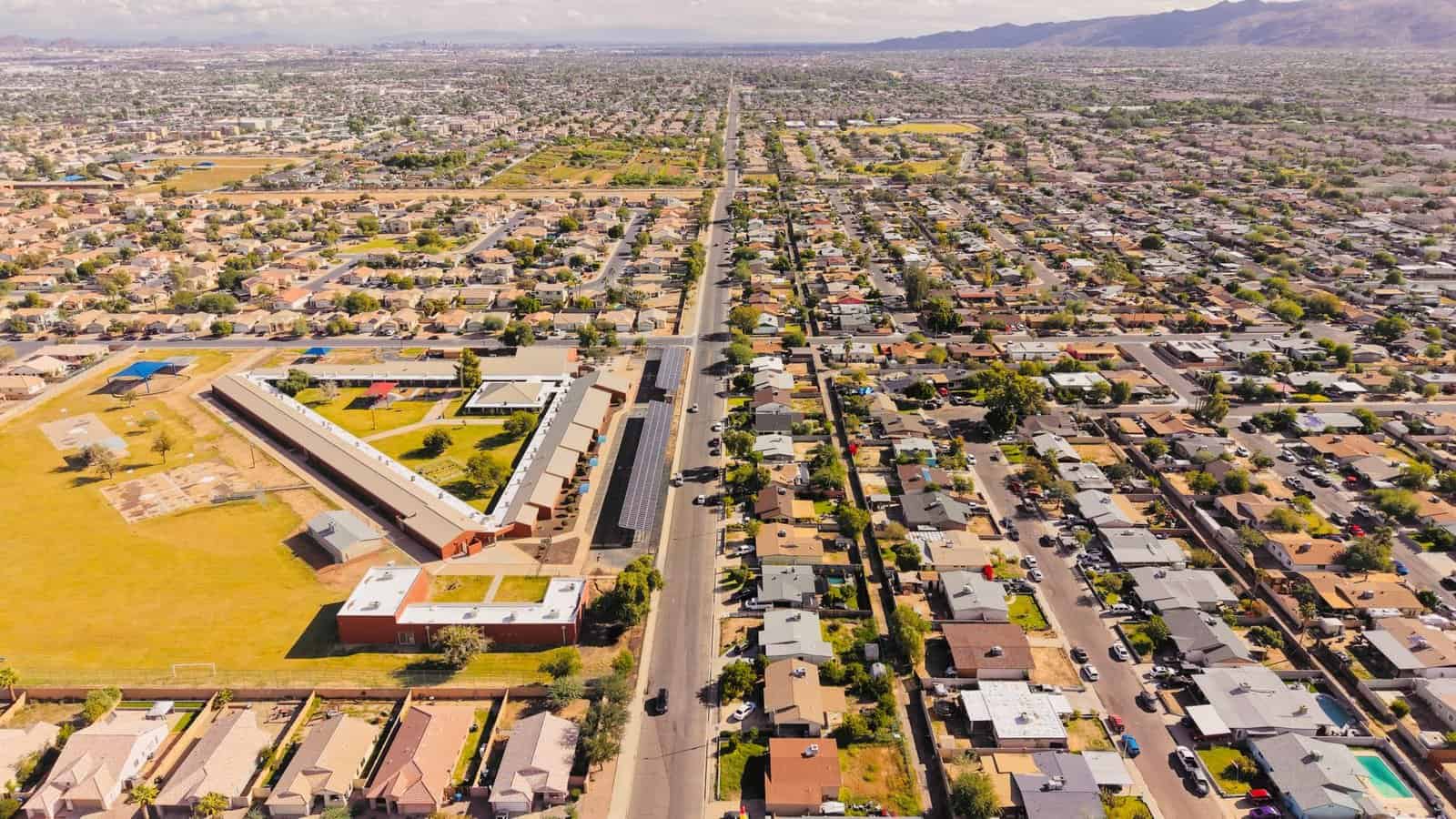
Here is what that combination looks like in practice. The city is still growing, but more slowly than its reputation suggests, and the growth is spreading to suburbs such as Buckeye, Surprise and Queen Creek. Water supply is tightening, so the region has moved to cut use per person, reuse more wastewater, restrict new development that relies on groundwater and prepare for deeper cuts to Colorado River deliveries.
For a visitor, the signs are everywhere: gravel yards instead of lawns, golf courses that use reclaimed water, restaurants that serve water only on request and a heat that makes outdoor planning serious. The city doesn’t feel like it is running out of water tomorrow. It feels like a place that has been planning for scarcity for decades.
The Real Numbers
It is worth getting the numbers right, because the headline versions often exaggerate. The 2020 census counted 1,608,139 residents in Phoenix. Census estimates for mid-2025 put the figure at about 1.665 million, an increase of roughly 3.6 percent, or about 57,000 people. Phoenix is the fifth-largest city in the country.
The picture is bigger at the metro level. Maricopa County, which includes Phoenix and its suburbs, has gained hundreds of thousands of residents since 2020 and is among the largest counties in the nation, with more than 4.5 million people. Suburbs on the edge of the valley are the fastest growing, because they have more open land and newer homes. The city of Phoenix, with 518 square miles of land, is largely built out in its core, so growth increasingly lands in the outer rim and in infill projects.
Where Phoenix Gets Its Water
The valley relies on three main sources:
- The Salt and Verde rivers, which collect mountain snowmelt and rain and are stored in reservoirs behind dams east of the city. This supply has been used since the early 1900s.
- The Colorado River, delivered through the Central Arizona Project canal, a 336-mile aqueduct that carries water from Lake Havasu to Phoenix and Tucson.
- Groundwater, which is pumped from aquifers and is regulated by a state law passed in 1980.
Phoenix gets a large share of its supply from the Salt and Verde system and a significant portion from the Colorado River, with groundwater as a backup. That mix matters, because it explains why the region has been able to absorb drought better than some communities that depend on a single source.
Why the Water Is Shrinking
The Colorado River has been in a long drought, driven by low snowpack, higher temperatures and over-allocation. The river was divided in 1922 based on a wet period that overestimated its typical flow. Lake Mead, the reservoir behind Hoover Dam, fell to record lows around 2022, and the federal government declared shortage conditions, which reduced Arizona’s deliveries from the river.
Arizona has the lowest priority among the lower-basin states for Central Arizona Project water, so it takes the first and largest cuts when shortages are declared. The operating rules for the river are set to expire at the end of 2026, and the seven states have been negotiating what comes next. Because that situation is changing, check current reports before making claims about how deep any cuts will be.
How the City Is Coping
Phoenix has taken a mix of steps:
- Conservation rules and price signals that cut per-person water use, so that total use has stayed roughly level even as the population has grown over the past few decades.
- A big wastewater reuse system that treats and recycles water for power plants, farms and some industrial uses.
- Underground storage, where surplus water is stored in aquifers for future use.
- Rebates for removing turf and installing desert landscaping.
- Rules that require developers to prove a 100-year supply under Arizona’s assured water supply program.
In 2023, the state announced limits on new subdivisions that rely on groundwater in parts of the Phoenix area, a notable change that could slow some outer-edge development. Debates continue over how to balance growth, agriculture and housing costs.
Who Uses the Water
A common surprise is that homes are not the main water users in Arizona. Agriculture, especially irrigated fields for crops such as alfalfa and cotton, accounts for the largest share of the state’s water use. Cities and suburbs use a smaller portion, and industry, including new data centers and semiconductor plants, is a growing piece. Debates about growth and water often come down to how to balance these uses.
Some farmland has been converted to housing, which can reduce water use per acre, since a typical household uses less water than the irrigated field it replaces. That is one reason planners argue growth can be consistent with water limits, though critics say the savings are not guaranteed.
The Groundwater Rules
Arizona’s 1980 Groundwater Management Act is one of the most significant water laws in the West. It created Active Management Areas, including one around Phoenix, with a goal of reaching a balance between how much groundwater is pumped and how much is replenished. It also required developers to show a 100-year supply before building. That law pushed the region to rely more on surface water and recycled water and to store water underground.
Critics note that the law has loopholes, especially in rural areas outside the management areas, where groundwater pumping for farms and homes has continued with fewer limits. Some rural wells have gone dry. In the metro area, though, the law helps explain why Phoenix has been able to keep growing.
The Heat Side of the Story
Heat compounds the water problem. Phoenix saw a stretch of 31 consecutive days at or above 110 degrees in the summer of 2023, a record, and heat-related deaths in Maricopa County topped 600 in 2023. The city has created an office of heat response and mitigation, planting trees, building shade structures and opening cooling centers.
For visitors, summer from June through September is hot. Daytime highs commonly exceed 105 degrees, and overnight lows often stay in the 80s. Many hikers are injured or die each year in extreme heat, and some trails close or restrict access on dangerous days. Plan outdoor activity for early morning or evening, carry more water than you think you need and respect trail closures.
What Visitors Notice
Watch for these clues of a city adapting:
- Landscaping with cacti, agave and gravel in place of lawns, often called xeriscaping.
- Misting systems on patios and shaded walkways.
- Reclaimed-water signs at golf courses and parks.
- Restaurants that serve water on request.
- Light-colored roofs and pavement that reflect heat.
- New canals and trails along the old Hohokam canal routes, which date back more than a thousand years.
The Hohokam were the region’s earlier irrigators, building hundreds of miles of canals in the valley between roughly 300 and 1450. Modern Phoenix follows many of those same routes, and the city’s name refers to a bird that rises from the ashes of an earlier civilization.
Planning a Trip
Seasons shape your options. From October through April, temperatures are mild, and resorts charge peak rates, commonly $250 to $500 or more a night. In summer, rates can fall to $80 to $200 at many hotels, and some resorts offer big discounts. If you travel in summer, limit outdoor activity and enjoy air-conditioned museums, pools and indoor attractions.
Good places to learn about the desert and water include:
- Desert Botanical Garden, which shows native plants and water-wise design.
- Heard Museum, covering the region’s Native cultures.
- Papago Park, with the Hole-in-the-Rock formation and trails.
- Tempe Town Lake, a dammed section of the Salt River bed used for kayaking and events.
- The Arizona Canal and Grand Canal paths, which show how the city’s water reaches homes.
What Growth Costs Beyond Water
Water is only one limit. Housing prices in the Phoenix area rose sharply after 2020, with the median home value in the city now above $400,000, according to Census survey data, and median gross rent near $1,600 a month. Roads are crowded, and the region’s freeway system carries heavy traffic. Electricity demand peaks in summer evenings, and utilities have invested heavily in solar and batteries to cope with air conditioning load.
There are also new pressures from industry. Large semiconductor plants, data centers and battery factories have been announced or built in the valley, and each uses water and power. City leaders say they are asking these companies to recycle water and meet strict standards, but the debates are real. The question for the next decade is whether the region can keep adding jobs and housing without outrunning its limits.
What Residents Say
Residents have mixed views. Some are proud of how the city manages water and see growth as a sign of success. Others worry about housing costs and about whether the region can keep adding people without cutting into the supply. Many people who have lived in Phoenix for decades point to the reduction in per-person water use as evidence that the city can adapt.
They also point out that the issues are shared. California, Nevada, Utah and other states draw on the same river, and the final decisions will be political as much as technical.
The Bottom Line
Phoenix added about 57,000 people between 2020 and 2025 while the water supply that serves it came under pressure. The result is a city that has planned for scarcity for decades, uses less water per person than in the past and faces a hard negotiation over the Colorado River. If you visit, go in the cooler months, respect the heat and notice how a desert city lives with limits.