Niagara Falls State Park Has Been Open Since 1885. 8 Reasons to See It After the Crowds Leave
We may earn money or products from the companies mentioned in this post. This means if you click on the link and purchase the item, I will receive a small commission at no extra cost to you ... you're just helping re-supply our family's travel fund.
Most of Niagara Falls State Park’s visitors come between June and August, and that is exactly why the late fall and winter months are such a good time to go. Niagara Falls State Park in winter has ice formations, nightly lights, open viewpoints, and a fraction of the summer lines.
The park has a strong claim on American history. Created in 1885, it is the oldest state park in the United States, according to the New York State Department of Environmental Conservation. The Library of Congress notes that it opened on July 15, 1885, as the 400-acre Niagara Reservation, the result of a movement to rescue the falls from the mills, hotels, and private gatekeepers who had built up around them. Today the governor’s office says it attracts more than 9 million visitors a year.
The founders wanted the falls free and open to everyone, year-round. That is still true, and winter is when that public access feels the most personal.
8 Reasons to See Niagara Falls State Park After the Crowds Leave
These are concrete reasons to go between November and March, along with what to expect at each spot.
1. You Will Have the Railings Almost to Yourself
In July, the walkways at Prospect Point are several people deep, and the Cave of the Winds line can stretch for an hour or more. In late fall and winter, you can walk right up to the railing beside the American Falls. On a weekday in January, you may share Terrapin Point with only a handful of people. The falls are just as loud and just as large; the difference is that you can stand and look without being pushed along.
2. The Ice Formations Are Something You Cannot See in Summer
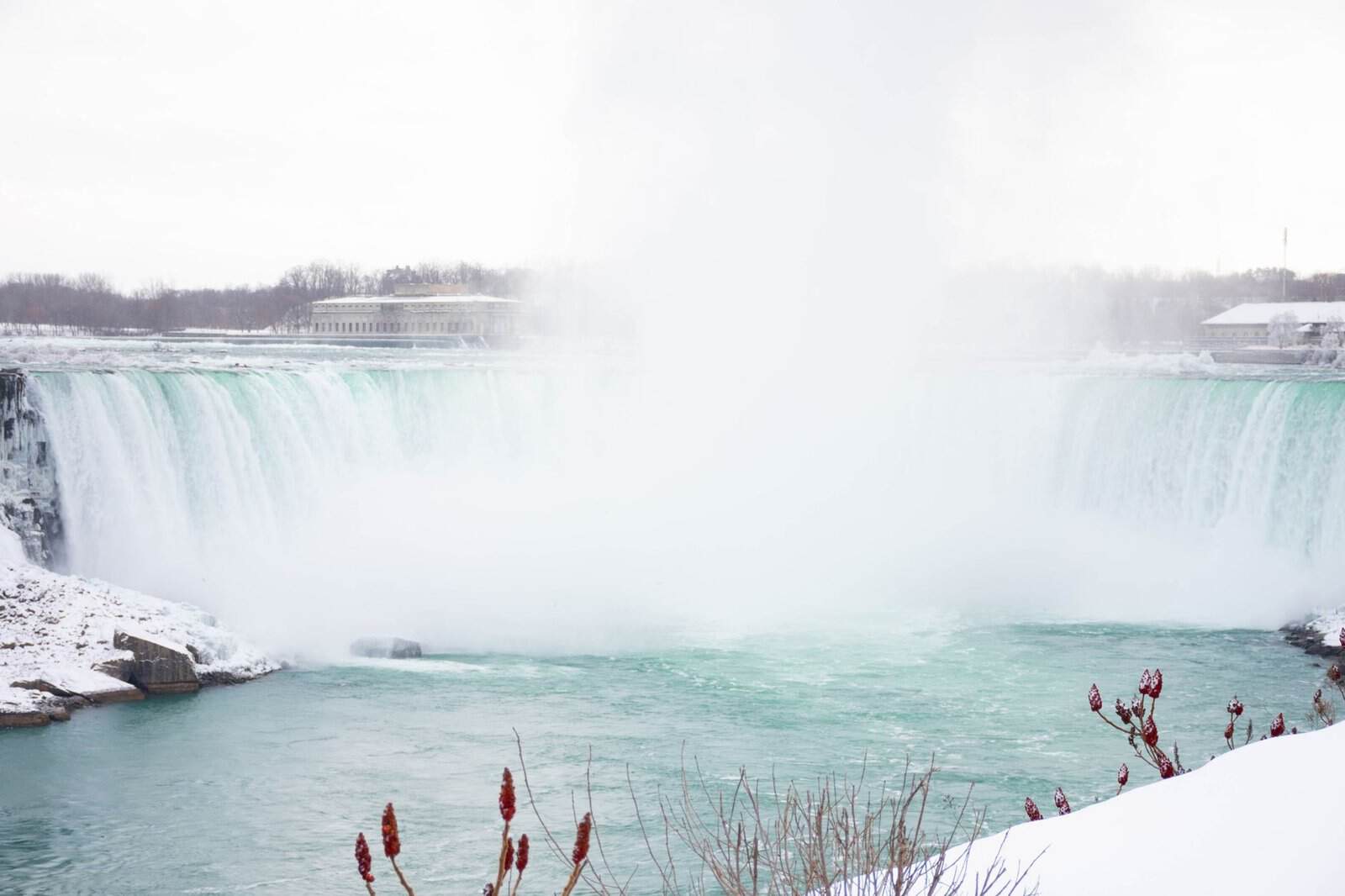
When temperatures drop, the mist from the falls freezes on everything it touches. Trees, railings, lamp posts, and rocks near the brink become coated in thick white ice. In very cold winters, ice builds up in the river below the falls and along the gorge walls. Parts of the American Falls can look partly frozen, though water keeps flowing behind the ice. This is the scene that shows up in viral photos every winter, and you can only see it in person between roughly December and March.
Do not walk on the ice in the river. Walking on the ice bridge below the falls was banned after three people died when the ice broke up in 1912.
3. Cave of the Winds Stays Open Year-Round
Many people assume everything closes in winter. Cave of the Winds does not. The park’s attraction page says it is open year-round, with a schedule that for late 2026 shows 9 a.m. openings and last tickets around 4 p.m. on most days, plus closures on Thanksgiving, Christmas Day, and New Year’s Day. In winter, the experience is different from summer: the wooden Hurricane Deck that sits in the spray of Bridal Veil Falls is removed for the season, and visitors see the falls from the lower viewing area. It is still a close, loud, wet look at the falls, without the summer wait.
4. The Observation Tower Is Open Every Day
The Niagara Falls Observation Tower at Prospect Point is the only American-side observation platform that is open 365 days a year, according to visitor guides. The tower extends out over the edge of the gorge and gives a straight-on view of the American and Horseshoe Falls. In winter, it is one of the best places to see ice building on the gorge walls. The elevator that runs down to the Maid of the Mist dock in summer is part of the same structure.
5. Goat Island and Terrapin Point Give You the Horseshoe Falls
Goat Island sits between the American Falls and the Horseshoe Falls, and you can drive or walk onto it year-round. Terrapin Point, at the western edge of the island, puts you right beside the Horseshoe Falls, the largest of the three falls. In winter, the mist rises off the Horseshoe Falls like steam, and the trees around the point freeze white. Wear boots with good tread, because walkways can be icy even after crews clear them.
6. The Falls Are Lit Every Night
The falls are illuminated with colored lights every night of the year, not just in summer. In winter, the lights come on early because it gets dark before 5 p.m., which means you can see the illumination without staying out late. The colored light on rising mist and ice is one of the most beautiful sights at Niagara, and it is free to watch from Prospect Point or Goat Island.
7. The New Welcome Center Makes Winter Visits Easier
New York has been investing in the park. The governor’s office recently celebrated the opening of the Ralph C. Wilson Jr. Welcome Center at Niagara Falls State Park, along with other park improvements. A modern indoor center matters most in winter, when you need a warm place to regroup, get directions, and use restrooms between viewpoints.
8. Hotels and Parking Cost Less
Hotels in Niagara Falls, New York, often charge a fraction of their summer rates between November and March. A room that runs $250 or more on a July weekend can drop below $120 on a winter weekday. Restaurants are easier to get into, and parking near the park is easier to find. Check the park’s current parking rates, which change by season.
What Is Closed After the Season
Not everything is open in winter. Plan around these closures:
- Maid of the Mist: The boat tour that sails to the base of the falls runs only in the warmer months, typically from spring to early November. It does not operate in winter.
- Hurricane Deck at Cave of the Winds: Removed for winter, as noted above.
- Some trails: Parts of the Niagara Gorge trails and stairs can close because of ice and rockfall danger. Check with the park before hiking.
- Trolley service: The seasonal park trolley may not run in winter. Plan to walk or drive between points.
How to Plan Niagara Falls State Park in Winter
Niagara Falls is about 20 miles from downtown Buffalo, and the park is easy to see in a day.
- Morning: Start at Prospect Point and the Observation Tower while the light is soft.
- Midday: Visit Cave of the Winds, then drive or walk onto Goat Island.
- Afternoon: Walk to Terrapin Point for the Horseshoe Falls. Warm up at the welcome center.
- Evening: Return to Prospect Point or Goat Island for the illumination after dark.
What to Wear
Winter at Niagara is cold and wet. The spray freezes on clothing, and wind off the river is strong.
- A waterproof outer layer: The mist soaks you even in winter.
- Insulated, waterproof boots with tread: Walkways ice over.
- Traction cleats: Slip-on cleats help on icy paths.
- Warm gloves and a hat: Wet gloves freeze fast. Pack a spare pair.
- A phone case or bag: Spray can damage cameras. Wipe lenses often.
The Canadian Side
Many visitors cross the Rainbow Bridge to Niagara Falls, Ontario, for a head-on view of the Horseshoe Falls. You will need a passport or other approved travel document to cross the border. The Canadian side has more hotels and attractions, but the New York side’s state park is where you get closest to the water itself, and it is where the idea of a free public park at the falls began.
Photography Tips for Winter at the Falls
Winter is the best season for dramatic photos at Niagara, but cold and spray make it tricky.
- Shoot early or late: Low sun lights up the mist and ice. Midday light is flatter.
- Protect your lens: Spray freezes on glass. Keep a microfiber cloth in an inside pocket and wipe often.
- Keep batteries warm: Cold drains phone and camera batteries fast. Carry spares in an inside pocket close to your body.
- Use the illumination: After dark, the colored lights on the falls give you a very different shot. A small tripod helps, but check rules for tripods in crowded areas.
- Watch your footing: Do not climb barriers or step onto ice for a better angle. Every year, people are hurt doing this.
How Long to Spend
Most winter visitors spend between half a day and a full day in the park. If you only have a few hours, prioritize Prospect Point, the Observation Tower, and Terrapin Point. If you have a full day, add Cave of the Winds, a slow walk around Goat Island, and the evening illumination. Add a second day if you want to cross to the Canadian side.
The Bottom Line
Niagara Falls State Park was created in 1885 so that anyone could stand at the edge of the falls without paying a private landowner. In summer, that open access comes with crowds and long lines. In late fall and winter, you get the ice, the nightly lights, and the railing to yourself, which is about as close to the founders’ vision as you can get.