Multigenerational Family Vacations Sound Like a Beautiful Idea Right Up Until They’re Not
We may earn money or products from the companies mentioned in this post. This means if you click on the link and purchase the item, I will receive a small commission at no extra cost to you ... you're just helping re-supply our family's travel fund.
This article contains affiliate links. If you book or buy something through our links, we may earn a small commission at no extra cost to you.
Someone — usually a grandparent with a timeshare or a family matriarch who has been reading about beach destinations — had the idea. Everyone said yes. It sounded, in the abstract, wonderful: three or four generations, all together, somewhere beautiful, making memories.
Then came the group chat.
Multigenerational family vacations are one of the most emotionally complex travel formats that exists, precisely because they combine the logistical difficulty of coordinating many people with the emotional weight of family history. The trip is never just a trip. It is a referendum on every dynamic in the family, conducted in a condo, at a dinner table, and in a minivan on the way to an aquarium.
Why Everyone Agreed to This in the First Place

The impulse behind multigenerational travel is real and often moving. Grandparents see the grandchildren growing up with frightening speed. Parents are aware of aging parents and the narrowing window of physical capability. Adult siblings live in different cities and see each other rarely. The trip is a container for all the connection that ordinary life doesn’t provide enough of.
For grandparents who are funding the trip — as is common — there’s often an explicit or implicit desire to create something lasting: a shared memory, a tradition, proof of the family’s coherence. The investment is emotional as much as financial.
For parents, there’s usually a mix of genuine desire to spend time together and a layer of obligation: this matters to their parents, and what matters to their parents matters to them. For children, depending on age, the range runs from excited to resistant.
The problem is that these different motivations produce different expectations about what the trip should deliver — and those expectations are almost never discussed before departure.
The Scheduling Problem Nobody Thought Through

A multigenerational vacation involves people whose internal clocks, energy levels, and optimal activity windows are often completely misaligned.
The grandparents are up at 6 a.m., have eaten breakfast before anyone else is awake, and are ready for an organized activity by 9. By 2 p.m., they need a rest. By 9 p.m., they are in bed.
The school-age children run on chaotic energy without a fixed schedule and are capable of going until 10 p.m., but require specific food at specific intervals or they destabilize.
The teenagers sleep until noon and come alive around 11 p.m.
The parents are running on a deficit of both sleep and decision-making capacity, trying to mediate between all of the above while also managing their own need for a vacation that feels like an actual vacation and not a project they’re managing.
“We got to the rental house on Saturday night,” said one mother who took a multigenerational trip to the South Carolina coast. “By Sunday morning, my in-laws had already decided we were doing a dolphin tour at 8 a.m. on Tuesday. My kids were upset about the dolphin tour until the dolphin tour happened, at which point they loved it. But Tuesday morning was a disaster.”
Three Generations, Three Completely Different Vacations

The vacation that grandparents want is often a slow, structured, memory-making experience: shared meals, family photos in matching colors, planned activities with everyone present, evenings on the porch.
The vacation parents with young children need is a managed respite: some help with the kids, a few hours of actual relaxation, no logistical crises.
The vacation teenagers want, if they’re being honest, involves their phones, some degree of freedom from family programming, and possibly a pool they can use without being photographed.
These are not incompatible, exactly. But they require active management and negotiation — which most families do not do explicitly, and instead do implicitly, through conflict.
The families who report the most successful multigenerational trips are often the ones who built in deliberate unstructured time alongside the organized activities. Not every meal together. Not every excursion together. Some structured shared time and some freedom for each generation to experience the trip on its own terms.
The Money Issue That Everyone Pretends Isn’t the Real Issue

Multigenerational trips are often funded asymmetrically, and the financial structure of the trip carries emotional weight that rarely gets acknowledged directly.
When grandparents pay for the accommodation, they also often feel entitled to the itinerary — a feeling that may or may not be expressed clearly, but which parents feel as a kind of invisible agenda. When parents contribute but are the lower earners in the group, they may feel constrained in their ability to push back on plans that don’t work for their children. When multiple adult siblings are splitting costs, the equity conversation (one sibling has more money, one has more children) is almost never resolved to everyone’s satisfaction.
“My mother-in-law paid for the house,” said one father who had taken three multigenerational trips with his wife’s family. “Which meant her preferences governed everything. I don’t blame her — she was generous. But it meant my wife and I spent the whole week managing her agenda and couldn’t really relax.”
The trips that work best tend to be ones where the financial contribution and the decision-making authority are either proportional to each other or explicitly separated — someone pays, but everyone has an equal voice in planning.
When Grandma’s Back Becomes the Trip’s Logistics Problem

Physical capability gaps are one of the most practically difficult aspects of multigenerational travel. A grandparent with limited mobility, chronic pain, or health management requirements creates constraints that cascade through the entire trip’s design.
This is not a complaint. It is a logistical reality. The rental house needs to be accessible. The restaurant needs to have seating that accommodates a bad hip. The excursion that involves a long walk may not be viable. The beach access, which looked fine in the photos, involves a sand path that isn’t navigable with a cane.
Families who plan trips around the most physically limited member often end up in destinations and accommodations that work for nobody optimally — too sedentary for the children, not interesting enough for the teenagers, not relaxing enough for the middle generation. Families who don’t plan around the physical limits end up watching a grandparent struggle through an itinerary that wasn’t designed for them.
The trips that handle this well usually involve a deliberate planning conversation about physical needs before any accommodation is booked — which requires talking honestly about aging, which most American families resist until they’re forced to.
What the Teenagers Are Doing (Hint: Not Family Activities)

Teenagers on multigenerational trips are in a particular kind of purgatory. They are old enough to be aware of the trip’s emotional stakes — the grandparents are aging, this matters, they should be present — and young enough to have strong impulses toward disconnection, autonomy, and their peer group.
The result is a teenager who is physically present and emotionally elsewhere, which grandparents experience as a loss, which parents experience as a failure, and which the teenager experiences as being asked to perform a feeling they’re not quite able to produce on demand.
“My son is fifteen,” said one mother. “He loves his grandparents. He just doesn’t know how to be with them for seven straight days. Neither does anyone, honestly. But because he’s fifteen, he’s the one who gets called out for it.”
Families who build specific one-on-one time between grandparent and grandchild — an afternoon activity chosen by the grandchild, a shared dinner, a specific conversation — often report more authentic connection than the group activities produce. The teenager who sulked through the dolphin tour may be the one who stayed up until midnight talking to their grandfather on the last night.
The Nights: When Everything Either Works or Falls Apart
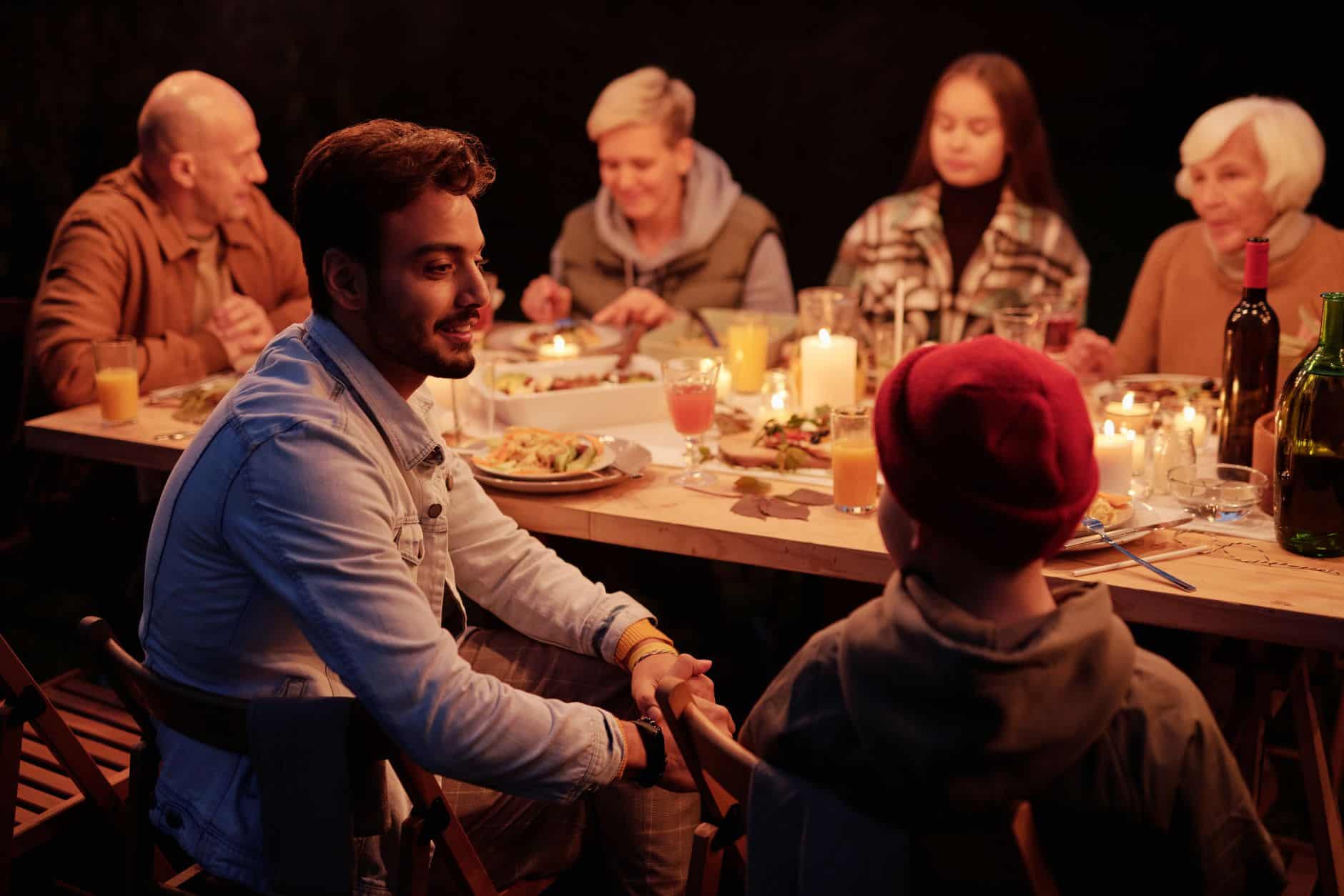
Evening is where the multigenerational vacation either pays off or detonates. Dinner together, especially after a full day of managed logistics and generational friction, carries enormous emotional charge.
At its best: everyone is sunburned and tired, a grandparent tells a story nobody’s heard before, a child says something unexpectedly funny, and for an hour the family is exactly the thing the grandparent who booked the trip imagined it would be.
At its worst: a parenting choice is relitigated by a grandparent in front of the children, an old sibling rivalry surfaces over who ordered what, the toddler who needed a nap four hours ago dissolves completely, and everyone retreats to their rooms with the unspoken agreement that dinner was a mistake.
Both of these outcomes happen on the same trip, sometimes on the same day.
What Actually Makes It Worth It
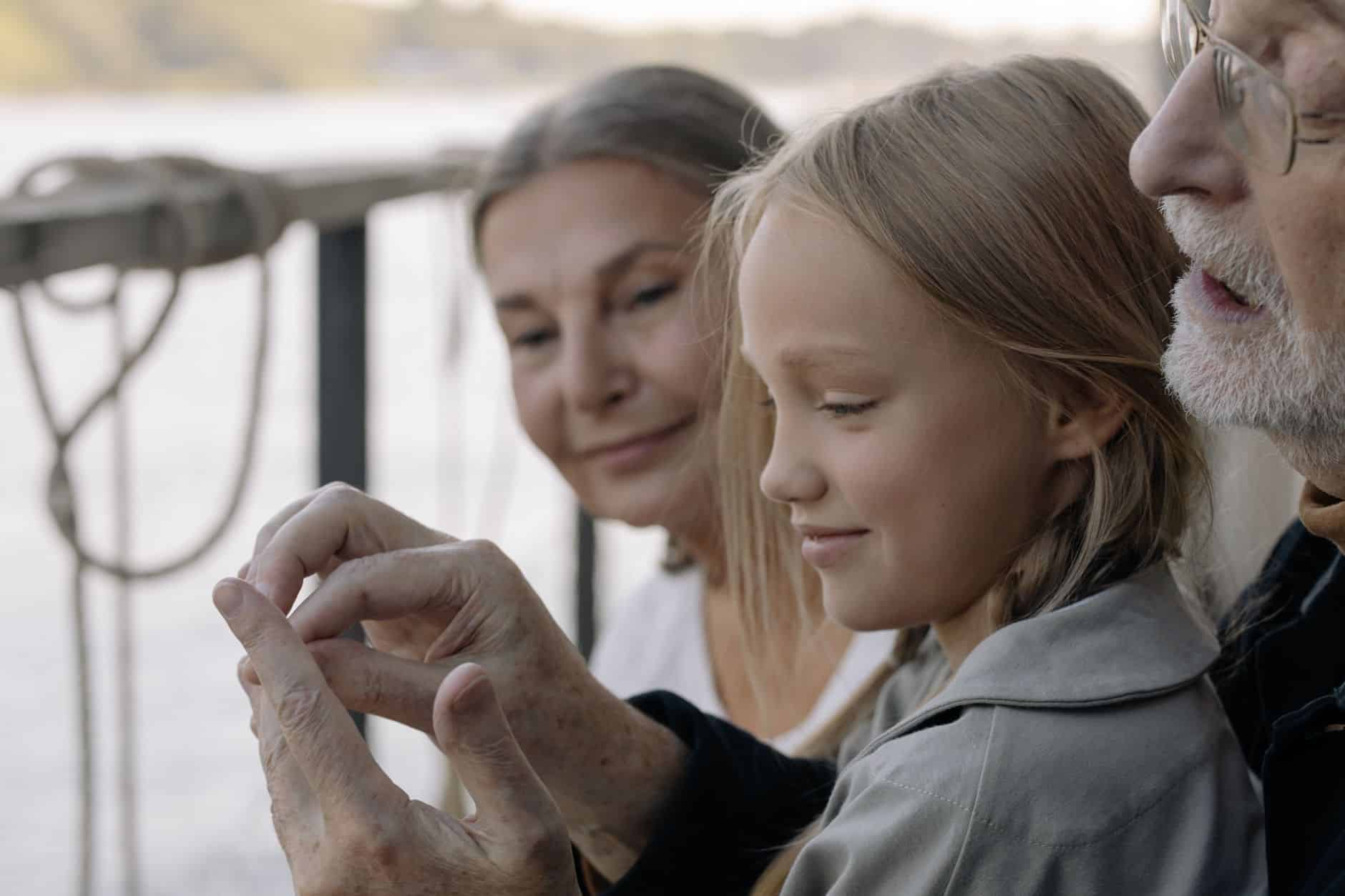
People who have taken multigenerational trips rarely say they regret them, even when they were difficult. What they remember, almost universally, is not the itinerary.
They remember a grandparent in the water with a grandchild for the first time. An aunt who lives across the country making breakfast for everyone. A photograph from the last night of a trip that, in hindsight, was the last time everyone was together before something changed — a move, a diagnosis, a loss.
The value of the multigenerational trip is not always visible during the trip itself. It’s often visible later, in the rearview mirror. The friction and the scheduling and the money conversations and the teenager with the phone — all of that is real. But so is the other thing, the harder-to-name thing, the reason someone always ends up booking the next one.
The families who enjoy these trips most tend to be the ones who go in with low expectations for seamlessness and high tolerance for mess. They’re not trying to produce a perfect family portrait. They’re just trying to be in the same place at the same time, for a little while, before the window closes.