The Most Underrated Road Trip in America Has Nothing to Do With Route 66
We may earn money or products from the companies mentioned in this post. This means if you click on the link and purchase the item, I will receive a small commission at no extra cost to you ... you're just helping re-supply our family's travel fund.
I’ve driven Route 66. I’ve done the Corvette museum in Bowling Green. I’ve stopped at the Cadillac Ranch in Amarillo. I’ve eaten at the Blue Swallow Motel diner in Tucumcari. It’s a perfectly fine American road trip, and I will never do it again if I can help it.
Between the commercial sprawl, the traffic, the I-40 segments that replace the original road, and the feeling that everyone around you is performing the same curated nostalgia pilgrimage, Route 66 has become its own kind of theme park. The romance is real. The reality is more crowded and more commercial than the mythology suggests.
Meanwhile, the Natchez Trace Parkway sits 444 miles long between Nashville, Tennessee and Natchez, Mississippi — a federally protected, two-lane road with no commercial traffic, no billboards, no stoplights, and some of the most consistently beautiful scenery in the American South. And almost nobody knows about it.
Why Route 66 Is Overrated (Sorry)
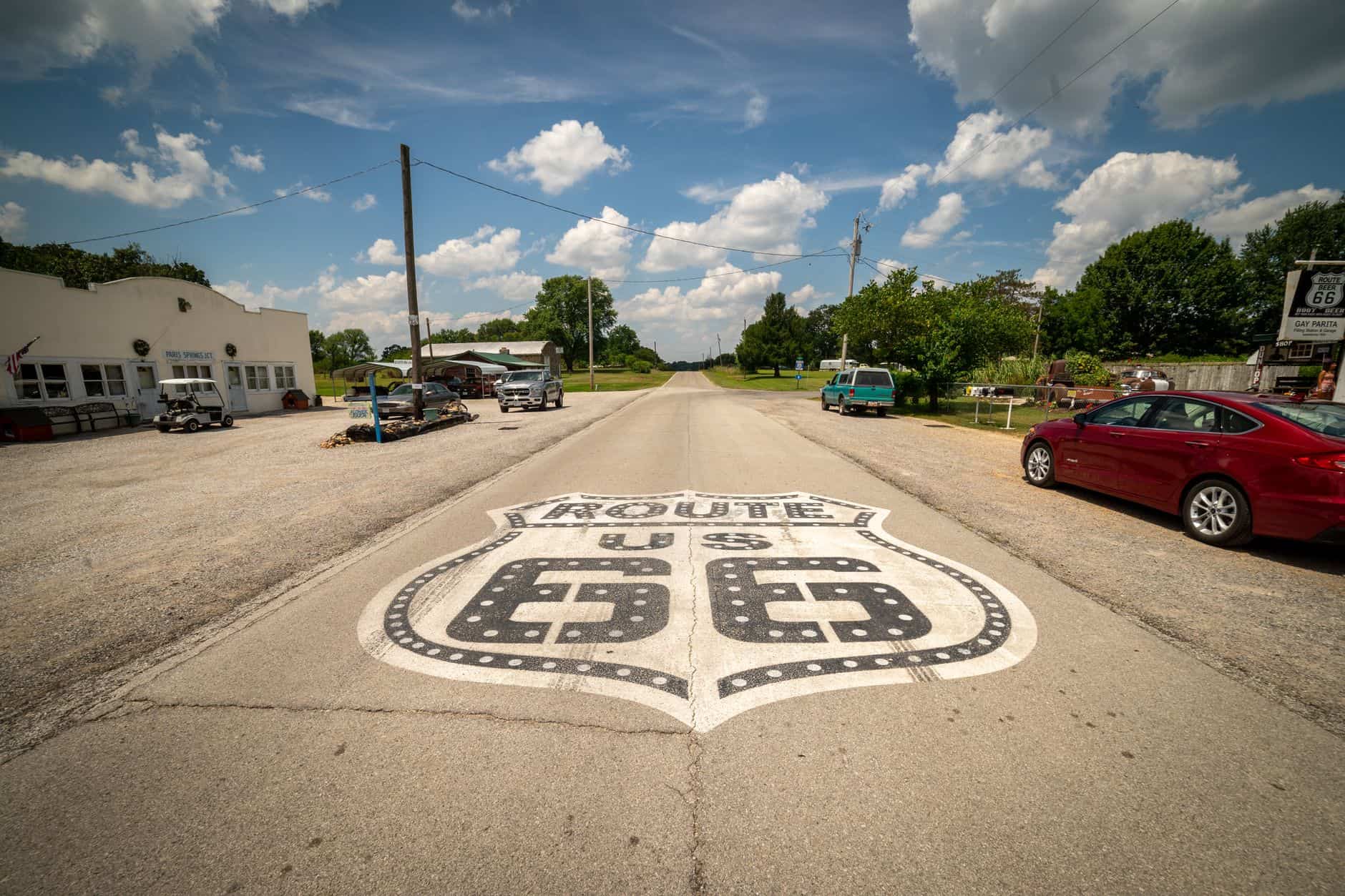
Route 66’s problem is the victim of its own mythology:
- Only about 80% of the original route still exists — long segments have been replaced by I-40
- The “vintage” attractions along the route are largely maintained as tourist infrastructure, not living pieces of American culture
- Peak summer means RV traffic, packed motels, and the sense that you’re in a highly curated version of the past rather than discovering something genuine
- The driving itself is frequently through landscapes that are difficult to call beautiful
None of this means you shouldn’t do it — it’s a legitimate piece of American travel history. But it shouldn’t be the default answer to “great American road trip” when alternatives this good exist.
What the Natchez Trace Actually Is
The Natchez Trace Parkway follows the path of one of the oldest roads in North America. For thousands of years before European contact, Indigenous peoples used the trace as a trade and travel corridor between what is now Nashville and the Mississippi River. European settlers, boatmen floating goods down the Ohio and Mississippi rivers, and soldiers all used it in the 18th and 19th centuries.
The National Park Service now manages the entire 444-mile route as a protected parkway. What that means in practice:
- No commercial vehicles allowed — no semi-trucks, no RV caravans you can’t pass
- No billboards, no commercial development visible from the road
- A 50 mph speed limit throughout — you’re encouraged to actually look at what you’re driving through
- Hundreds of pull-offs, historic markers, short hiking trails, and picnic areas maintained by the NPS
- Free to drive — no entry fee
The landscape transitions from Tennessee’s cedar glades and rolling hills, through Alabama’s river bottomlands, to Mississippi’s pine forests and antebellum South — and it does it continuously, without a single gas station or billboard interrupting the view.
The Route: Nashville to Natchez in Five Days

The Trace runs from milepost 444 near Nashville to milepost 0 in Natchez, Mississippi. Here’s a five-day itinerary that hits the best of it without rushing:
- Day 1 — Nashville to Franklin (30 miles): Start late. Explore the northern end of the Trace, stop at the Gordon House (one of only two original structures on the Trace), and spend the night in Franklin, Tennessee — one of the best small towns in the South, with a Civil War battlefield, excellent restaurants, and walkable downtown.
- Day 2 — Franklin to Florence, Alabama (200 miles): Long driving day through the best Tennessee scenery. Stop at the Meriwether Lewis Monument (Lewis died here under still-disputed circumstances in 1809), the Tennessee Valley Divide overlook, and Colbert Ferry. Stay in Florence, Alabama — underrated, charming, home to W.C. Handy, the father of the blues.
- Day 3 — Florence to Tupelo (80 miles): Short day, but pack it. Tupelo is Elvis Presley’s birthplace — the house where he was born is genuinely moving in its smallness and simplicity. The Tupelo National Battlefield covers a key Civil War engagement. Stay in Tupelo and eat well.
- Day 4 — Tupelo to Jackson (180 miles): The Mississippi section is the most lush and least-trafficked. Stop at the Pharr Mounds (2,000-year-old Native American burial mounds visible directly from the Trace), the Jeff Busby site for the only gas station on the Trace, and the French Camp historic area.
- Day 5 — Jackson to Natchez (80 miles): The final stretch through Mississippi’s hill country ends at Natchez — an antebellum city on the bluffs above the Mississippi River with more pre-Civil War mansions than anywhere in the country and a genuinely fascinating, complicated history worth at least two days of exploration.
The Stops That Make It Worth It
- Meriwether Lewis Site (Milepost 385.9) Lewis died here in 1809 — likely murdered, though official accounts said suicide. The monument and inn ruins are haunting. You’ll have it almost to yourself.
- Pharr Mounds (Milepost 286.7) Eight burial mounds built between 100 and 200 CE by the Middle Woodland people. They’re enormous, directly accessible, and have none of the visitor center infrastructure (or crowds) that similar sites attract elsewhere.
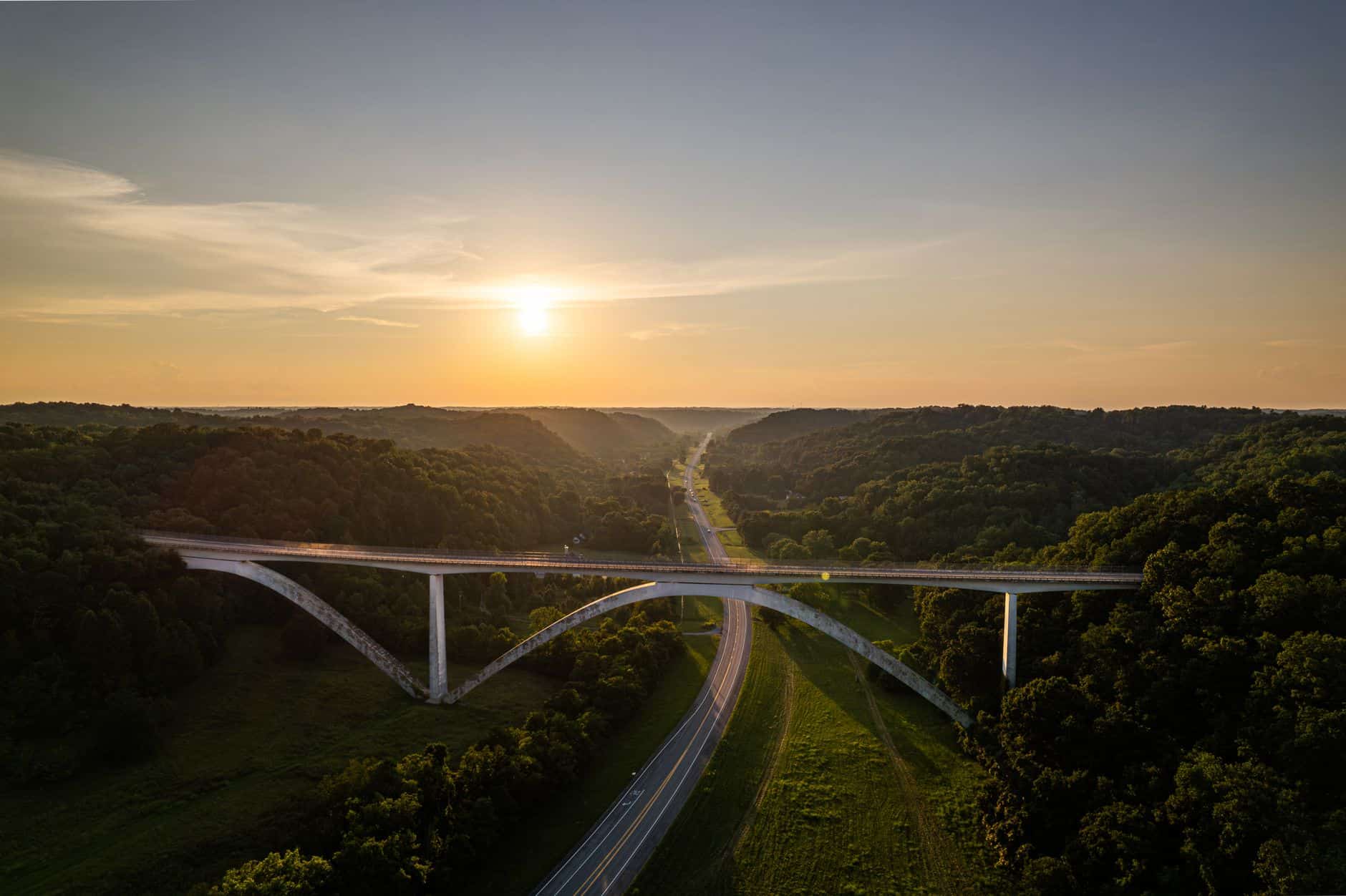
- The Double Arch Bridge (Milepost 438) Near the Nashville end, one of the most photographed sections — two bridges arching over a forested valley in a way that looks like concept art. It looks best in fall color or early spring green.
- Emerald Mound (Milepost 10.3) The second-largest pre-Columbian mound in the United States. It’s massive, well-preserved, and most people drive past the sign without stopping. Walk up it. The scale becomes clear at the top.
What to Know Before You Go

- Gas stations are scarce. There’s literally one on the entire Trace (Jeff Busby, near milepost 193). Plan accordingly — fill up before getting on the parkway at each town stop.
- Cell service is intermittent. Download offline maps before you go. This is a feature, not a bug, for many people.
- The speed limit is 50 mph the entire way. Don’t plan on making fast time — it’s not that kind of road. Budget roughly one hour per 40 miles of Trace.
- Camping is available at three developed campgrounds along the route and at numerous primitive sites — all free with no reservation required.
- Best seasons: Spring (April–May) and Fall (October–November). Summer is hot and humid; winter is fine but lacks the dramatic foliage.
Other Underrated Road Trips Worth Mentioning
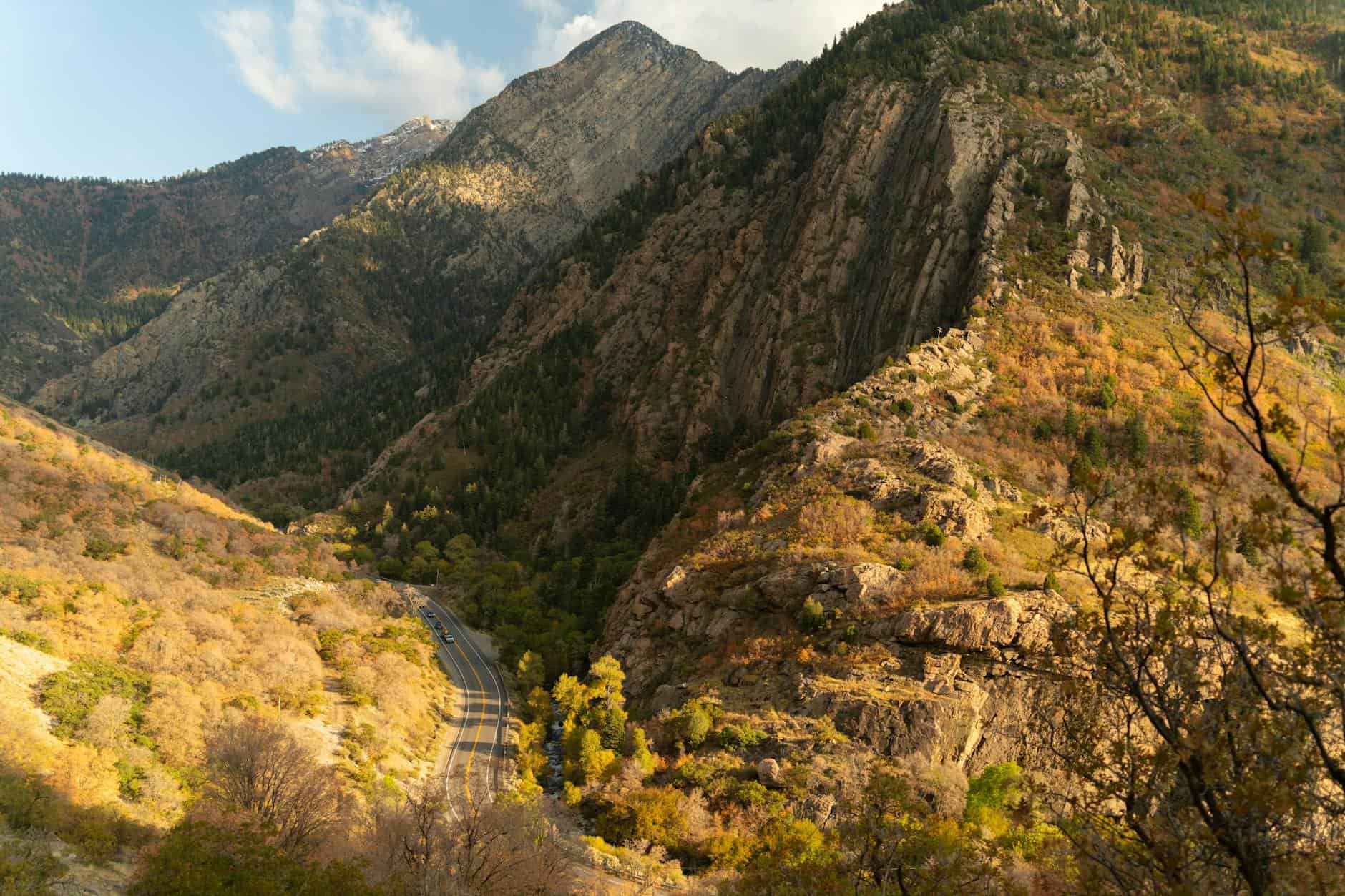
If the Trace isn’t your geography, here are others that deserve more traffic than they get:
- The Loneliest Road in America (US-50 across Nevada): Genuinely desolate, genuinely beautiful, genuinely lonely — the stretch between Reno and Ely crosses five mountain ranges and passes through towns that look unchanged from 1975.
- The Great River Road (Mississippi River corridor): US Route 61 from Minnesota to Louisiana follows the river through a landscape of bluffs, river towns, and Delta blues history that’s as American as anything Route 66 offers.
- Highway 1 through the Oregon Coast: Everyone knows Big Sur. Almost nobody talks about the Oregon coast, which is just as dramatic, far less crowded, and passes through towns that haven’t been completely consumed by tourism infrastructure.
The Natchez Trace will not give you vintage neon signs and kitschy roadside attractions. It will give you 444 miles of quiet, history-soaked American landscape with almost nobody else on it. In a world of crowded bucket lists, that’s increasingly rare.