More Than 10,000 Sandhill Cranes Winter at One Tennessee Refuge. Here’s How to See Them Without Getting Turned Away
We may earn money or products from the companies mentioned in this post. This means if you click on the link and purchase the item, I will receive a small commission at no extra cost to you ... you're just helping re-supply our family's travel fund.
Every winter, more than 10,000 sandhill cranes settle on and around the Hiwassee Refuge sandhill cranes habitat where the Hiwassee River meets the Tennessee River near Birchwood, Tennessee. The Tennessee Wildlife Resources Agency puts the wintering count at over ten thousand birds, and in strong years far more pass through. The catch is that most of the refuge is off-limits during the exact months the birds are thickest.
Here is the short answer: you watch from the observation platform on Priddy Road, not from inside the refuge. The refuge closes to entry from November 15 through the end of February, but the platform stays open in daylight all year and looks straight out over the fields and shallows where the cranes feed and roost. Go early in the morning or late in the afternoon, bring binoculars, and aim for December through early January, when numbers typically run highest.
That is the whole trick. The rest of this guide covers timing, what to bring, and how to make the drive worth it.
How to See Them Without Getting Turned Away
People get turned away at Hiwassee for one reason: they drive past the platform looking for a refuge entrance, find a closed gate, and assume the birds are not viewable. The refuge closure exists because the cranes, ducks, and geese need undisturbed resting and feeding ground through the coldest months. TWRA has managed the land for waterfowl for decades, and the closure is part of why the birds keep coming back.
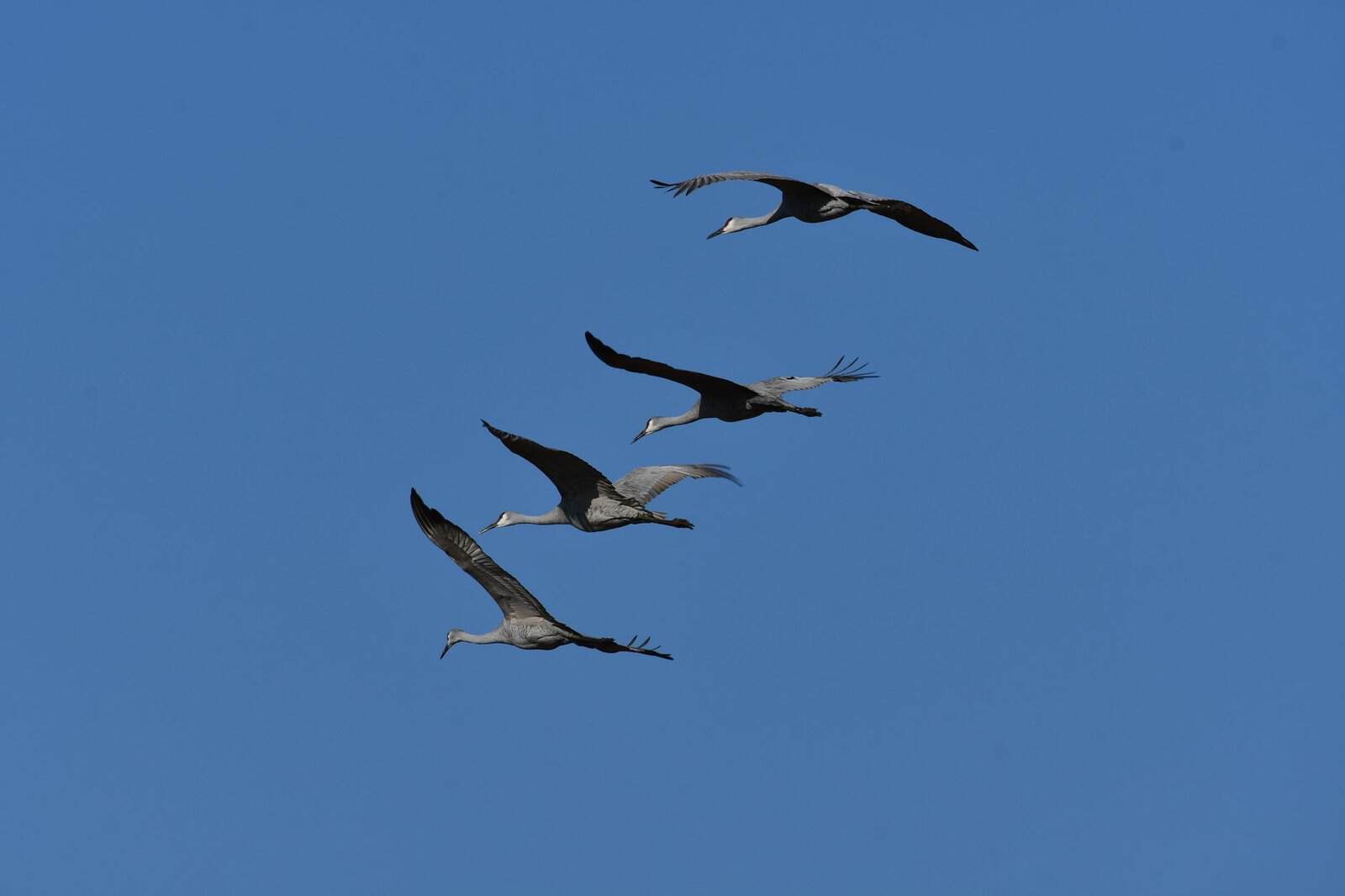
The viewing platform sits on the north side of the Hiwassee River on Priddy Road in Birchwood, in Meigs County. It is a raised, covered structure built for exactly this purpose. From it you get a wide view across farmland, mudflats, and the river edge. On a good morning you will see long gray lines of birds drifting in from roost sites on the water, then dropping into the fields with their legs dangling.
A few practical rules keep the visit smooth:
- Stay on the platform and public road. Walking into posted refuge land during the closure can earn a citation.
- Park only in the designated lot. Shoulders on rural roads in Meigs County are narrow and soft.
- Keep voices low. Cranes flush easily when people crowd the rail or wave arms.
- Leave drones at home. Flying over wildlife on state refuges is not allowed and scatters the birds.
If you follow those four points, you can stand in one spot for an hour and watch thousands of cranes come and go.
When Hiwassee Refuge Sandhill Cranes Are Easiest to Spot
Cranes start arriving in late October. Through November, numbers build week by week as birds from the Great Lakes region and Canada move south along the Tennessee River corridor. TWRA notes fall migration in Tennessee runs from late October to late December, with spring migration from mid-February through late March.
Peak numbers usually land in December and early January. That is why TWRA schedules the Tennessee Sandhill Crane Festival in mid-January, when birders arrive by the busload and free shuttles run from Birchwood School. If you want the full spectacle with fewer people, a weekday in December is the sweet spot.
Time of day matters more than the calendar. Cranes roost in shallow water overnight for protection. At sunrise they lift off in waves and fly to feeding fields. In the last hour before sunset they fly back. Those two windows are when you see the most movement and hear the most calling. Midday can be quiet, with birds spread out and feeding with their heads down.
Weather plays a role too. A cold, clear morning after a front often brings sharp light and active birds. Fog along the river can hide everything until mid-morning, so check conditions before you leave.
What You Will Actually See and Hear
Sandhill cranes are big. Adults stand roughly four feet tall with wingspans past six feet. They are gray with a red patch of bare skin on the crown and a white cheek. In flight, their necks stretch straight out, which separates them from herons that tuck their necks in an S curve.
The sound is the part people talk about afterward. Cranes call with a rolling, rattling bugle that carries for a mile or more. When a few thousand birds call at once, it sounds almost mechanical, like a wooden ratchet turned by a crowd. Many first-time visitors hear the birds before they see them.
You may also catch the dance. Cranes bow, jump, flap, and toss bits of grass into the air. It is associated with courtship, but pairs do it year-round to strengthen their bond. Watch for it along the edges of a feeding flock.
Other birds share the space. Ducks and Canada geese raft on the water. Bald eagles hunt the shoreline. In some winters, a few endangered whooping cranes from the reintroduced eastern population mix in with the sandhills. They are white with black wingtips and stand taller. TWRA and local birders treat any whooping crane sighting as a big deal, so if you spot one, keep your distance and enjoy it.
Why So Many Cranes Stop Here
The Hiwassee story is a recovery story. TWRA records the first sandhill cranes at the refuge in 1968, when about 20 birds stopped to rest. Through the 1990s, the eastern population rebounded and more birds began stopping here on the way to Georgia and Florida. Over time, a large share started skipping the rest of the trip and spending the entire winter in southeast Tennessee.
The reasons are practical. The refuge offers shallow water for safe roosting, planted grain fields for food, and protection from disturbance. TWRA plants crops for wildlife, and surrounding farm fields add more feeding ground. Milder winters in recent decades have also made a northern wintering site workable.
The eastern population of sandhill cranes has grown from near collapse in the early twentieth century to tens of thousands of birds. TWRA describes it as the second-largest sandhill crane population in North America. Hiwassee is one of the main places where you can see a large share of it in one view.
What to Bring for a Winter Morning on the Platform
The platform is covered, but it is not heated, and river wind cuts through jeans fast. Pack the way you would for a cold football game.
- Binoculars. Even a basic 8×42 pair turns gray dots into birds with red crowns.
- A spotting scope if you own one. The far fields are a long way out.
- Layers, a hat, and gloves. Early January mornings in Meigs County can sit near freezing.
- A thermos of coffee or cocoa. There is nowhere to buy a hot drink at the platform.
- A camera with a long lens. Phone cameras struggle at this distance, but a phone held to binoculars can work in a pinch.
- A field guide or birding app to sort out ducks, eagles, and the occasional whooping crane.
Restroom access at the site is limited, so plan stops in Dayton, Decatur, or Cleveland before you head down the rural roads.
Pairing the Cranes With the Cherokee Removal Memorial
Right beside the crane viewing area is the Cherokee Removal Memorial Park at Blythe Ferry. This is where thousands of Cherokee people crossed the Tennessee River in 1838 during forced removal on what became known as the Trail of Tears. The memorial includes a wall listing the names of Cherokee heads of household and an overlook toward the river crossing.
Many visitors pair the two. You watch the cranes at sunrise, then spend time at the memorial while the birds feed. It turns a birding trip into something heavier and more complete. The memorial is part of the reason the area carries meaning for local residents beyond the birds.
Getting There and Where to Base Yourself
Birchwood is rural. The platform is about 45 minutes northeast of Chattanooga and around an hour and a half southwest of Knoxville, depending on your route. Cleveland and Dayton are the nearest towns with a range of motels and restaurants. Chattanooga offers the most lodging choice if you want a city base and do not mind an early start.
Plan your timing backward from sunrise. If sunrise is around 7:30 a.m. in early January, you want to be parked and on the platform by 7:00. That can mean leaving Chattanooga before 6:15.
Mistakes First-Time Crane Watchers Make
A few errors show up again and again.
- Arriving at noon and leaving disappointed. Midday is the slowest window.
- Following GPS to the wrong side of the river. Search for the Hiwassee Refuge viewing area on Priddy Road, not just “Hiwassee Refuge.”
- Visiting in late March and expecting peak numbers. By then most cranes have headed north.
- Underdressing. River wind makes 40 degrees feel like 30.
Get those right and Hiwassee becomes one of the best free wildlife shows in the South. You stand on a wooden platform in rural Tennessee and watch thousands of four-foot birds fill the sky, the same way they have every winter for decades.