8 Things to See at Petit Jean, Arkansas’s First State Park, Once the Leaves Are Down
We may earn money or products from the companies mentioned in this post. This means if you click on the link and purchase the item, I will receive a small commission at no extra cost to you ... you're just helping re-supply our family's travel fund.
Petit Jean State Park is where Arkansas’s park system started. Land around Cedar Falls was set aside in 1923, making it the state’s first state park, and the Civilian Conservation Corps built much of what you still use there in the 1930s. Once the fall color drops in November, the crowds thin, the trails open up, and the views get wider because the leaves are no longer in the way.
Below are eight specific places on the mountain worth your time after leaf season. Each one is real, reachable, and good in cold weather. The park sits about 75 miles northwest of Little Rock near Morrilton, on a flat-topped mountain between the Ozarks and the Ouachitas.
8 Petit Jean State Park Sights Worth the Late-Fall Drive
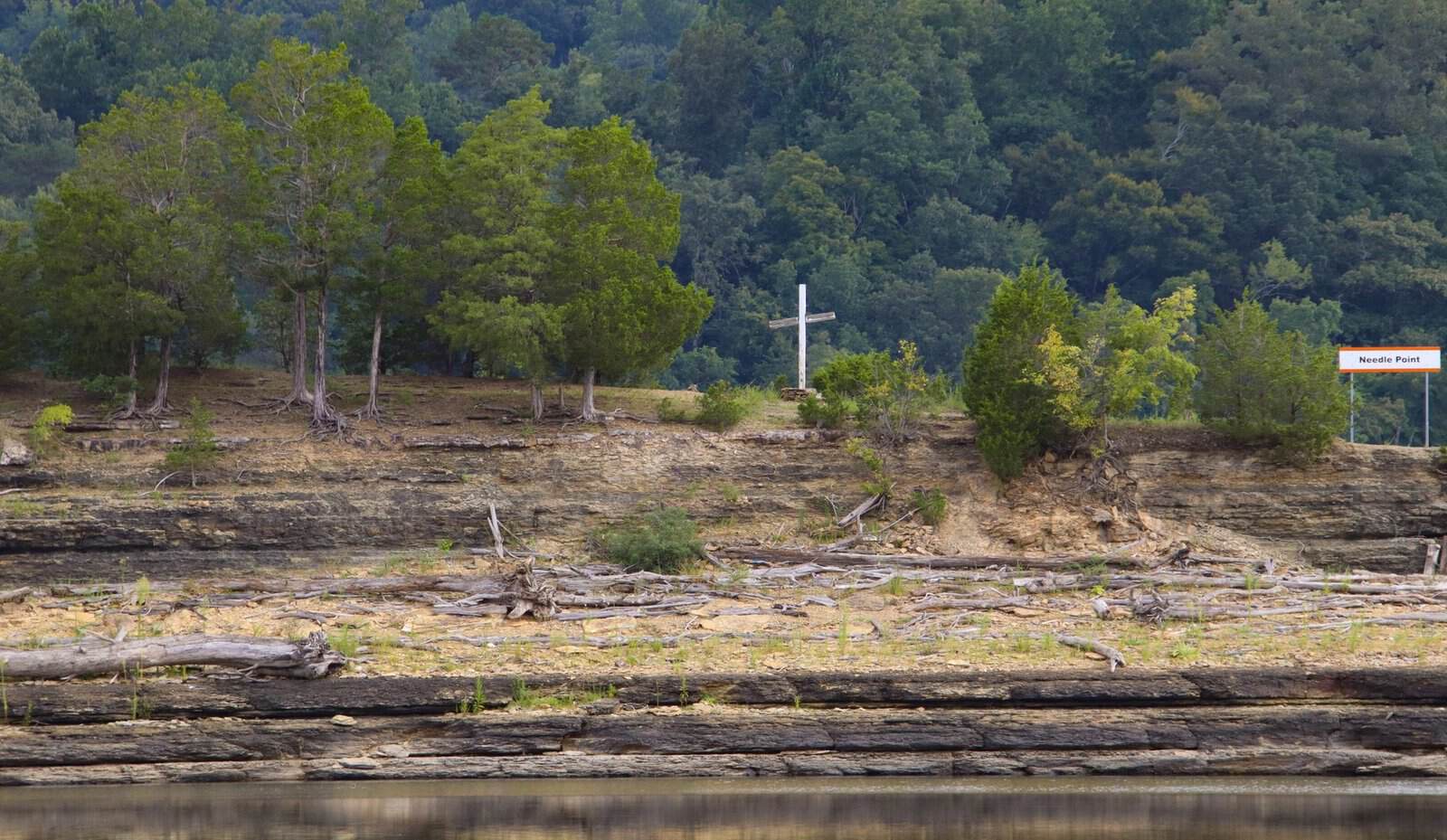
A quick note on timing first. Fall color on Petit Jean usually peaks in late October into early November. After that, you trade color for clear sightlines, more water in the creeks after autumn rain, and far fewer people on the most popular trail. Entry to the park is free.
1. Cedar Falls
This is the reason most people come. Cedar Falls drops 95 feet off a sandstone ledge into a bowl-shaped canyon carved by Cedar Creek. The trail to the base starts behind Mather Lodge and runs about two miles round trip. The first half mile drops more than 200 feet on rock steps and switchbacks the CCC cut in the 1930s.
Late fall is often better than summer here. Summer heat can shrink the falls to a trickle. After autumn rains, the flow picks up and the spray hangs in the cold air. Bring traction-friendly shoes, because the rock steps stay damp and leaves pile up on them. The climb back out is the hard part, so pace yourself.
2. Cedar Falls Overlook
If the canyon hike is not for you, drive to the Cedar Falls Overlook. It is an accessible viewpoint that looks across the canyon at the falls from above. With the leaves down, the view is clearer than it is in summer, when foliage hides part of the drop.
The overlook is also the smart move on a wet, icy day. You still see the falls and the canyon walls, and you skip the slick steps. Photographers like it in the late afternoon, when sidelight hits the far canyon wall.
3. Mather Lodge
Mather Lodge is the stone-and-log lodge the CCC built on the canyon rim. It has guest rooms, cabins nearby, and a restaurant with windows facing the canyon. Even if you are not staying overnight, it is worth walking through the breezeway, which doubles as the Cedar Falls trailhead.
In November and December the lodge is a cold-weather refuge. Grab a meal, warm up, and look out over Cedar Creek Canyon. The building is part of what earned the park its reputation as a CCC showpiece. Book rooms ahead for weekends in fall and around holidays, since the lodge is popular with Little Rock and Conway families.
4. Seven Hollows Trail
Seven Hollows is the park’s longest featured loop, roughly four and a half miles. It drops through a series of hollows and passes a natural bridge, sandstone formations called turtle rocks, a grotto with a seasonal waterfall, and long stretches of forest.
This is the trail that improves the most after leaf fall. With the canopy open, you see the shapes of the hollows and the rock layers instead of a green tunnel. It is moderate to strenuous, so budget two and a half to three hours. Cold, dry days are ideal. Skip it right after heavy rain, when creek crossings can run high.
5. Bear Cave
Bear Cave is the short, fun stop. The trail is about half a mile and winds through giant sandstone boulders, narrow passages, and overhangs. The name comes from local lore that the last bear on the mountain was killed here.
It is a good choice for kids and for anyone short on time. The rock formations are the point, and they are easier to see without summer brush. Wear shoes with grip, since moss and fallen leaves make the rock slick in cold months.
6. Rock House Cave
Rock House Cave is a large sandstone bluff shelter with rock art on the ceiling and walls. These pictographs were left by Native American people long before European settlement. The trail is short, and the shelter is big enough to stand in comfortably.
Treat the site with care. Do not touch the paintings, since skin oils damage them, and never add marks of your own. Late fall is a calm time to visit, and the low winter sun can light the back of the shelter in the afternoon. It is one of the most meaningful stops on the mountain.
7. Petit Jean’s Grave and Stout’s Point
The mountain’s name comes from a legend. A young Frenchwoman is said to have disguised herself as a cabin boy to follow her fiancé to the Louisiana Territory, fallen ill, and been buried on the mountain under the name “Petit Jean.” Historians treat it as legend, but a marked grave site near the eastern edge of the mountain honors the story.
Next to it, Stout’s Point gives one of the best views in the park, looking east over the Arkansas River valley. On a clear November afternoon you can see a long way across the river bottomland. It is a short walk from parking, which makes it a good sunset stop.
8. Museum of Automobiles
Not everything on Petit Jean is a trail. The Museum of Automobiles sits on the mountain near the park and grew out of Governor Winthrop Rockefeller’s car collection. It displays antique and classic cars, along with other vintage items, in a building that feels like a step back in time.
It is the right plan for a rainy afternoon or for anyone in your group who does not want another hike. Check hours before you go, since small museums often shorten schedules in winter. Paired with a morning at Cedar Falls, it rounds out a full day.
How to Plan a Late-Fall Day at Petit Jean State Park
If you only have one day, here is a sequence that works well in cold weather:
- Start with the Cedar Falls hike in the morning, when legs are fresh and the trail is quiet.
- Warm up with lunch at Mather Lodge.
- Do Bear Cave and Rock House Cave in the early afternoon. Both are short.
- Drive to Petit Jean’s Grave and Stout’s Point for late-afternoon light.
- Save the Museum of Automobiles for a rainy day or a second morning.
Two days let you add Seven Hollows without rushing. The park also has campsites and cabins, and some cabins include fireplaces, which makes a winter stay more appealing.
What to Know Before You Go
The visitor center is open most days but closes on Thanksgiving Day, Christmas Eve, Christmas Day, and New Year’s Day. Plan around those dates if you want maps or ranger advice. The lodge operates year-round.
Weather on top of the mountain can differ from Little Rock. It is often a few degrees cooler and windier. Ice on the rock steps is the main winter hazard, so if a hard freeze hits, stick to overlooks and short trails.
Cell service is decent on most of the mountain but spotty in the canyons. Download trail maps before you start. The CCC-built trails are well marked, but the hollows can be confusing at dusk.
Where to Stay on Petit Jean Mountain
Staying overnight changes the trip. You get sunrise at the canyon rim and an early start on Cedar Falls before day-trippers arrive from Little Rock and Conway. The park offers three main options.
- Mather Lodge rooms, set right on the rim of Cedar Creek Canyon, with the restaurant downstairs.
- Cabins scattered around the park, some with fireplaces and a few with hot tubs, which are popular in cold months.
- Campsites, including sites with water and electric hookups, plus a few more rustic options.
Book lodge rooms and cabins well ahead for holiday weekends. Rates vary by season and unit, so check the Arkansas State Parks reservation site for current prices. Winter weeknights are usually the easiest dates to land.
Lake Bailey, a small lake in the park, has a boathouse and calm water for an easy walk at dusk. The park even has its own small airstrip, which makes Petit Jean unusual among Arkansas state parks.
Wildlife Watching in Cold Months
Winter is a good season for wildlife on Petit Jean. With the leaves down, white-tailed deer are easier to spot along roads and trail edges at dawn and dusk. Woodpeckers, nuthatches, and wintering songbirds move through the bare trees.
The Arkansas River runs below the mountain, and bald eagles spend the winter along the river corridor in Arkansas. Overlooks on the eastern side of the mountain, like Stout’s Point, give you a wide view of the valley. Bring binoculars and scan the treeline along the water. Even if you do not see an eagle, the long view over the river bottoms on a cold, clear day is worth the stop.
A Short History of the Park
Petit Jean’s story as a park started with a lumber company. In the early 1920s, the Fort Smith Lumber Company owned land around Cedar Falls and decided the canyon was too scenic to log. The company offered the land to the federal government as a national park, but the site was considered too small. Arkansas stepped in instead, and the legislature created the state’s first state park in 1923.
The Civilian Conservation Corps arrived in the 1930s. Young men in the CCC built Mather Lodge, cabins, trails, bridges, and the stone overlooks that still define the park. Their work is a big reason Petit Jean is listed among the best-preserved CCC parks in the region. When you walk the stone steps to Cedar Falls, you are using steps those crews laid by hand.
The park has grown over the years to more than 3,000 acres, with new trails, cabins, and visitor facilities, but the core around Cedar Creek Canyon still looks much as it did when the CCC finished its work.
Why Late Fall Suits This Park
Petit Jean is one of Arkansas’s most visited parks. Peak color weekends can fill parking lots near Mather Lodge by mid-morning. Once the leaves drop, that pressure eases. You trade orange and red for something better suited to this landscape: long views, visible rock layers, and full waterfalls.
The CCC work also shows more clearly in winter. Stone shelters, bridges, and hand-cut steps stand out against bare woods. You can see the craftsmanship that made this park the model for the rest of the state system. For a place that started with 80 acres around one waterfall, it has held up remarkably well for more than a century.