Maquoketa Caves State Park Closes Its Caves Every November 15. Here’s Why, and What You Can Still Do There
We may earn money or products from the companies mentioned in this post. This means if you click on the link and purchase the item, I will receive a small commission at no extra cost to you ... you're just helping re-supply our family's travel fund.
If you’re planning to see Maquoketa Caves in winter, you’ll see them only from the outside. Iowa’s Department of Natural Resources closes the caves at Maquoketa Caves State Park every year from November 15 until April 1, because the caves serve as a hibernaculum, a winter shelter for hibernating bats.
Here’s why that matters: a hibernating bat survives the winter on a small reserve of body fat. Each time people wake it up, it burns energy it can’t replace until spring, and too many disturbances can kill it. The deadly fungal disease white-nose syndrome has made bats even more vulnerable. The good news is that the park itself stays open. You can still hike the trails, walk under the park’s Natural Bridge, look into cave entrances, visit the interpretive center, and enjoy winter views of the limestone bluffs.
The park is in Jackson County in eastern Iowa, about 35 miles south of Dubuque, near the city of Maquoketa. It covers about 370 acres and has 13 caves connected by roughly 6 miles of trails.
Why Maquoketa Caves Closes Every November 15
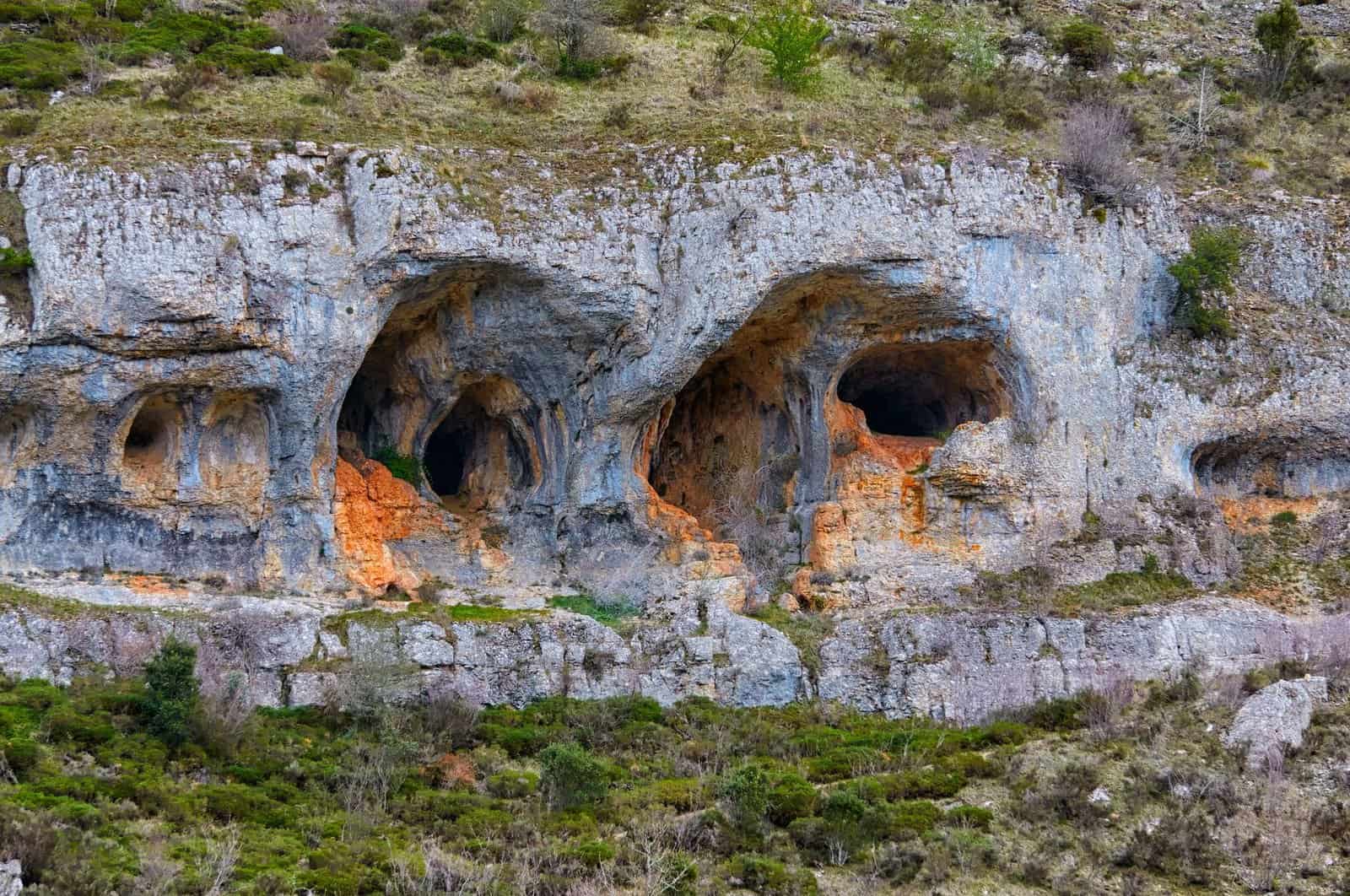
The caves are cool year-round, about 50 degrees. That steady temperature makes them a good place for bats to hibernate. Every fall, bats return to the caves and cluster on the walls and ceilings, slowing their heart rate and breathing until spring.
Why waking bats is dangerous
A hibernating bat isn’t just sleeping. Its body temperature drops and its metabolism slows so it can survive months without eating, since there are no insects to catch in winter. When a person walks into a cave with a flashlight, talking and moving around, bats may wake up. Rousing from hibernation takes a lot of energy. A bat that wakes up too many times can run out of fat before spring and starve.
White-nose syndrome
White-nose syndrome is a fungal disease that has killed millions of bats in North America since it was first found in New York in 2006. The fungus grows on bats’ skin during hibernation, irritating them and causing them to wake up more often, which drains their fat reserves. It has hit some species very hard.
The fungus can be spread from cave to cave on people’s clothing, shoes, and gear. That’s why Maquoketa Caves closed all of its caves between 2010 and 2012 to protect bats, and why it asks visitors in the open season not to wear clothes or shoes they’ve worn in other caves.
Which bats live there
The caves shelter several species of bats, including little brown bats and tri-colored bats, two species hit hard by white-nose syndrome. Keeping the caves closed in winter gives them the best chance to survive.
Why the dates are November 15 to April 1
The closure covers the core hibernation period, from late fall until bats begin to leave the caves in early spring. Older news stories sometimes give different dates, but the current DNR rule is November 15 through April 1. Check the park’s alerts page before you go, since the DNR can change closures if needed.
What You Can Still Do at Maquoketa Caves in Winter
The caves may be off-limits, but the park is open year-round, and winter has its own appeal.
Hike the trails
The park’s trails wind through wooded ravines, along limestone bluffs, and past the cave entrances. With the leaves gone, you can see more of the rock formations and the shape of the valley than in summer. The trails include boardwalks and stairs, which can be icy in winter. Wear boots with good grip, and consider traction devices on icy days.
Some boardwalk sections have been closed for repairs, so check the alerts page for current trail closures.
See Natural Bridge
Natural Bridge is a limestone arch that spans Raccoon Creek, about 50 feet above the stream. The trail goes beneath it, and it’s one of the park’s most popular sights in any season.
Look at Balanced Rock
Balanced Rock is a large boulder that sits on a narrow base near the trail. It’s a good photo stop and doesn’t require going inside a cave.
See the cave entrances
You can walk up to the entrances of caves like Dancehall Cave, the park’s largest and most famous cave. It hosted community dances in the 19th century, which is how it got its name. Don’t enter any cave during the closure, even a short distance.
Visit the interpretive center
The park’s interpretive center, formerly known as Sager’s Museum, explains the caves’ geology, the park’s history, and the bats that live there. Check hours before you go, since they may be limited in winter.
Watch for wildlife
Winter is a good time to see birds and deer tracks in the snow. Watch for woodpeckers, owls, and bald eagles, which are common along eastern Iowa’s rivers in winter.
Planning a Late-Fall Visit
Go before November 15
If seeing the caves is your top priority, plan your visit before the closure. Early November can be a great time to go: the summer crowds are gone, the weather is cool, and the caves are still open. Bring a flashlight or headlamp, old clothes, and shoes you don’t mind getting muddy. Some caves require crawling.
Camping
The park’s campground is open from March through November and closes from December 1 through the end of February. If you want to camp, plan for November, and reserve a site in advance.
Weather
Eastern Iowa in late November and December often has temperatures below freezing, and snow is possible. Dress in layers and bring water, even in cold weather.
Getting There
Maquoketa Caves State Park is northwest of the city of Maquoketa, off Iowa Highway 428. It’s under an hour’s drive from Dubuque, about an hour from the Quad Cities, and roughly an hour and a half from Cedar Rapids. Parking is free, and Iowa state parks don’t charge entrance fees.
What to Bring and How to Prepare
For a fall visit, before November 15
- A bright headlamp or flashlight for every person, plus spare batteries.
- Old clothes and sturdy shoes or boots that can get muddy or wet. Some caves have water and mud on the floor.
- Knee pads and gloves if you plan to crawl through tighter caves.
- Clean clothes and shoes that haven’t been worn in other caves. The DNR asks visitors not to bring gear from other caves to help prevent the spread of white-nose syndrome.
- Water and snacks. There’s no food service in the park.
For a winter visit, after November 15
- Warm layers, a hat, and gloves.
- Boots with good grip, and traction devices for icy boardwalks and stairs.
- A camera for the bluffs, ice formations, and snow.
- A plan to stay on open trails and respect all closure signs.
How the Caves Formed
The caves at Maquoketa formed in limestone and dolomite rock. Over thousands of years, water seeping through cracks in the rock slowly dissolved it, widening the cracks into passages and rooms. Raccoon Creek carved the valley where many of the caves are found. Some caves were once part of a larger underground system that later collapsed in places, leaving features like Natural Bridge.
The park’s caves range from easy walk-in caves like Dancehall Cave, which has a lighted walkway in the open season, to tight, muddy crawls that require flashlights and patience. That variety is part of why the park is popular with families and more experienced cavers alike.
The Park’s Human History
People have used the caves for thousands of years. Archaeologists have found evidence of Native American use, including stone tools and pottery. In the 1800s, settlers came to explore the caves and hold events there, including dances in Dancehall Cave. The park became one of Iowa’s early state parks in the 1920s, and the Civilian Conservation Corps built trails, stairs, and structures in the 1930s, some of which are still in use. The interpretive center tells more of this history.
Nearby Stops for a Late-Fall Day
If you’re making the drive to see the park in winter, you can combine it with other stops in eastern Iowa. The city of Maquoketa has restaurants and a small downtown. Bellevue, on the Mississippi River northeast of the park, has a riverfront and a state park with views of the river, and winter is a good time to look for bald eagles along the Mississippi. Dubuque, about an hour away, has holiday events, museums, and the Fenelon Place Elevator, a short, steep funicular railway with its own seasonal schedule.
Reporting Problems
If you see someone entering a closed cave, or you notice bats outside a cave in winter, report it to park staff or the Iowa DNR. Bats flying outside in the middle of winter can be a sign of white-nose syndrome, and wildlife officials track those reports.
The Bottom Line on Maquoketa Caves in Winter
The caves close from November 15 to April 1 to protect hibernating bats, which can’t afford to be woken up in winter. The closure has become even more important since white-nose syndrome began spreading. You can still hike the trails, walk under Natural Bridge, and enjoy the bluffs. If you want to explore the caves, visit before November 15 or come back in April.