Amish Residents Make Up About Half of Holmes County, Ohio. 8 Rules for Visiting Respectfully This Holiday Season
We may earn money or products from the companies mentioned in this post. This means if you click on the link and purchase the item, I will receive a small commission at no extra cost to you ... you're just helping re-supply our family's travel fund.
Visiting Holmes County Amish Country means visiting a place where Amish families make up about half the population, the highest concentration of Amish of any county in the United States. The settlement centered on Holmes County, which spills into neighboring Wayne, Tuscarawas, and Coshocton counties, has close to 39,000 Amish residents, making it the second-largest Amish settlement in the world after the one in Lancaster County, Pennsylvania.
That means the farms, roads, and many of the shops you’ll see are part of people’s everyday lives. The holiday season brings more visitors for Christmas shopping, cheese, baked goods, and lights in towns like Berlin, Walnut Creek, and Millersburg. Here are eight rules for visiting respectfully.
8 Rules for Visiting Respectfully
Most Amish people are used to tourists and are friendly in shops and markets. Following these rules helps keep it that way.
1. Don’t photograph Amish people’s faces
This is the most important rule. Many Amish people believe posing for photographs goes against biblical teaching about graven images and can encourage pride. Taking a close-up photo of someone’s face, especially without asking, is disrespectful. Photos of landscapes, farms, and buggies at a distance are generally considered acceptable, but avoid taking pictures of identifiable people. If you’re in a shop or market, don’t take photos of the staff.
2. Slow down and give buggies room
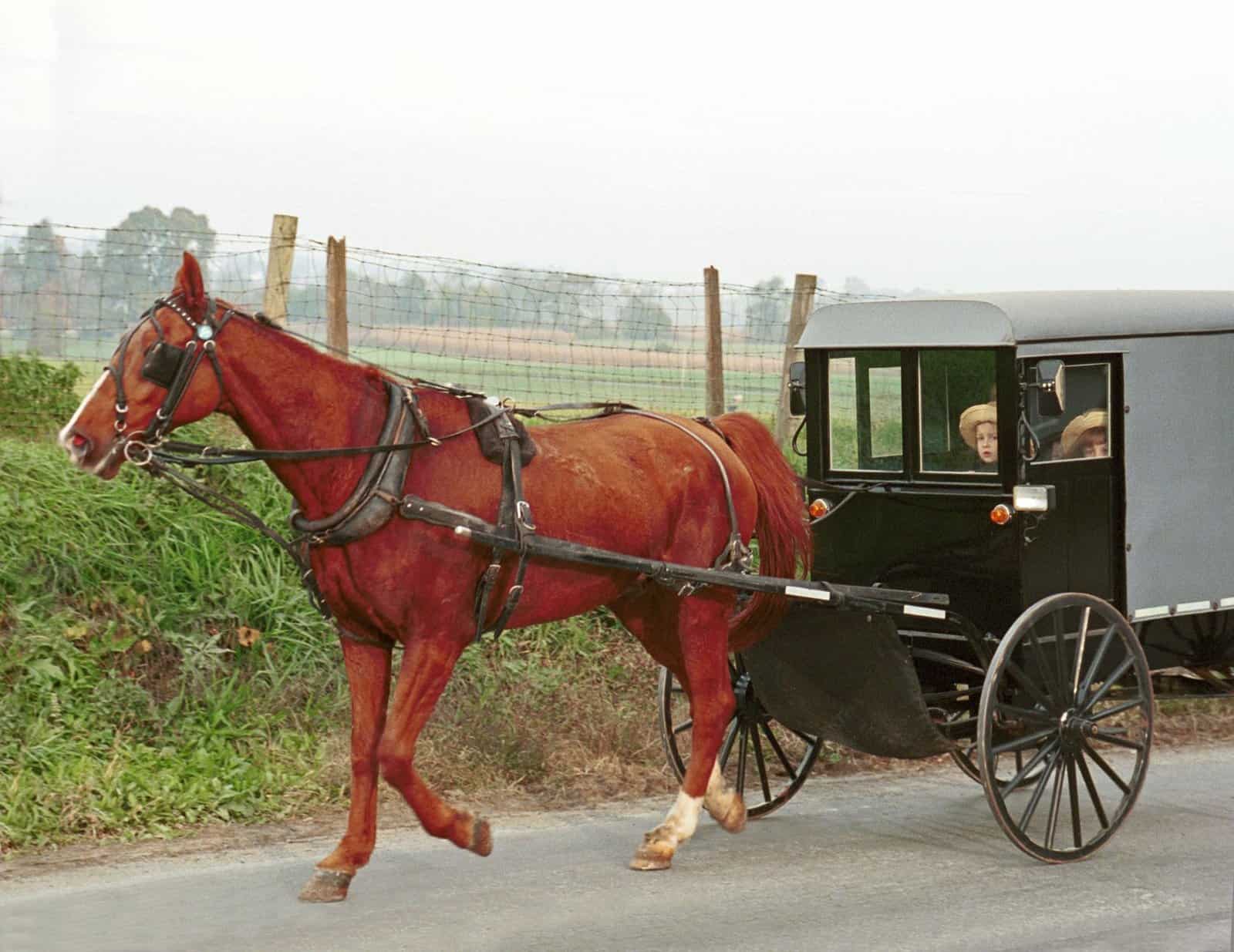
Horse-drawn buggies share the roads with cars and trucks, and the hilly, winding roads in Holmes County make that tricky. Buggies travel slowly, often around 5 to 10 miles per hour.
- Slow down well before you reach a buggy, especially on hills and curves.
- Pass only when you can see clearly ahead, and give the buggy plenty of room.
- Don’t honk. A loud horn can frighten a horse.
- Watch for buggies at night. They carry lights and reflective signs, but they’re still hard to see in the dark, and it gets dark before 5:30 p.m. in late November and December.
Many roads also have wide shoulders or buggy lanes. Don’t park or drive in them.
3. Expect closures on Sundays and some holidays
Many Amish-owned businesses are closed on Sundays, and some also close on religious holidays, which can include days beyond Christmas, such as the day after Christmas (sometimes called Second Christmas) and others. Some Amish families also observe Old Christmas on January 6. Plan major shopping for Monday through Saturday, and check hours before you drive to a specific shop.
Some non-Amish businesses in tourist towns like Berlin stay open on Sundays, but the countryside is much quieter.
4. Stay off private property unless invited
Amish farms are homes, not attractions. Don’t pull into a farm lane, walk into a barn, or approach a house to look around unless there’s a sign welcoming customers, such as for a roadside stand or a shop. Many farms sell baked goods, eggs, quilts, or furniture from a stand or a small store on the property. In those cases, stay in the shop area and use the marked parking spot.
5. Dress modestly
You don’t need to dress like the Amish, but modest clothing shows respect. In December, the cold weather makes it easy: coats, long pants, and layers fit right in.
6. Ask before touching horses
Horses tied up outside shops and churches belong to families and may be nervous around strangers. Don’t pet or feed them without asking the owner first, and keep children from walking up behind a horse.
7. Bring cash
Many Amish businesses accept only cash or checks. Roadside stands may have an honor box. Bring enough cash, especially in small bills, before you head into the countryside, since ATMs aren’t always close by.
8. Remember it’s a community, not a theme park
The Amish aren’t performers. They’re living their lives, raising families, and running farms and businesses. Be polite and patient, don’t stare, and don’t ask personal questions about their beliefs unless they bring up the topic. If you want to learn more, visit a museum or heritage center where explaining Amish life is the purpose.
Where to Learn About Amish Life
For an introduction, start at the Amish & Mennonite Heritage Center near Berlin. Its centerpiece is “Behalt,” a large cyclorama mural that tells the story of Amish and Mennonite history from the Reformation era to the present. The center also has guides who can answer questions.
Other ways to learn:
- Visit a farm or home that offers tours meant for visitors, like Yoder’s Amish Home near Walnut Creek, which has tours seasonally. Check winter schedules.
- Take a buggy ride offered by a business that runs them for visitors.
- Attend an auction or market if one is scheduled while you’re there.
Visiting Holmes County Amish Country in the Holiday Season
What to buy
Holmes County is known for its food and handmade goods. Common holiday purchases include:
- Cheese, especially Swiss, from the area’s cheese houses.
- Baked goods: pies, cookies, breads, and the area’s famous noodles.
- Quilts, which make up a big part of the local economy and can cost several hundred dollars or more for a handmade piece.
- Handmade furniture, often ordered and delivered later.
- Jams, apple butter, and bulk foods from local stores.
Food
Family-style restaurants in the area serve Amish-style cooking: broasted chicken, mashed potatoes, noodles, and pie. These restaurants are often busy during the holidays, so expect waits on Saturdays.
Holiday lights and events
Towns like Berlin, Walnut Creek, and Millersburg decorate for the holidays, and some businesses host Christmas events. Check the Holmes County tourism bureau calendar for dates.
Getting Around
Holmes County is about an hour and a half south of Cleveland and about an hour and a half northeast of Columbus. You’ll need a car to get around, since public transportation in the countryside is limited. U.S. 62 and State Route 39 run through the main towns, and the back roads connect farms and shops.
In winter, roads can be icy and hilly. Leave extra time for driving, especially after dark.
Understanding What You’ll See
Knowing a little about Amish life helps you understand what you’ll see while visiting, and it makes it easier to be respectful.
Different groups, different rules
Not all Amish follow the same rules. The Holmes County settlement includes several groups, from more conservative ones to more progressive ones, and their practices vary. Some families use gas-powered appliances, some use phones in a shared shanty at the end of the lane, and some work in factories or businesses run by non-Amish owners. You may see Amish people riding in vans driven by hired non-Amish drivers, which is common for long trips. These differences aren’t contradictions; each church district sets its own rules.
Buggies vary too
Buggy styles can differ by group. Some have open tops, some are enclosed, and they come in various colors. Lights and reflective triangles on the back are required for safety on the road.
Mennonites and other groups
Holmes County is also home to many Mennonites and other Anabaptist groups. Some Mennonites dress plainly and drive cars, so not everyone in plain clothes is Amish. When in doubt, follow the same rules: be polite, don’t stare, and don’t take photos of people without asking.
School and work
Amish children usually attend one-room schools through the eighth grade, and many adults work on farms or in trades like carpentry, furniture making, and construction. The handmade furniture and quilts you see for sale are often made by local Amish families.
Shopping Etiquette
Shopping is a big part of a Holmes County trip, and a few tips can help:
- Don’t haggle. Prices in Amish shops are generally set.
- Be patient at the register. Some shops use simple systems, and lines can form during the holidays.
- Ask before you assume a business is Amish-owned. Many shops in tourist towns are run by non-Amish owners.
- Check delivery policies before ordering furniture. Many furniture makers ship or deliver, but it can take weeks or months.
A Sample Holiday Day in Holmes County
Here’s one way to spend a December Saturday:
- Morning: Start at the Amish & Mennonite Heritage Center near Berlin to learn the background.
- Late morning: Visit a cheese house and a bakery for holiday gifts and treats.
- Lunch: Eat at a family-style restaurant, and arrive before noon to beat the rush.
- Afternoon: Drive the back roads slowly, stopping at roadside stands and a quilt or furniture shop.
- Evening: Walk through Berlin or Walnut Creek to see the holiday lights, and drive carefully in the dark, watching for buggies.
If You’re Unsure, Ask
When you aren’t sure whether something is appropriate, like taking a photo of a farm, visiting a shop on a family’s property, or asking a question, the simplest approach is to ask politely. Most people will give you a straight answer, and asking shows respect.
The Bottom Line on Visiting Holmes County Amish Country
A holiday trip to Holmes County means shopping for cheese, quilts, and pie in a community where a horse and buggy is normal transportation. Leave your camera pointed at the landscape, give buggies room, plan around Sundays, and bring cash. The people who live here have been welcoming visitors for decades, and following a few simple rules helps keep that relationship strong.