The Vacation Rental Lake House Reckoning: What Five Years Did to Cabin Prices — and the Families Getting Priced Out
We may earn money or products from the companies mentioned in this post. This means if you click on the link and purchase the item, I will receive a small commission at no extra cost to you ... you're just helping re-supply our family's travel fund.
This article contains affiliate links. If you book through our links, we may earn a commission at no extra cost to you.
For decades, the American lake cabin tradition operated on a specific kind of informality. The good cabins were passed down in families, rented by word of mouth, priced according to a vague community standard that had more to do with social norms than market forces. You knew someone who knew someone. The price seemed fair because it was set by a person, not an algorithm.
That system is gone. What replaced it is a market — efficient in certain ways, brutal in others — that has transformed what it costs to spend a week on a lake, who can afford to do it, and what the experience of arriving at a lake cabin now involves.
The numbers are stark. Short-term rental analytics firms that track vacation property pricing have documented average rate increases in lake and mountain cabin markets of 60 to 90 percent between 2019 and 2023. In specific high-demand markets — the Wisconsin Dells area, Lake Tahoe, the Boundary Waters region of Minnesota, the Ozarks — increases exceed 100 percent.
The families who used to anchor their summer around a specific lake cabin and came back year after year are, in many cases, gone. Not gone from the tradition — they still want the lake experience. Gone from the specific price range that made the tradition accessible.
The Pre-Pandemic Lake Cabin Market Most People Remember
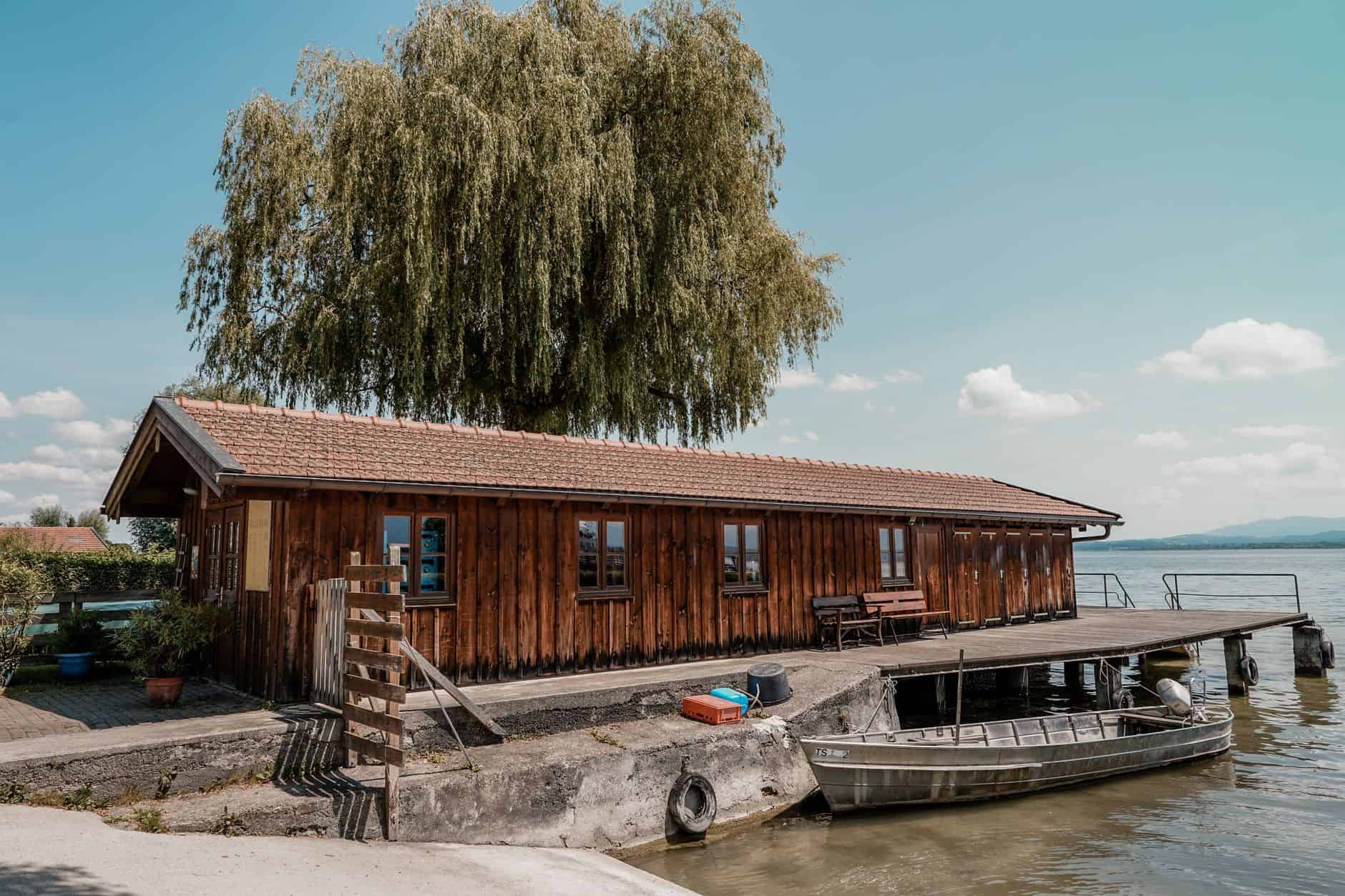
The pre-2020 lake cabin rental market had inefficiencies that, in retrospect, were features. Information was unevenly distributed. Not every available rental was listed on a platform. Pricing was inconsistent across comparable properties. Owners underpriced their properties relative to what the market would bear because they didn’t know what the market would bear.
For renters, these inefficiencies meant opportunity. If you had local knowledge — you knew the area, you knew which families rented their places, you had the phone number of the right person — you could find good cabins at prices that reflected 2005 economics, not 2019 market rate.
Platform adoption was uneven. Many lake cabin owners in 2018 and 2019 were still renting through classified ads, personal networks, or small regional listing sites. The national platforms were present but hadn’t yet captured the majority of inventory in smaller lake markets.
The result was a market that rewarded knowledge and relationships and penalized people who didn’t have those advantages. It was inefficient and not entirely fair. But its inefficiency had a distributional benefit: properties priced by social norms rather than algorithms were accessible to a broader range of incomes.
What the Pandemic Did in 18 Months
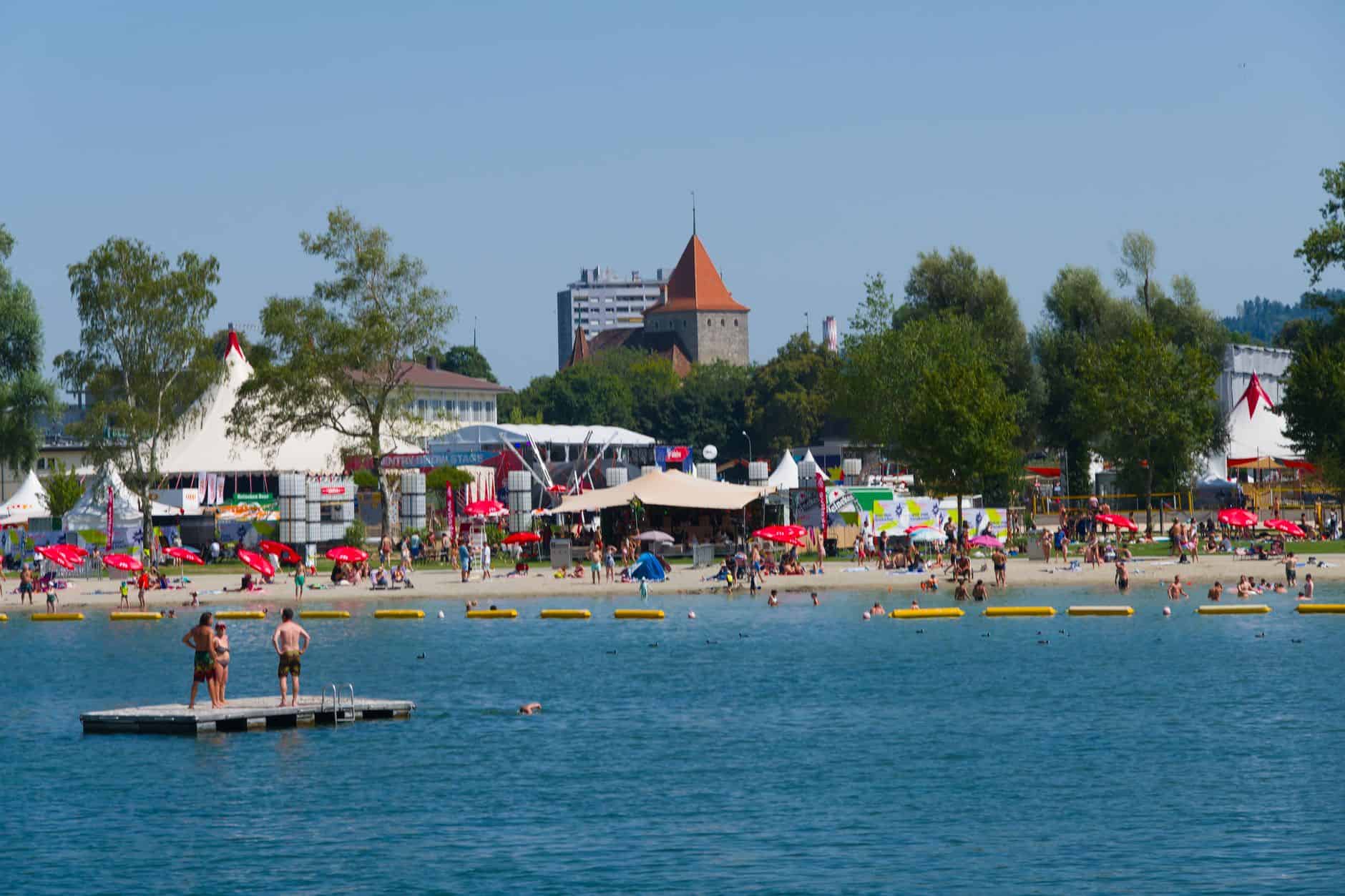
The 2020 travel collapse affected international and urban tourism far harder than domestic outdoor destinations. The combination of lockdown psychology — a desperate need for outdoor space and fresh air — and the restriction of international and cruise travel pushed an enormous volume of vacation demand into a small set of domestic outdoor destinations.
Lake and cabin markets, which were already seeing gradual platform adoption, absorbed this demand and repriced in real time. The platform pricing algorithms did what they were designed to do: they detected elevated demand and raised prices to match it. Owners who had been underpricing their properties suddenly saw what their property could actually earn in a hot market, and many of them recalibrated their base prices upward.
The 2021 and 2022 seasons cemented the new pricing reality. The demand wave continued longer than expected. Workers who had remote flexibility discovered they could extend lake stays into weeks rather than just weekends. The rental income potential of a lake cabin in a good market jumped dramatically, and that income potential began to show up in property valuations.
A wave of investment purchasing followed. People who identified the income potential of short-term rental properties bought lake cabins specifically as investment vehicles — pricing the purchase around projected rental revenue at the new, elevated rates. This purchasing wave absorbed inventory that might otherwise have been available for long-term rental or community ownership and converted it into professionally managed short-term rental operations.
The Platform Economics That Made It Permanent
Before platforms, the lake cabin market’s information problem worked in renters’ favor. After platforms, that advantage inverted completely.
The major vacation rental platforms created something that didn’t previously exist: a transparent, real-time price comparison market for short-term rentals. This was genuinely useful for consumers in one sense — you could see many options in one place, compare prices, read reviews. But price transparency also eliminates the inefficiency that produced underpriced properties.
The algorithms that set dynamic pricing on vacation rentals are sophisticated tools that analyze demand signals, local event calendars, weather forecasts, competitor pricing, and booking velocity to optimize revenue for property owners. They are very good at what they do. What they do is ensure that properties are not underpriced relative to demand — which means the family that used to rent a cabin at a price the owner set because it seemed reasonable now pays what the market will bear.
Platform service fees have added another layer of cost that didn’t exist in the informal market. A cabin listed at $250 per night often costs $340 or more per night when platform fees and cleaning fees are added. Cleaning fees in particular have become a significant source of consumer frustration — flat fees of $150 to $300 are not uncommon on cabins that might be booked for only two nights, effectively adding $75 to $150 to each night’s cost.
The Families Who Lost Their Traditions

The stories in this category have a consistent structure. A family that had been going to the same lake for fifteen or twenty years — same week, same cabin, same rituals — received their renewal offer one spring and discovered the price had increased 40 or 60 percent. Or the owner decided to list on a platform and the family discovered they were now competing for their own vacation week in an open market they’d never had to participate in before.
In the best cases, the family found an alternative — a different lake, a different cabin, a price point that still worked. The tradition adapted.
In harder cases, the family simply lost the thing. Not just the cabin, but the specific experience that the cabin made possible: the cousins who’d been doing the same lake week for a generation, the grandchildren who’d learned to water ski at the same dock, the particular combination of people and place and ritual that had become a family’s version of itself at its best.
You can find these families in the comment sections of any article about vacation rental pricing. Their loss is specific and genuine, and it falls into a category of harm that markets produce all the time but rarely acknowledge: the destruction of traditions that had value precisely because they weren’t priced.
Who Actually Benefited — and Who Bought at the Peak

Property owners who held lake cabins through the pandemic pricing surge and sold in 2021 or 2022 captured extraordinary appreciation. Lake property values in high-demand markets increased 30 to 50 percent in two years in many areas, on top of whatever rental income the property generated during the surge.
Platforms captured significant fee revenue from the elevated transaction volume and pricing. The vacation rental management companies that operate at scale — managing dozens of properties in a single market — benefited from high nightly rates and a management fee structure that scales with revenue.
The category of people who fared worst: those who bought lake investment properties at 2021 or 2022 peak valuations based on 2021 or 2022 rental revenue projections. As demand normalized and supply increased — as more properties entered the short-term rental market in response to the income opportunity — occupancy rates and nightly rates in some markets softened while mortgage costs at the new purchase prices remained fixed.
This is the classic investment cycle: the smart money bought in 2018 or 2019, the early-adopter institutional buyers entered in 2020, and the retail buyers who saw the income opportunity but entered at peak prices are now operating in a more competitive market with higher carrying costs.
What the Market Looks Like Now
The lake and cabin vacation rental market in 2024 and 2025 is softer than its 2021 to 2022 peaks but not a return to pre-pandemic pricing. The platforms have absorbed most of the available inventory in attractive markets. Dynamic pricing continues to push rates higher during peak periods — July 4th week and Labor Day week remain premium-priced in most lake markets, by significant margins.
Occupancy rates have declined in some markets as supply increased faster than demand. Some owners who entered the short-term rental market at peak expectations are discovering that their properties are harder to book than projected and that the cleaning and maintenance costs of running a short-term rental are higher than they anticipated.
For families trying to rent, the experience has normalized at a higher price point. The sticker shock of 2021 has become the new baseline expectation. Families that adapted their budgets upward are planning further in advance, booking less popular weeks, or moving to less competitive geographic markets.
Whether Any of It Comes Back Down

The honest answer is: not to where it was, and probably not enough to matter for the families that were priced out.
The structural factors that drove the increase — platform adoption, dynamic pricing algorithms, elevated property values, increased supply of professionally managed properties — don’t reverse. Algorithms don’t return to underpricing. Property values don’t re-deflate to pre-appreciation levels. The management fee infrastructure doesn’t go away.
What’s possible is a gradual softening in the most overbuilt markets, as the short-term rental supply of mediocre properties exceeds demand for mediocre properties at premium prices. Renters who are willing to be flexible on timing and to do genuine comparison shopping can find relative value in the current market.
What’s not coming back is the pre-platform lake cabin market, where a long-term relationship with an owner and local knowledge were worth more than cash. That market worked on trust and social capital. The platform market runs on data and fees. Those are not the same thing, and the families who understood the difference knew it the moment they saw their first cleaning fee.