We may earn money or products from the companies mentioned in this post. This means if you click on the link and purchase the item, I will receive a small commission at no extra cost to you ... you're just helping re-supply our family's travel fund.
I’ve been in content marketing for over two decades now, long before
being an influencer was even a thing, so I know a thing or two about influencer compensation. I had my first e-zine in middle school that had sponsorship by Steven Madden and Oop! Juice. This was during dial-up internet, and all of my marketing was done in chat rooms. Any time someone wanted to subscribe or unsubscribe, I had to do it all by hand.
Now, I’ve been blogging in some form or another for fifteen years but didn’t start taking it seriously until 2012. My blog was about homesteading, attachment parenting, and natural living. Brand would send me free product, and I would blog about them or I’d only have to post about them on social media as an influencer. I was doing all of this for free, and soon found myself with a desk full of little gadgets and gizmos that I had to create content for and needed it done in a short period of time. It was then that I realized I needed to start charging brands for this.
For some reason, people have been conditioned to not talk about money—particularly, how much money they make. This allows a wide discrepancy in pay between influencers (and in pretty much every industry whether you’re working for yourself or for an employer).
How much should you get paid as an influencer?
Your influencer compensation depends on several factors. These are:
- The number of followers you have
- How engaged your followers are
- Whether you’re receiving free product or not, and how much that product is worth
- How great your content is
I want to chat a little bit about #4. If you’re an amazing videographer or photographer but have little to no audience, a brand might be willing to pay you more than an influencer with a huge audience because they can use the footage you shoot in commercials or on their own channels. Similarly, you may get paid more as a micro-influencer with a really engaged audience compared to an enormous influencer with hardly any engaged followers. This is because followers can be bought, and it’s clear when an influencer buys them.
As an influencer, I take #3 into consideration when negotiating with a brand. If they want to give me a new fridge, I’m likely to charge on the lowest end of my ask rate. Or, if they’re covering 100% of my transportation and expenses on a press trip, I may not charge as much.
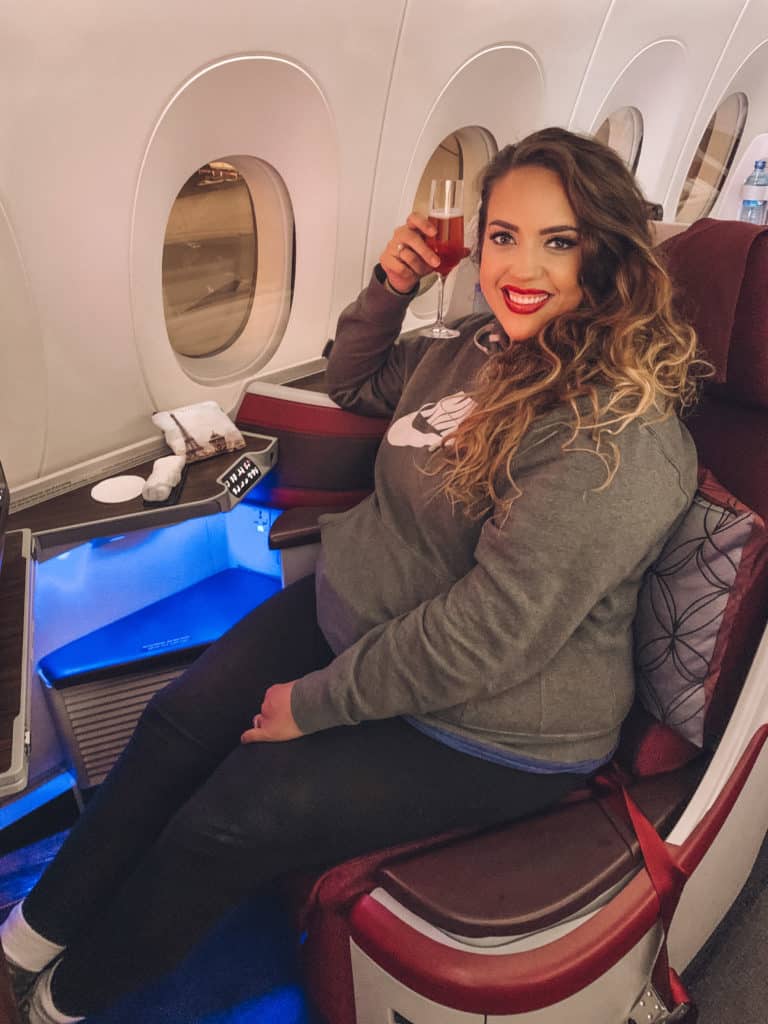
Enjoying rosé before getting to lay my seat completely flat to sleep during my flight from Nairobi to Doha.
Either way, it’s important that expectations are crystal clear. I once worked with a brand that asked me to do a video on a press trip and it was the best work I’ve ever done— it looked like it was done by a high-end production company. I put a lot of money into producing it. I also hired some of the best editors to help me take it up a notch further, and when I turned it into the brand, they came back asking for all of these edits and footage requirements. Mind you, I was no longer in-country, but gave them this within a week of leaving the press trip.
I had to let them know I wouldn’t be making any further edits as these weren’t communicated beforehand and I wasn’t compensated for the work aside from expenses once I arrived at their lodge in their country. Had they said there were specific requirements when I asked for them before the trip (so I knew what to shoot), it would’ve been a completely different story.
This is why it’s important as an influencer to communicate not only with brands about expectations but also communicate with other influencers. Start having these money conversations, as well as learn which brands are great to work with and which ones to avoid.
Leave a Reply