Hurricane Irma Split the Florida Keys in Half. Some Islands Rebuilt Bigger. Others Never Came Back
We may earn money or products from the companies mentioned in this post. This means if you click on the link and purchase the item, I will receive a small commission at no extra cost to you ... you're just helping re-supply our family's travel fund.
Hurricane Irma made landfall in the Florida Keys on September 10, 2017 as a Category 4 storm, destroying or severely damaging roughly a quarter of all homes in Monroe County according to FEMA damage assessments, and the recovery that followed didn’t restore the Keys evenly. Some islands, particularly those closer to the mainland and already popular with wealthier buyers, rebuilt with larger, more expensive homes than what existed before. Others, especially trailer parks and older working-class communities in the Lower Keys, never fully returned, their land instead absorbed into pricier new construction or left vacant under stricter post-storm building codes.
The Rebuilding Divide
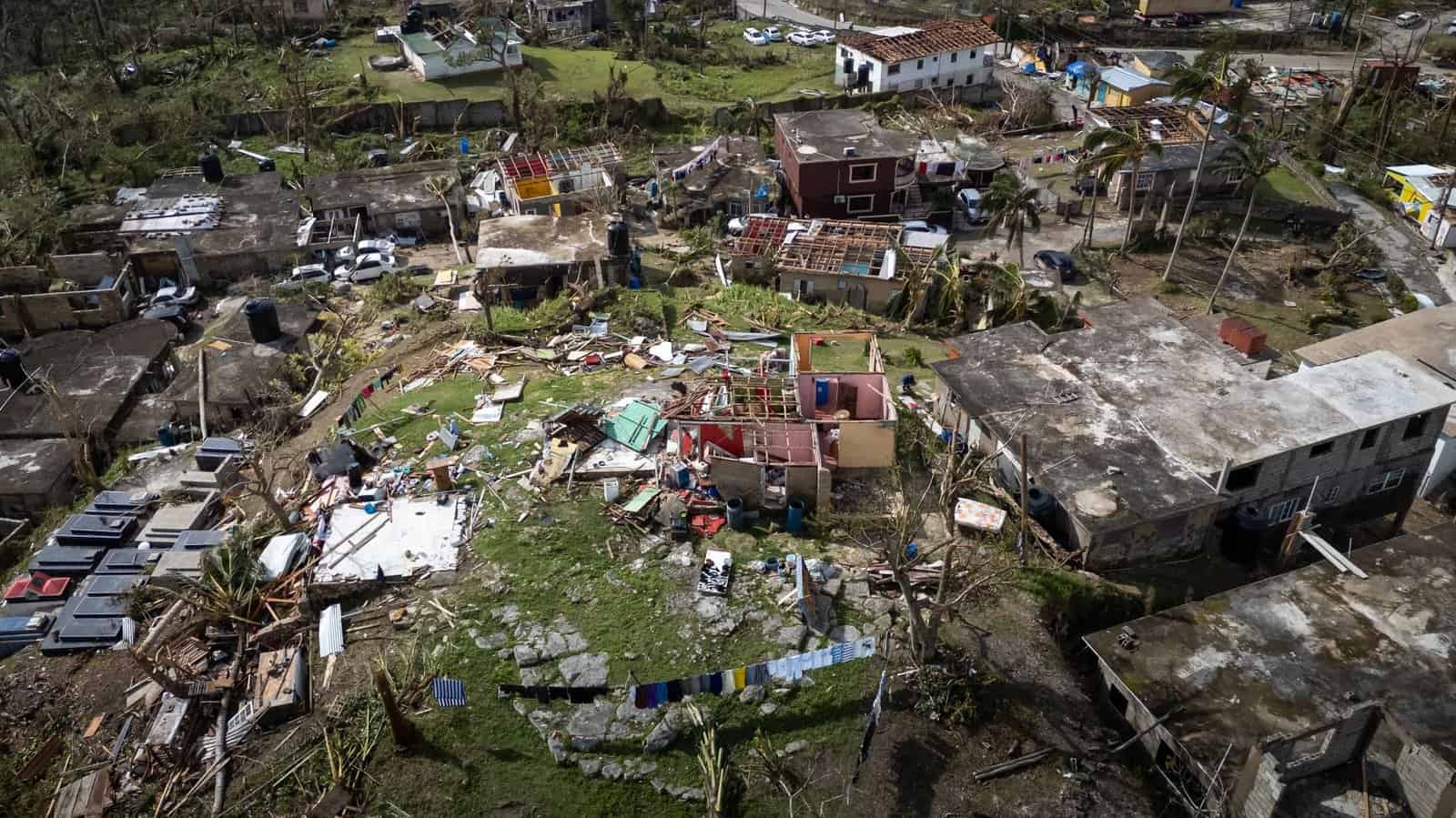
FEMA’s 50% rule, which requires substantially damaged homes to be rebuilt to current flood elevation standards if repair costs exceed half the structure’s value, became the dividing line in the Keys’ recovery. Owners of modest, older homes built at ground level often found that rebuilding to code meant either elevating the structure at a cost that exceeded what insurance covered, or selling the land to a buyer who could afford to build new. Wealthier buyers moved in specifically because they could absorb that cost, and in many cases replaced a single-family home with a larger, code-compliant house worth two or three times as much.
Big Pine Key and other Lower Keys communities that had large mobile home parks serving fishing guides, service workers, and retirees on fixed incomes lost a disproportionate share of that affordable housing stock after Irma, since mobile homes rarely met the elevation and wind-resistance requirements needed to qualify for straightforward rebuilding. Monroe County’s own post-storm housing studies documented a measurable decline in workforce housing units in the years immediately following the storm.
What Changed and What Didn’t
- Monroe County’s median home price has more than doubled since 2017, driven partly by post-Irma rebuilding quality and partly by broader pandemic-era migration to Florida
- The county has maintained a strict building permit allocation system limiting new residential construction, a rate-of-growth ordinance in place since the 1990s specifically to manage hurricane evacuation capacity
- Key West’s historic district, protected by both preservation rules and its elevation advantage relative to the Lower Keys, suffered comparatively less structural damage than more exposed islands
- Workforce housing programs funded through the state and county have tried to offset losses, but availability still lags well behind demand from the service and tourism workers the islands’ economy depends on
The permit allocation system, originally designed to cap population growth for hurricane evacuation safety along the single road connecting the Keys, has had the secondary effect of making every existing housing unit more valuable, since new construction cannot simply expand to meet demand the way it would in a market without growth caps.
The Insurance Problem That Followed the Storm
Property insurance in the Keys has become dramatically more expensive and, in some cases, harder to obtain at all since Irma, following a broader Florida trend of insurers reducing exposure to hurricane-prone coastal areas. Some homeowners have turned to Florida’s state-backed Citizens Property Insurance Corporation as a last resort, and premiums for waterfront and flood-zone properties in the Keys now regularly run into the tens of thousands of dollars annually for adequately insured coverage.
This insurance cost has become as significant a filter on who can afford to live in the Keys as the housing price itself, since even buyers who can afford a mortgage may struggle to absorb annual insurance costs that rival a car payment. Some longtime residents have simply gone without full coverage, accepting the risk of another storm rather than paying premiums that have climbed faster than their income. Community land trusts and deed-restricted affordable housing programs have expanded in the Keys since Irma specifically to try to preserve some units permanently outside the speculative market, an approach borrowed from other high-cost coastal areas like Aspen and Martha’s Vineyard that faced similar workforce housing pressure decades earlier. Monroe County’s habitat authority has also used land acquisition to permanently protect a small number of environmentally sensitive parcels from redevelopment altogether, which incidentally limits the total buildable land available and adds further upward pressure on remaining developable lots.
Which Communities Actually Recovered
Islamorada and Marathon, positioned in the middle of the island chain with strong existing tourism infrastructure, rebuilt relatively quickly and have seen continued investment in hotels and vacation rentals since 2017. Big Pine Key and other Lower Keys communities recovered more slowly and unevenly, with some residents who lost mobile homes never returning to the area at all, relocating instead to mainland Florida communities like Homestead or Florida City where housing costs remained lower.
Key West itself, buffered somewhat by its historic elevation and dense urban core, experienced a different kind of post-Irma transformation: short-term rental demand accelerated even further as the island’s reputation for resilience combined with pent-up pandemic-era travel demand to push occupancy and rates to new highs, exacerbating the same affordability pressure on service workers that existed before the storm but at a faster pace afterward.
What This Means for the Keys’ Future
Climate researchers and local planners increasingly discuss the Keys’ long-term future in terms of managed retreat from the most vulnerable low-lying areas, a conversation that Irma accelerated but didn’t start. FEMA flood maps updated in the years following the storm expanded the area classified as high-risk, which will make rebuilding after any future storm even more expensive and could push the same demographic sorting — wealthier buyers replacing displaced working-class residents — further along the island chain over the coming decades. The National Flood Insurance Program’s own actuarial reforms, phased in gradually since 2021 under a system known as Risk Rating 2.0, have pushed flood insurance premiums even higher for many Keys properties regardless of storm activity, adding another layer of cost that compounds the effect FEMA’s rebuilding rules already created. Local officials in Monroe County have publicly acknowledged that the combination of stricter building codes, shrinking private insurance availability, and rising flood premiums amounts to a slow-motion affordability crisis that didn’t require a second hurricane to keep accelerating after Irma.
What Irma ultimately revealed wasn’t just storm damage, but the underlying economic mechanism through which climate-related disasters tend to accelerate gentrification in vulnerable coastal communities: the cost of rebuilding to modern safety standards filters out exactly the residents who could least afford to pay it, while creating opportunity for buyers who can.