Hotel Minibars Cost a Fortune to Stock and Almost Nobody Uses Them. Hotels Keep Them Anyway. Here’s Why
We may earn money or products from the companies mentioned in this post. This means if you click on the link and purchase the item, I will receive a small commission at no extra cost to you ... you're just helping re-supply our family's travel fund.
A can of Pringles in a hotel minibar can run $8. A tiny bottle of vodka might cost $14. The markup on minibar items routinely runs 300% to 500% over retail, and most travelers know it well enough that usage rates are famously low — industry estimates have long put actual minibar utilization somewhere in the range of a small fraction of occupied rooms per night. And yet hotels keep installing and restocking them, year after year, even as the obvious math suggests they’d be more profitable simply removed.
The Minibar Was Never Really About the Snacks
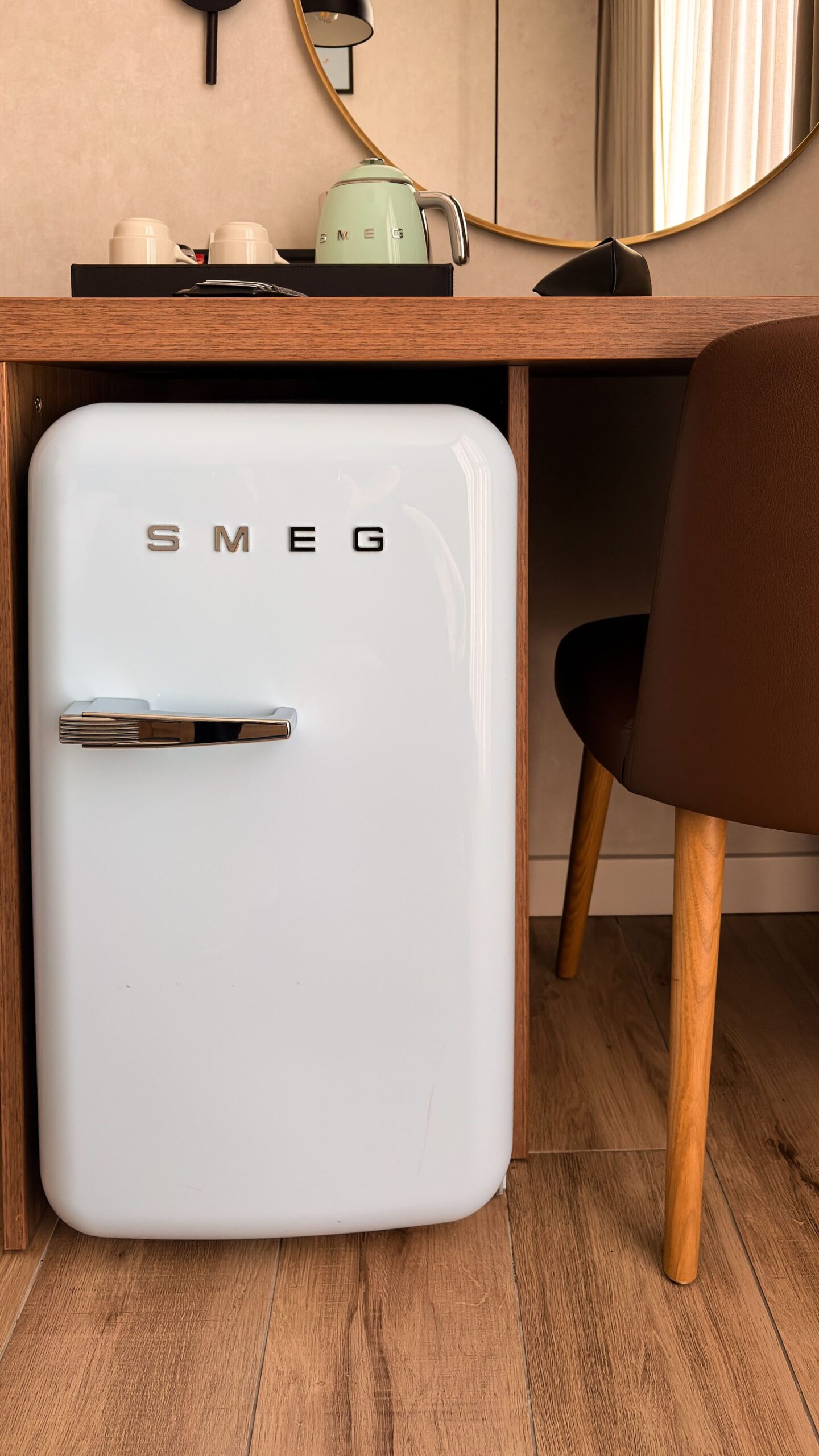
The minibar’s real function is signaling. A well-stocked, well-lit minibar communicates a certain level of service and completeness to a room even if the guest never opens it, in roughly the same way a bathrobe or a decorative bowl of fruit does. It is a visual cue that the hotel anticipated your needs, even the needs you don’t actually have, and hotel design consultants have long treated it as part of the room’s “perceived value” rather than a standalone profit center. Removing it can make a room feel cheaper even to a guest who would never have used it, which is a strange but well-documented quirk of hospitality psychology.
The Labor Cost Problem Nobody Talks About
Restocking and auditing minibars is genuinely labor-intensive: housekeeping staff or dedicated minibar attendants have to check every room, every day, note what’s missing, restock it, and update the billing system, all for a category of revenue that might amount to a few dollars per occupied room on an average night. Many hotel chains have gradually scaled back full-service minibars in recent years in favor of a simple locked cabinet, a small selection of high-margin items, or nothing at all, replaced by a note directing guests to a lobby pantry or vending area instead. Luxury properties, by contrast, have often kept elaborate minibars specifically because the labor cost is trivial relative to the room rate, and the signal of abundance matters more at that price point.
Sensor Minibars Tried to Fix the Math and Mostly Failed
In the 1990s and 2000s, a wave of hotels installed automated sensor minibars that would charge a guest’s room the moment an item was lifted off its sensor pad, regardless of whether the guest put it back. These systems were designed to eliminate the labor cost of manual auditing, but they generated so many billing disputes — guests moving a bottle to grab something behind it, kids touching items out of curiosity — that many hotels eventually removed them after years of complaints and chargebacks. The friction of disputing a wrongful charge often cost the hotel more in guest satisfaction and staff time than the sensor system saved.
- Minibar markups routinely run 300% to 500% over retail prices
- Utilization rates are low enough that many hotels barely break even on the category once labor is factored in
- Sensor-based automatic billing systems caused enough disputes that many hotels reverted to manual restocking or removed minibars entirely
Why Budget and Luxury Hotels Diverge
Budget and midscale chains have increasingly abandoned the traditional minibar altogether, betting that the labor and inventory cost isn’t worth it for a guest segment less likely to pay $14 for a tiny vodka anyway. Luxury hotels have gone the opposite direction in some cases, stocking minibars with local, curated products — regional snacks, small-batch spirits — turning the minibar into a mini showcase of destination branding rather than a simple vending function. Either way, the minibar’s survival has very little to do with whether guests actually use it and almost everything to do with what a fully stocked cabinet, or its deliberate absence, tells a guest about the kind of hotel they’re staying in.
The International Version Tells a Similar Story
European and Asian hotels have historically approached the minibar differently than American chains, often integrating it more seamlessly into room design or, in the case of many Japanese business hotels, replacing it entirely with a well-stocked vending machine on each floor, which solves the labor-cost problem without sacrificing the convenience factor. Higher-end Middle Eastern and Southeast Asian resort properties have gone the opposite direction, treating the minibar as a genuine amenity worth investing in, sometimes stocking premium local products specifically because guests at that price point expect the abundance signal regardless of whether they use it. The variation across regions confirms the core point: the minibar has never really been a rational profit center anywhere, it has always been a cultural and psychological fixture that different hospitality markets have chosen to keep, shrink, or eliminate based on what their specific guests expect a hotel room to feel like.
What Replaced It in Many New Hotels
A growing number of newer hotel concepts, particularly in the lifestyle and boutique segments, have replaced the traditional minibar with a curated pantry or “grab and go” market in the lobby, betting that guests actually prefer browsing a slightly larger selection downstairs over a cramped, overpriced cabinet in their room. This shift also solves the restocking labor problem by consolidating inventory management into one location rather than distributing it across every room in the building. Whether guests actually prefer this trade-off is debatable — plenty of travelers still like the convenience of not having to leave the room at 11pm for a snack — but it represents hotels finally acting on the long-standing math that minibars rarely justified their operational cost, even while they hung onto the idea in spirit through a downstairs alternative.
Some hotel brands have tried a middle path, offering a small selection of free items — bottled water, a couple of snacks — as a goodwill gesture while removing the higher-margin alcohol and premium snack selection entirely, betting that guests value the free gesture more than they resent the absence of a full paid selection. Whether that approach outperforms either extreme remains an open question across the industry, but it reflects just how much unresolved uncertainty still surrounds a fixture that most travelers assume has a settled, rational business logic behind it.