Morgantown, West Virginia Has a Real Economy Because 30,000 WVU Students Aren’t the Whole Story.
We may earn money or products from the companies mentioned in this post. This means if you click on the link and purchase the item, I will receive a small commission at no extra cost to you ... you're just helping re-supply our family's travel fund.
Morgantown, West Virginia is a college town in the most literal sense, home to West Virginia University’s flagship campus and roughly 30,000 students who dominate the city’s rental market, restaurant scene, and Saturday traffic every fall. But Morgantown’s population of about 30,000 permanent residents runs an economy that extends well past the university, anchored by a regional healthcare system, a biometrics and technology sector that has grown steadily around federal research funding, and a functioning downtown that survives the summer months when campus empties out.
That combination, a major university plus a diversified regional economy, makes Morgantown an outlier among Appalachian towns, most of which have struggled for decades with population loss and the decline of coal and manufacturing employment that once sustained them.
WVU’s Economic Footprint Beyond Tuition
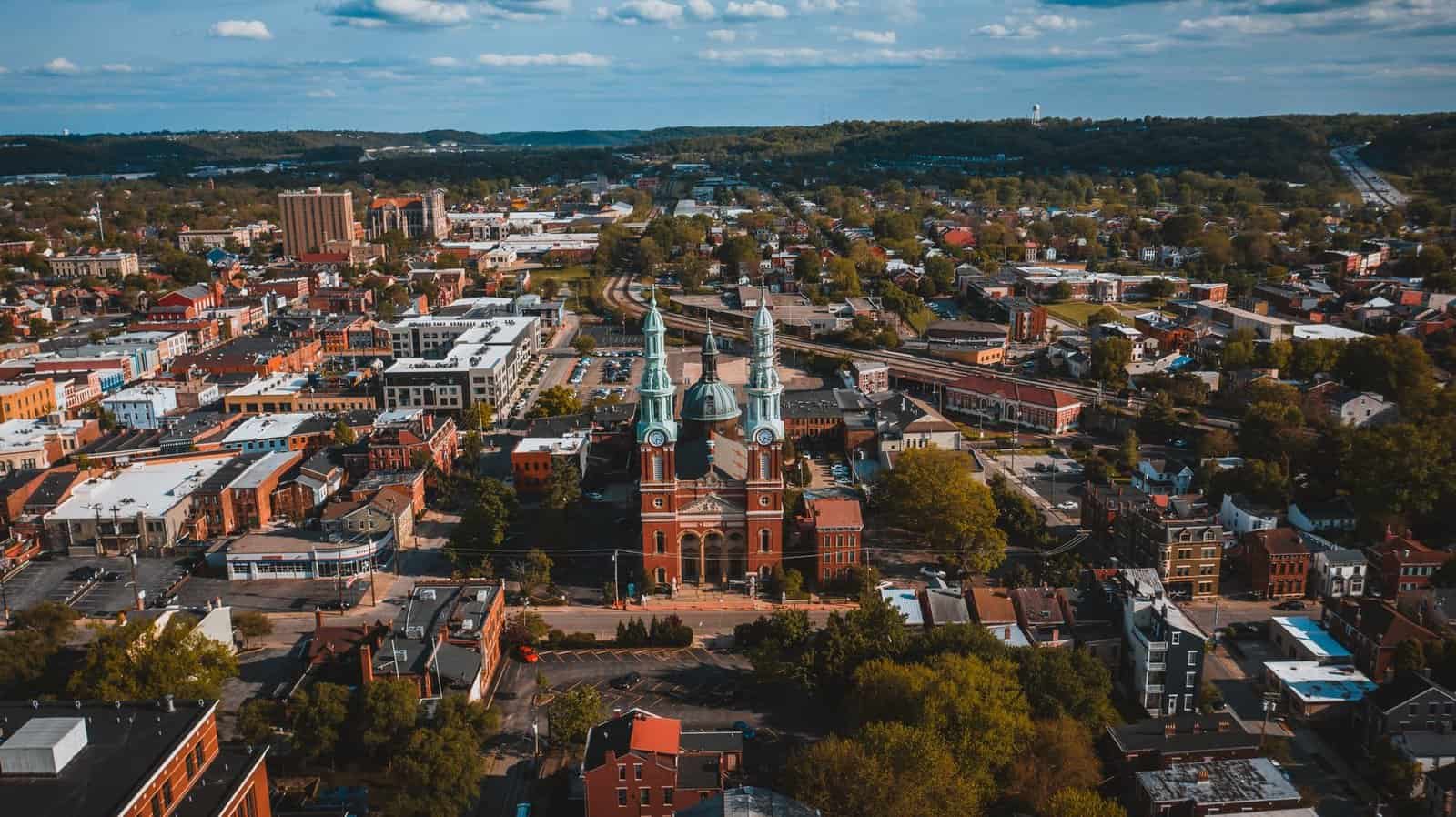
West Virginia University is the largest employer in Monongalia County, and its footprint extends well beyond classroom instruction. WVU Medicine, the university’s healthcare system, has grown into the largest hospital network in the state, drawing patients from a multi-state region across West Virginia, western Pennsylvania, and western Maryland for specialized care unavailable at smaller regional hospitals.
The university’s research spending, concentrated in areas like biometrics, energy research, and health sciences, has drawn federal funding that supports a small but real cluster of technology jobs in Morgantown that have nothing to do with teaching undergraduates. West Virginia University’s forensic and biometric research programs, in particular, built relationships with federal agencies that turned into a modest but genuine tech employment base in a state that otherwise lags badly in that sector.
Downtown Morgantown’s retail and restaurant base depends heavily on the academic calendar, with revenue dropping noticeably every May when students leave and rebounding sharply every August, a seasonal pattern that local business owners have learned to plan around with the same precision as a ski town managing its snow season.
The PRT: Morgantown’s Strange Transit Legacy
Morgantown operates one of the only personal rapid transit systems in the country, a driverless people-mover system built in the 1970s with federal transportation research funding, connecting the university’s downtown and Evansdale campuses. The PRT was originally conceived as a national prototype for future urban transit and never got replicated elsewhere, leaving Morgantown with a unique, if quirky, piece of infrastructure that still moves tens of thousands of riders weekly and remains a genuine point of local pride despite its dated technology.
- The PRT has operated continuously since 1975 and moves roughly 15,000 riders on a typical class day
- WVU Medicine employs more than 12,000 people across its Morgantown facilities alone
- Monongalia County’s population has grown steadily even as many surrounding West Virginia counties have lost residents
- Downtown Morgantown’s High Street corridor supports a restaurant density unusual for a city this size, sustained partly by graduate students and faculty who stay year-round
What Housing Costs Look Like
Morgantown’s rental market runs on a two-tier system: student housing, often overpriced relative to quality given captive demand near campus, and family housing in surrounding neighborhoods that remains genuinely affordable by national standards, with median home prices still under $250,000 as of 2025. That affordability, rare for any town anchored by a major university, is a big part of why WVU Medicine and the university itself have had relative success recruiting staff who might otherwise balk at a rural Appalachian location.
The affordability comes with tradeoffs, though. Morgantown’s geography, hemmed in by hills along the Monongahela River, limits how much new housing supply the city can add, and rental prices near campus have crept up as investor-owned student housing developments have consolidated a larger share of the market over the past decade.
Why the Coal Story Doesn’t Apply Here
Much of the national conversation about West Virginia’s economy centers on coal decline, and it’s true that Monongalia County sits near coal-producing regions that have shed thousands of jobs over the past two decades. But Morgantown itself was never primarily a coal town, and its economy diversified around the university early enough that it largely escaped the single-industry collapse that has devastated smaller West Virginia communities further south and west.
That distinction matters because outside observers often apply a single narrative, coal decline and population loss, to the entire state, when Morgantown’s trajectory looks almost nothing like that story and instead resembles a mid-sized university town anywhere else in Appalachia’s periphery.
What a Visitor Actually Sees
A visitor arriving on a fall Saturday for a football game sees a completely different Morgantown than one arriving on a random Tuesday in July, and both versions are real. Game days bring six-figure crowds to Milan Puskar Stadium and turn the entire town into a tailgate, while summer Morgantown moves at the pace of any small Appalachian city, with the Monongahela River waterfront and downtown farmers market drawing a mostly local crowd.
That range, from a full-throttle Big 12 football weekend to a quiet summer river town, is part of what makes Morgantown hard to categorize, and it’s exactly the kind of place that rewards a visitor willing to see it outside the three or four fall weekends when the university dominates the entire local narrative.
The Rail-Trail and Outdoor Recreation Economy
Morgantown sits at the northern end of a rail-trail network that connects to Pittsburgh, roughly 75 miles north, giving the city an outdoor recreation identity that complements its university-driven economy. The Mon River Trail and connecting paths draw cyclists and runners from across the region, and several outdoor gear retailers have set up shop in Morgantown specifically to serve that recreation market rather than the university crowd.
This recreational infrastructure, built gradually over several decades with a mix of federal rail-banking funds and local investment, gives Morgantown an amenity base that most Appalachian towns of similar size simply don’t have, adding another layer to an economy that already looks unusually diversified for the region.