Greenville, South Carolina Keeps Showing Up on Best Places to Live Lists. Here’s What the Rankings Are Actually Measuring
We may earn money or products from the companies mentioned in this post. This means if you click on the link and purchase the item, I will receive a small commission at no extra cost to you ... you're just helping re-supply our family's travel fund.
Greenville, South Carolina shows up on “best places to live” lists with a consistency that would be suspicious if the underlying city didn’t actually deliver. Every few years, a new publication discovers Greenville and writes the same article. What’s interesting is that the city keeps making those lists not because the PR machine is better than everyone else’s, but because something genuinely happened here that most mid-sized Southern cities didn’t replicate.
What Greenville Built That Changed the City’s Trajectory
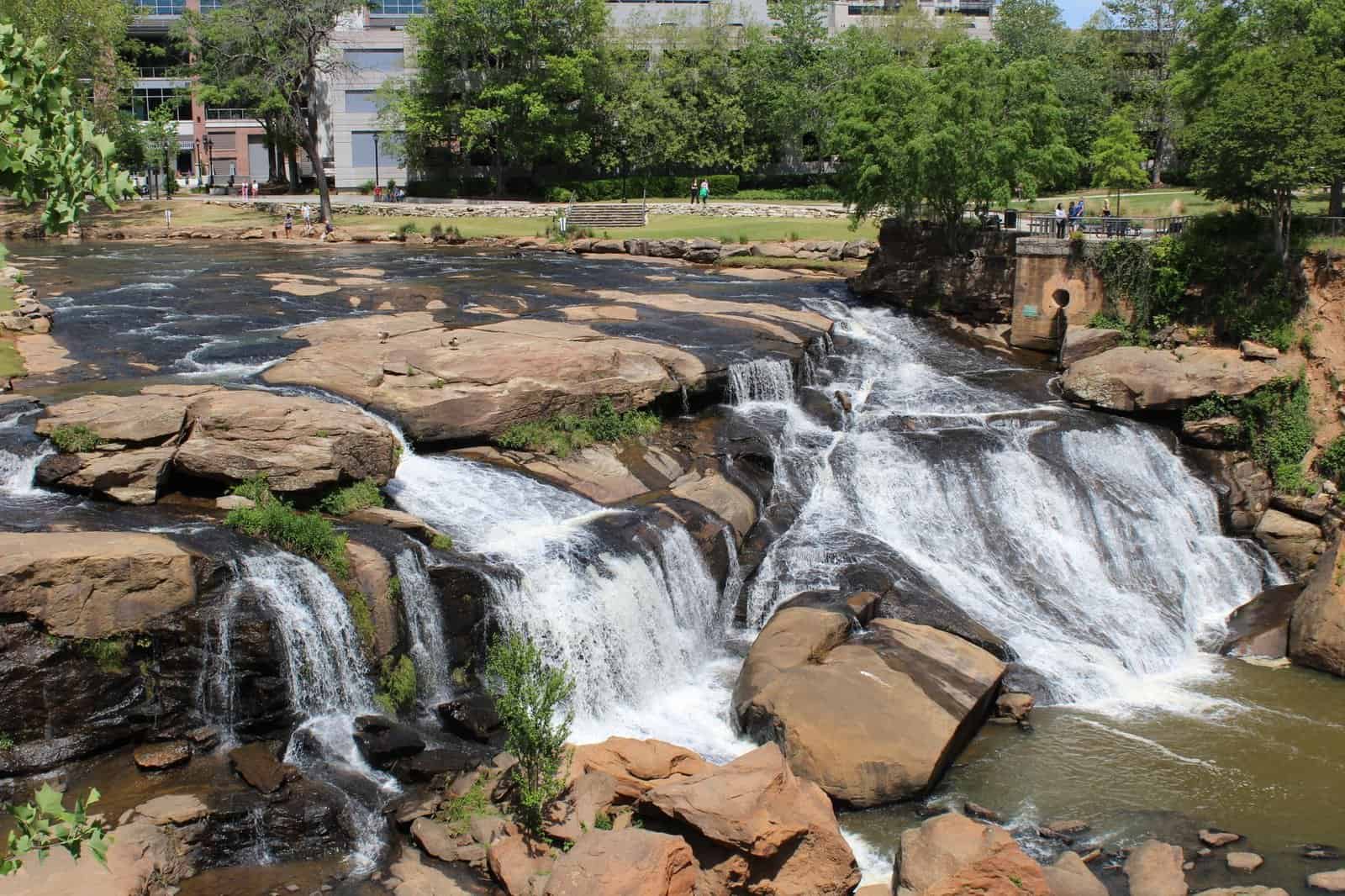
The decision in 2004 to remove the Camperdown Bridge — a highway overpass that ran directly over the Reedy River through downtown — was the catalytic event. Replacing it with the Liberty Bridge (a pedestrian suspension bridge) and creating Falls Park on the Reedy around the previously hidden Reedy River Falls gave downtown Greenville an anchor that changed the character of the surrounding blocks. The investment in Falls Park attracted investment in hotels, restaurants, and retail that transformed the Main Street corridor over the following decade.
Greenville’s industrial base also evolved differently from most Rust Belt and Sun Belt cities. BMW’s North American manufacturing headquarters is 30 miles away in Spartanburg. GE Power, Michelin, Fluor, and a concentration of advanced manufacturing companies have together built a professional and technical employment base that supports income levels above most comparable-sized cities. That income supports the restaurant quality, the real estate investment, and the overall service economy that the rankings measure.
What Greenville Costs to Live In Now
Housing in 2026:
- Median home price: approximately $320,000 (city proper)
- August Road, South Greenville, Berea: $220,000–$280,000
- Downtown condos and new construction: $400,000–$650,000
- Two-bedroom apartment rent: $1,400–$1,900
South Carolina tax context:
- State income tax: top rate 6.5% (reduced from 7% under recent legislation)
- Property taxes: among the lowest in the Southeast
- No estate tax and favorable retirement income treatment
The Blue Ridge Mountains Are 30 Minutes Away
Greenville’s outdoor access is part of the equation that the rankings capture. Table Rock State Park, Caesar’s Head State Park, and Jones Gap State Park are all within 45 minutes and offer mountain hiking, waterfalls, and wildlife that most South Carolina cities don’t have as day-trip options. Swamp Rabbit Trail, an 18-mile rail trail running from Greenville’s downtown through the suburb of Travelers Rest, is one of the best urban-accessible trail systems in the Southeast.
The Food Scene That Took a Decade to Build
Main Street Greenville in 2026 has the density of a food scene that most cities twice its size would be proud of. The anchor restaurants have won regional and national recognition. The coffee scene is legitimately good. The local craft brewery culture — Methodical Coffee, Birds Fly South Ale Project, Brewery 85 — has built a scene that rewards a weekend exploration. None of this existed at the level it does now twenty years ago. The investments in the physical infrastructure (Falls Park, Swamp Rabbit Trail, the renovated Peace Center performing arts campus) attracted the human capital that built the food and culture scene.
Greenville’s window as a city with a quality of life above what its price suggests is narrowing as the secret gets more widely known. Prices are up, but the ratio of what you get to what you pay is still more favorable here than in comparable cities. Whether that remains true in five years depends on how quickly the housing market continues to move.
What Greenville Built on the Reedy River
Greenville’s physical transformation is centered on Falls Park on the Reedy River — a 32-acre park in the middle of downtown that was created by closing a major highway bridge and replacing it with the Liberty Bridge, a curved pedestrian bridge over the Reedy River Falls. The decision in 2004 to remove the bridge and restore the falls was a $4 million investment that catalyzed billions in downtown development over the subsequent two decades. The Swamp Rabbit Trail, a 22-mile rail-trail connecting downtown Greenville to Travelers Rest, passes through the park and provides the cycling infrastructure that has driven a culture of trail-oriented business development along its length.
The restaurant and entertainment district between Poinsett Plaza and the Swamp Rabbit Café has a density and quality that most visitors from outside the Carolinas don’t expect from a mid-sized Southern city. Nose Dive, American Grocery, and the farm-to-table cluster around Falls Park have given Greenville the dining reputation that sustained its best-city-to-live rankings. Hotel prices in Greenville average $150–$210/night downtown — significantly below Charlotte or Atlanta for comparable quality — making it one of the better-value Southern city hotel markets.