Georgia’s 1829 Gold Rush Centered on Dahlonega. 6 Places Where You Can Still See It
We may earn money or products from the companies mentioned in this post. This means if you click on the link and purchase the item, I will receive a small commission at no extra cost to you ... you're just helping re-supply our family's travel fund.
In 1829, thousands of prospectors poured into the north Georgia mountains, which were then part of the Cherokee Nation. The Dahlonega gold rush that followed is widely called America’s first major gold rush, coming two decades before California’s 1849 boom. Niles’ Register reported in the spring of 1830 that four thousand miners were working along Yahoola Creek alone, according to the New Georgia Encyclopedia.
The rush reshaped the region fast. The town of Dahlonega took its name in 1833 from the Cherokee word for golden or yellow, a federal branch mint opened there in 1838, and the Cherokee were forced west on the Trail of Tears by 1839. Today, Dahlonega sits about 65 miles north of Atlanta, and much of that history is still visible. Here are six places to see it.
6 Places Where the Dahlonega Gold Rush Still Shows
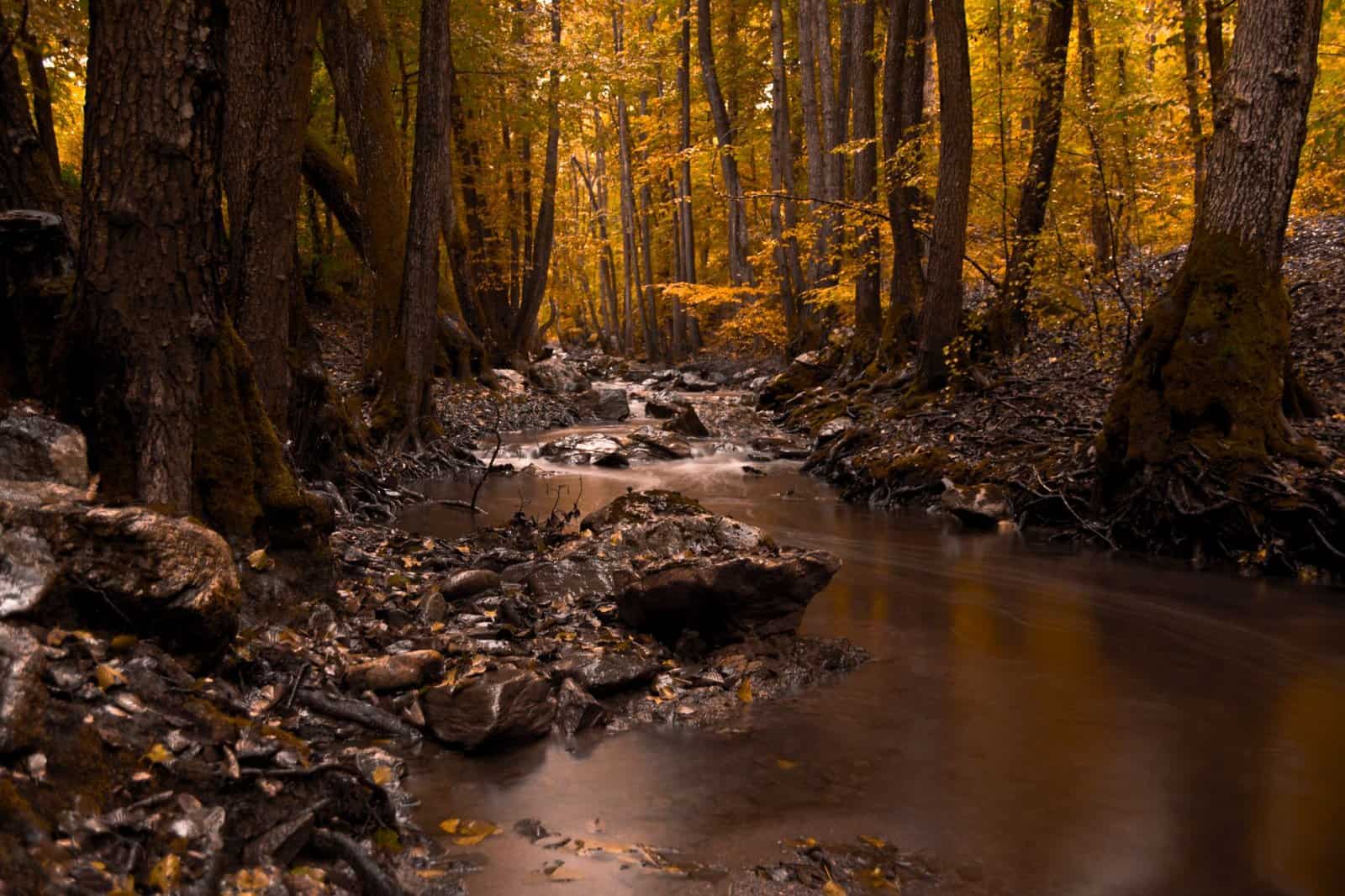
Late fall is a good time to visit. The leaf crowds of October have passed, and the town square starts decorating for its holiday season around Thanksgiving. Most of these sites are open year-round, though some close on major holidays.
1. Dahlonega Gold Museum State Historic Site
The museum sits in the middle of the Public Square inside the old Lumpkin County Courthouse, built in 1836. Georgia State Parks describes it as one of the oldest courthouse buildings in Georgia, and local tourism officials call it the state’s oldest existing courthouse. The bricks were made locally and are said to contain trace amounts of gold.
Inside, you can see a complete set of gold coins minted in Dahlonega, a nugget weighing more than five ounces, and a large hydraulic cannon used to blast soil off hillsides. A short film features interviews with members of longtime mining families. Admission is modest, generally under $10 per adult. The site closes on Thanksgiving, Christmas, and New Year’s Day.
Start here. The museum gives you the timeline you need to make sense of everything else in town.
2. Consolidated Gold Mine
The Consolidated Gold Mine on the edge of town offers guided underground tours through tunnels dug in the late 1800s and early 1900s, after the first easy surface gold had played out. Guides explain how miners followed quartz veins into the rock and how the work changed from creek panning to hard-rock mining.
The tour takes you well below the surface, where the temperature stays cool and steady year-round. That makes it a good choice on a cold or rainy November day. Tours end with gold panning, so you leave with a sense of how much work it takes to find even a few flakes. Wear closed-toe shoes, since the tunnel floor can be damp.
3. Crisson Gold Mine
Crisson Gold Mine is a family-run operation that has worked gold in the area since 1847, according to the business. Today it focuses on visitors, with gold panning troughs, gem panning, and displays of old mining equipment, including a stamp mill.
Crisson is the hands-on stop. You buy a bucket of ore, sit at a sluice, and swirl a pan until the heavier material settles. Staff show beginners the technique. It is popular with families and works in cool weather, though cold water makes long sessions tough on the hands. Bring a towel and a light pair of gloves for between pans.
4. Price Memorial Hall and the Old Mint Site
The federal Branch Mint at Dahlonega opened in 1838. Over its life, it coined almost 1.5 million gold coins with a face value of more than $6 million, according to the New Georgia Encyclopedia. The Confederate government closed it in 1861, and it never reopened as a mint.
In 1871, the mint building and its land went to the new North Georgia Agricultural College, now the University of North Georgia. The original mint building burned in 1878. Price Memorial Hall, the college’s administration building, was built on its foundation. Its steeple is covered with gold mined in the area, about 13 ounces according to the encyclopedia. You can see it from much of downtown, and it shines on sunny days.
5. The Historic Public Square
Dahlonega’s Public Square grew up around the courthouse during the rush. The streets were laid out when the town became the county seat in the 1830s, and many storefronts around the square date to the 1800s. Today they hold shops, restaurants, tasting rooms, and galleries.
Walk the full loop and read the historical markers. One tells the story of Dr. Matthew Fleming Stephenson, the mint’s assayer, who in 1849 tried to persuade miners not to leave for California. His speech is often linked to the phrase “There’s gold in them thar hills,” though the exact wording is debated. The square is especially pretty from late November, when it is lit for the holidays.
6. The Georgia State Capitol Dome in Atlanta
The gold rush left a mark far from Dahlonega. The dome of the Georgia State Capitol in Atlanta is covered with gold leaf made from gold mined in Lumpkin County. In 1958, residents carried the gold to Atlanta by wagon train in a ceremony that drew wide attention. The dome has been regilded since then, with Dahlonega gold used again.
The New Georgia Encyclopedia notes that 43 ounces of gold cover the dome. If you are driving to or from Atlanta, it is worth a detour. The Capitol offers free self-guided visits on weekdays, with security screening at the entrance.
How the Dahlonega Gold Rush Unfolded
Historians are not certain who found Georgia gold first. The best-known story credits Benjamin Parks, who said in an 1894 newspaper interview that he found gold while deer hunting in 1828. The earliest clear written record is a notice in the Georgia Journal on August 1, 1829.
What followed happened fast:
- 1829: Prospectors flood into north Georgia, then part of the Cherokee Nation.
- 1832: Lumpkin County is created from Cherokee land.
- 1833: The county seat is named Dahlonega.
- 1836: The courthouse that now holds the Gold Museum is built.
- 1838: The federal Branch Mint opens. Cherokee removal begins the same year.
- 1849: Many miners leave for California.
- 1861: The mint closes at the start of the Civil War.
The human cost was heavy. The arrival of miners, which Cherokee people called the Great Intrusion, intensified pressure on the Cherokee Nation. By 1839, most Cherokee people had been forced west. The Gold Museum addresses this history, and it is worth taking time with those exhibits.
Panning for Gold: What to Expect
Most visitors want to try panning, and both mines on this list make it easy. Here is what the process looks like:
- You get a pan and a bag or bucket of material, sometimes salted with extra gold or gems.
- You submerge the pan in water and shake it so heavy material sinks.
- You tilt and swirl to wash lighter sand and gravel over the edge.
- You keep going until only dark, heavy sand remains, where gold flakes show up.
Expect flakes, not nuggets. Gold is about 19 times heavier than water, which is why it settles at the bottom of the pan. Small vials are usually provided to take your flakes home.
Planning a Late-Fall Visit
Dahlonega is about an hour and a half from downtown Atlanta by car, depending on traffic, via Georgia 400. Weekends fill up in October for leaf season and again in December for holiday events. Mid-November weekdays tend to be the calmest.
A simple one-day plan:
- Morning: Gold Museum, then a walk around the Public Square.
- Midday: lunch on the square.
- Afternoon: Consolidated Gold Mine tour, or panning at Crisson.
- Late afternoon: view Price Memorial Hall’s steeple in the low sun.
If you stay overnight, the town has inns, bed-and-breakfasts, and cabins in the surrounding hills. Nearby wineries and Amicalola Falls State Park add more to a weekend.
Gold Rush Sites Beyond the Square
A few more spots round out the story for visitors who want to go deeper.
- Yahoola Creek, which runs near town, was one of the busiest mining streams of the rush. In the spring of 1830, Niles’ Register reported four thousand miners working along it.
- Auraria, a few miles southwest of Dahlonega, was the first boomtown of the rush. The New Georgia Encyclopedia says it grew to about 1,000 people by 1832. Today, little remains beyond a few old structures and historical markers, which makes it an eerie stop on a back-road drive.
- The Chestatee River, west of town, was another important gold stream and is still popular with recreational prospectors where access is allowed.
Respect private property. Much of the land around old mining sites is privately owned, and panning without permission is trespassing. Stick to commercial mines and public areas where panning is clearly allowed.
The Holiday Season in Dahlonega
From late November through December, the town leans into the holidays. The square is lit, shops stay open later on some evenings, and seasonal events fill the calendar. Exact dates change each year, so check the local visitor center’s schedule before you go. A December visit pairs the gold history with a festive small-town feel.
Why This History Still Matters
The Georgia gold rush is often overshadowed by California’s. But it shaped the Southeast in lasting ways. It drove the creation of new counties, a federal mint, and a college that still stands on the mint’s foundation. It also accelerated the removal of the Cherokee people from their homeland, one of the darkest chapters in the region’s history.
Dahlonega tells both sides of that story. You can pan for gold and tour a mine, but you can also stand in the 1836 courthouse and learn what the rush cost the people who lived there first. That combination is what makes a visit here more than a souvenir stop.