Everyone Passing Through Flagstaff Is Headed to the Grand Canyon. The People Who Live There Wish They’d Stop for a Minute
We may earn money or products from the companies mentioned in this post. This means if you click on the link and purchase the item, I will receive a small commission at no extra cost to you ... you're just helping re-supply our family's travel fund.
Flagstaff, Arizona sits at 6,910 feet, is covered in ponderosa pine forest, and gets real snow most winters — nothing like the desert image most people carry of Arizona. It’s also the last town of any size before Grand Canyon National Park’s South Rim, roughly 80 miles north, which means a huge share of its visitor traffic treats it as a gas-and-bathroom stop rather than a destination. That’s a shame, because Flagstaff has a functioning downtown, a university (Northern Arizona University), and one of the more genuinely livable small cities in the Southwest — for people who can afford it, which is an increasingly narrow group.
The pass-through problem
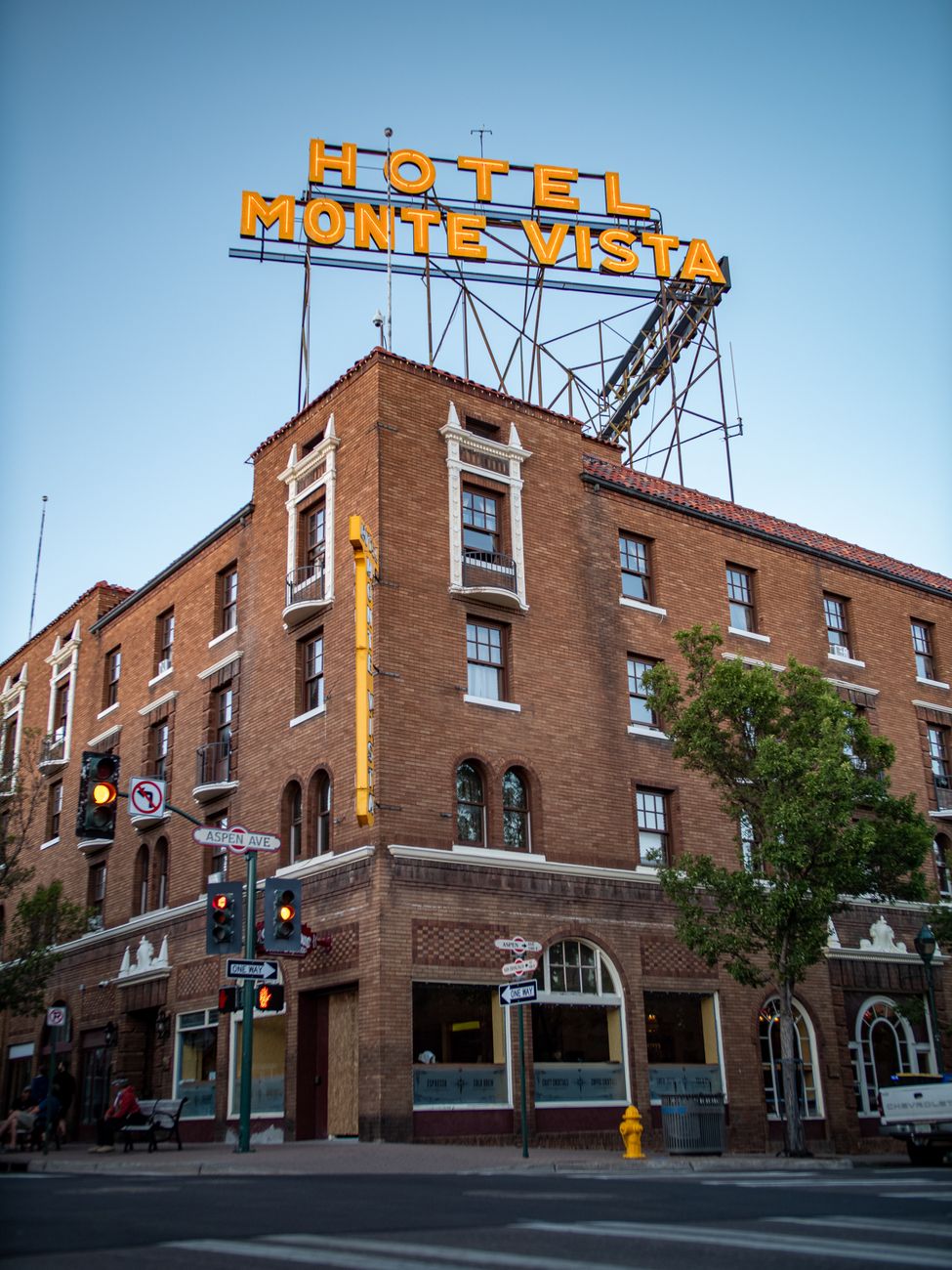
Grand Canyon National Park draws around 4.5 to 5 million visitors a year, and a significant share of them route through Flagstaff on I-40 or US-180 without stopping for more than fuel and fast food. That traffic pattern shapes the town’s economy in a specific way: it supports a huge hotel and gas station infrastructure along the interstate corridor while doing relatively little for the historic downtown a mile away, where local businesses depend far more on university students, NAU staff, and residents than on Grand Canyon traffic.
Locals will tell you the split is almost literal — there’s “tourist Flagstaff” clustered around the interstate exits and historic Route 66 corridor, and there’s “resident Flagstaff” built around NAU, the Southside neighborhood, and the trail systems on the San Francisco Peaks. The overlap is smaller than people assume, and that separation is part of why Flagstaff has managed to retain some authenticity that pure gateway towns like Tusayan (literally at the park’s entrance) never had a chance to develop.
What it costs to actually live there
Flagstaff’s cost of living runs meaningfully above the Arizona average and above the national average too, driven by a housing market that’s constrained by national forest land surrounding the city on nearly every side — there’s simply nowhere to sprawl. Rent for a one-bedroom apartment commonly runs $1,300 to $1,600, high for a city of roughly 76,000 people in a state that isn’t otherwise known for expensive housing. Locals frequently cite the gap between Flagstaff wages (heavily influenced by university, healthcare, and tourism service jobs) and Flagstaff housing costs as the central tension of living there — a Reddit thread on the topic titled some version of “how do you afford to live here” surfaces regularly in local forums, which is its own kind of data point.
What’s actually worth stopping for
- Historic downtown along Route 66, with breweries and a walkable core
- Lowell Observatory, where Pluto was discovered in 1930
- The Museum Club, a honky-tonk roadhouse that’s been open since 1936
- Hiking or skiing on the San Francisco Peaks at Arizona Snowbowl
- Walnut Canyon and Sunset Crater, both dramatically less crowded than the Grand Canyon and within a 30-minute drive
The tension that never fully resolves
The elevation change nobody warns visitors about
Flagstaff sits at nearly 7,000 feet, which catches visitors off guard in a way that Phoenix, at just over 1,000 feet, never does. Travelers flying into Phoenix and immediately driving north often feel the altitude change within hours — mild headaches, faster fatigue, occasional shortness of breath during hikes that would feel easy at sea level. It’s rarely dangerous for a short visit, but it does mean the standard advice of hydrating more than usual and pacing hikes conservatively actually matters here, more than in most of Arizona’s other popular destinations.
The elevation is also exactly why Flagstaff gets real winter weather while the rest of the state stays warm — snowfall can exceed 100 inches in a season, and Arizona Snowbowl has been operating as a functioning ski resort since the 1930s, a detail that surprises people who associate the entire state with cactus and desert. That climate contrast within a two-hour drive, from ski slopes to saguaro forest, is one of the more genuinely unusual geographic features in the American Southwest, and it’s a big part of why NAU students and longtime residents describe Flagstaff as feeling like a different state entirely.
Flagstaff’s relationship with the Grand Canyon is further complicated by the existence of Tusayan, a tiny town literally at the park’s south entrance built almost entirely to capture overnight stays from visitors who don’t want to drive the extra 80 miles into Flagstaff at all. That competition for the one-night Grand Canyon visitor has pulled some hotel demand away from Flagstaff over the years, even as Flagstaff’s own appeal as a multi-day destination in its own right — for hiking, for the observatory, for the university town atmosphere — has grown independently of canyon traffic. The two towns essentially serve two different kinds of travelers: Tusayan captures the person who wants to see the canyon and leave, while Flagstaff increasingly captures the person who wants an actual trip.
Flagstaff’s designation as the world’s first International Dark Sky City, granted in 2001, adds another layer that pure canyon traffic never touches — astronomy tourism tied to Lowell Observatory and the surrounding dark-sky protections has become a niche but genuine draw of its own, pulling in visitors who have no interest in the Grand Canyon at all and are there specifically for the night skies.
Flagstaff needs the Grand Canyon traffic economically — the hotels, gas stations, and restaurants along the interstate corridor employ a substantial share of the local workforce. But the town’s identity, the thing that actually makes it different from a generic highway waypoint, has nothing to do with the canyon at all. It’s the elevation, the ponderosa forest, the dark skies that earned it International Dark Sky City status, and a college-town energy that most people driving through at 75 miles an hour never register. The locals’ quiet frustration isn’t that tourists exist — it’s that so few of them realize there’s a real town here worth a night, not just a tank of gas.