Ankeny, Iowa Added 8,000 People Since 2020. It’s Now Bigger Than Cedar Falls. Nobody Outside the State Knows Its Name
We may earn money or products from the companies mentioned in this post. This means if you click on the link and purchase the item, I will receive a small commission at no extra cost to you ... you're just helping re-supply our family's travel fund.
Ankeny, Iowa had 445 residents in 1910. It had 67,887 at the 2020 census. A special census confirmed it hit 76,207 by August 2024 — an increase of more than 8,000 people, or roughly six new residents a day, over just four years. That makes Ankeny the fifth-largest city in Iowa, ahead of towns most Americans could actually place on a map. Waukee, another Des Moines suburb, crossed 31,800 in the same 2024 count. These aren’t hypothetical growth projections. They’re confirmed head counts, and they represent one of the least-discussed population booms in the country.
Why Des Moines suburbs specifically
Des Moines has steadily built one of the more diverse mid-size economies in the Midwest — insurance giants like Principal Financial and Nationwide, a growing tech and data center presence (Facebook and Microsoft both built major data centers in the metro), and a state government base that doesn’t disappear in a downturn. Ankeny and Waukee absorbed the housing overflow from that job growth because Des Moines itself has limited room to build outward, and both suburbs had open farmland, decent highway access via I-35 and I-80, and school districts that built reputations fast enough to attract young families.
The growth rate is almost unheard of for a place with zero coastline, zero mountains, and a climate defined mostly by extremes — brutal winters, humid summers. Ankeny grew nearly 170 percent between 2000 and 2023, a rate faster than 93 percent of similarly sized U.S. cities, according to population trackers analyzing Census data. That kind of growth usually shows up in Sun Belt boomtowns with obvious climate or tax advantages. Ankeny has neither. What it has is proximity to stable jobs and land that was cheap enough to build on fast.
What the growth actually looks like
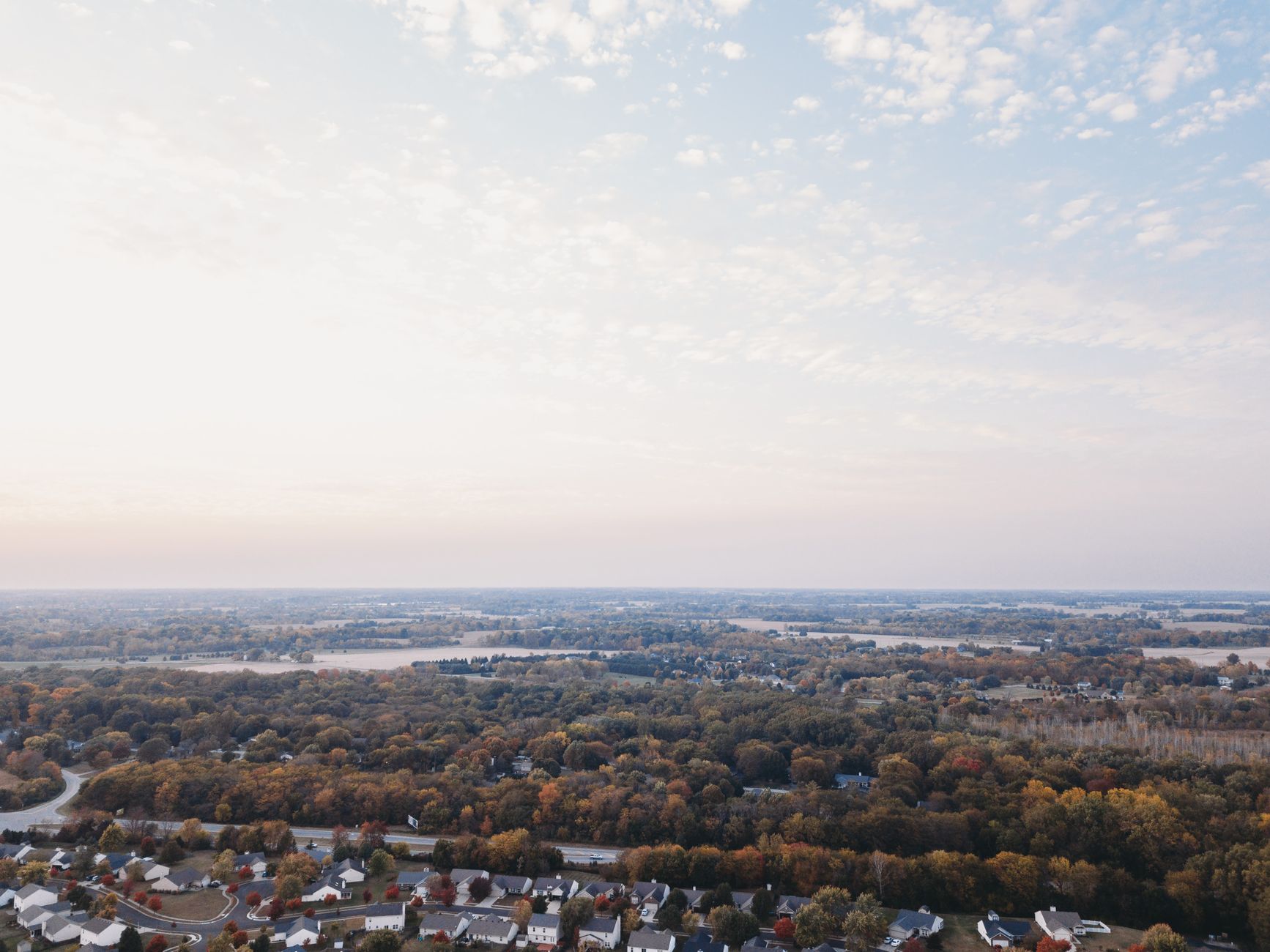
Drive through Ankeny and it doesn’t look like a boomtown in the way Bentonville or Boise does — there’s no dramatic downtown transformation, no new arts district drawing magazine coverage. It looks like subdivision after subdivision of new single-family homes, a growing retail corridor along its main commercial strips, and school construction that can’t quite keep pace with enrollment. City leaders have told local media they expect the population to reach 120,000 eventually, which would put Ankeny in the same population class as small cities like Green Bay or Odessa, Texas — a genuinely different kind of place than the sleepy bedroom community it was a generation ago.
The Des Moines suburb growth ranking
- Ankeny: 76,207 as of the 2024 special census, up from 67,887 in 2020
- Waukee: 31,823 as of 2024, roughly doubling over the past decade
- North Liberty (near Iowa City rather than Des Moines) has followed a similar trajectory tied to university and healthcare job growth
- The broader Des Moines-West Des Moines metro has become one of the fastest-growing metro areas in the Midwest by percentage
Why this matters beyond Iowa
What the growth means for schools and infrastructure
Ankeny’s school district has had to open new elementary and middle schools at a pace that would be unthinkable in most Midwestern towns, simply to keep up with enrollment tied to the housing boom. Bond measures for new school construction have passed repeatedly over the past decade, a reflection of a community that’s grown comfortable with near-constant expansion rather than treating it as an emergency. Waukee has followed a nearly identical pattern, with its school district repeatedly ranked among the fastest-growing in Iowa by enrollment.
The infrastructure strain shows up most visibly in traffic on connector roads between the suburbs and Des Moines proper, particularly along Interstate 35 and the state highways that funnel commuters into downtown office parks and the airport. City planners in both Ankeny and Waukee have pushed for expanded road capacity and, more recently, discussions about regional transit options that would have been unnecessary just fifteen years ago when both towns were still closer to rural bedroom communities than fast-growing small cities in their own right.
This growth pattern is playing out in a handful of other Midwest metro suburbs that get almost no national attention despite trajectories that rival Sun Belt boomtowns in percentage terms — Rogers, Minnesota outside Minneapolis, and parts of the Fargo, North Dakota metro have followed similar paths, driven by the same combination of stable regional employers and available land. None of these places will ever anchor a “best places to live” magazine spread built around outdoor recreation or nightlife, because that’s simply not the value proposition. The value proposition is a good school, a short commute, and a new house that costs less than half of what equivalent square footage would cost in a coastal metro, and for a specific kind of buyer, that’s the whole pitch.
It’s worth noting that this kind of growth carries its own quiet costs even without the visible strain of a coastal boomtown. Farmland that once supported Iowa’s agricultural economy is being converted to subdivisions at a pace that worries some agricultural economists, and the loss of that land is effectively permanent once it’s paved and built on, a tradeoff rarely discussed in the same breath as the population growth numbers themselves.
Ankeny and Waukee are a preview of what growth looks like when it’s driven by job stability and buildable land rather than lifestyle branding. Nobody is writing magazine features about Ankeny’s food scene or outdoor recreation, because that’s not the draw — the draw is a good school district, a short commute to a stable job market, and a new-construction home that’s still meaningfully cheaper than equivalent square footage in Denver, Austin, or Nashville. It’s the least glamorous possible growth story in America, which is probably exactly why it hasn’t made national news, even as it reshapes what “small Iowa town” means for an entire generation of Midwestern families who’d rather have a yard than a skyline.