Europe Is Now Fingerprinting and Photographing Every American Who Arrives — What You Need to Know Before You Land
We may earn money or products from the companies mentioned in this post. This means if you click on the link and purchase the item, I will receive a small commission at no extra cost to you ... you're just helping re-supply our family's travel fund.
What the EES Actually Is — and Why It’s a Bigger Deal Than the Headlines Suggest

The Entry/Exit System was designed to replace manual passport stamping at EU borders with a digital record. In theory, it makes the 90-day rule easier to enforce, reduces passport fraud, and eventually — once everyone is enrolled — makes border crossings faster. In practice, the first summer of full implementation is a logistical stress test that is already showing cracks.
Here is what the system collects from you at your first entry: fingerprint scans of typically all four fingers on each hand, a facial image, and full passport details including your name, date of birth, and document number, according to the EU’s official travel-europe.europa.eu portal. This data is stored in the EES database and verified on every subsequent trip for three years. After that, you re-register. Refusing to provide biometric data at the border is not an option — if you decline, entry is denied. Full stop.
The three-year registration window means that once you get through the first enrollment, future trips will be faster. But right now, in the summer of 2026, an enormous wave of travelers is going through first-time enrollment simultaneously. Border officers, kiosks, and the system itself are under peak pressure. The result is delays that are not theoretical — they are already happening and being documented by travelers in real time.
What Happens at the Border: The Step-by-Step Reality

When your plane lands at a Schengen airport — say, Paris CDG, Rome Fiumicino, or Barcelona El Prat — and you are a first-time EES enrollee, you will be directed to either a self-service kiosk or a staffed immigration desk for the biometric collection process. The kiosk scans your passport, prompts you to press your fingers against a reader, and captures a facial image. You then answer four screening questions about your visit: where you are staying, how long you plan to remain, and whether you have sufficient funds.
In ideal conditions with functioning equipment and short queues, this takes roughly 5 to 10 minutes per person. In real-world 2026 conditions, it is taking significantly longer. A U.S. citizen traveling to Lisbon in late June reported waiting 1.5 to 2 hours in immigration lines because the kiosks malfunctioned with her biometric passport, according to the EES Rollout Megathread on Reddit. On departure, she waited another 75 to 90 minutes. Travelers going through Munich reported an hour in EES queues on arrival. At Dover, French border authorities temporarily suspended the additional EES data collection on May 23, 2026, after hours-long holiday weekend delays, according to Thrifty Traveler’s reporting on the EES rollout.
This is not a one-off. The airports and airline industry groups have been raising alarms. Major travel organizations warned that without more processing flexibility, peak summer travel would bring serious disruption. That disruption is here. And one critical legal point that every traveler needs to understand: if you miss a flight or connection because of EES border delays, you are almost certainly not entitled to EU261 compensation, because the delay is caused by a government border procedure — not an airline operational failure. Your airline did not cause the queue. They are not responsible for it.
The Connection Flight Problem Nobody Is Warning You About
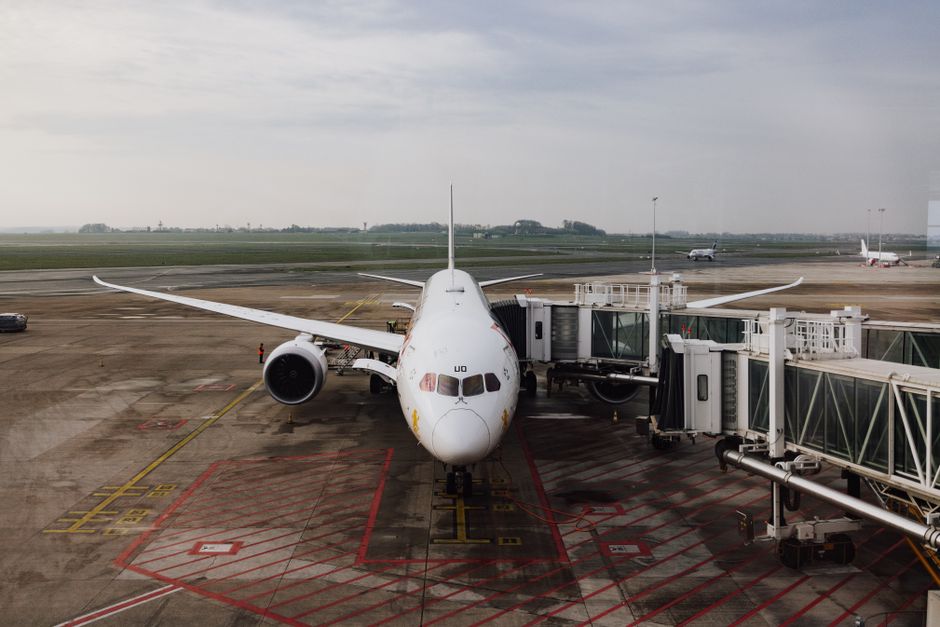
This is the part of the EES story that I genuinely think is being underreported, and it has the potential to ruin a trip. If you are flying from, say, New York to a non-Schengen city with a layover inside the Schengen Area — say, a connection through Frankfurt or Amsterdam — you may need to complete EES enrollment during that layover. That 90-minute connection you booked because it looked fine on paper? It may not be enough time anymore.
Thrifty Traveler reported in May 2026 that connections into the Schengen Area now carry meaningfully higher risk. A connection time that worked smoothly last year can turn into a missed flight when you add the enrollment bottleneck. One traveler on Reddit noted they were evaluating a 1 hour 20 minute connection through Frankfurt and was rightly alarmed — with 40 to 50 minute immigration wait times being reported at that airport alone, the math simply does not work.
The stakes are especially high for travelers on separate tickets. If you booked your transatlantic flight and your intra-Europe flight separately to save money — a common strategy — and you miss the second flight because of EES delays, the second airline has no obligation to rebook you for free. The first airline’s delay did not cause your missed connection in their view. You are on your own, potentially stranded and buying a new ticket at the gate.
The fix is painful but clear: build a minimum of 2.5 to 3 hours into any Schengen connection until the system stabilizes. Avoid separate-ticket itineraries involving Schengen connections entirely if possible. And if you are on a single ticket and do miss your connection due to EES delays, go directly to the airline’s transfer desk, explain the situation, request rebooking, and ask for written documentation of the delay for a potential travel insurance claim.
Which Airports Are the Worst Right Now

Not all airports are equal in how they have handled the EES rollout, and knowing which ones are struggling can help you plan smarter. Based on traveler reports and coverage from Thrifty Traveler and TravelPirates through June 2026, the airports drawing the most concern include Lisbon LIS, Porto OPO, and Athens ATH, where travelers have reported immigration waits stretching to several hours. Paris CDG, Amsterdam AMS, Frankfurt FRA, and Rome FCO are also flagged as high-risk during peak summer periods — especially on flights with large numbers of non-EU passengers.
The Dover-Calais crossing had its most dramatic moment in late May 2026, when French border authorities paused EES data collection after delays spiraled. The Eurostar terminal in London has set up 49 EES kiosks, but the physical throughput during peak travel windows has still created backlogs.
Ireland is a notable exception worth building into your itinerary if flexibility allows. Dublin Airport is not part of EES, so a transatlantic flight arriving in Dublin routes you around the enrollment process entirely. If you plan to continue into the Schengen Area from there, you will still need to enroll at that Schengen entry point — but you have the flexibility of managing that timing without the added pressure of a tight transatlantic connection.
ETIAS Is Coming Next — Europe’s Version of the ESTA
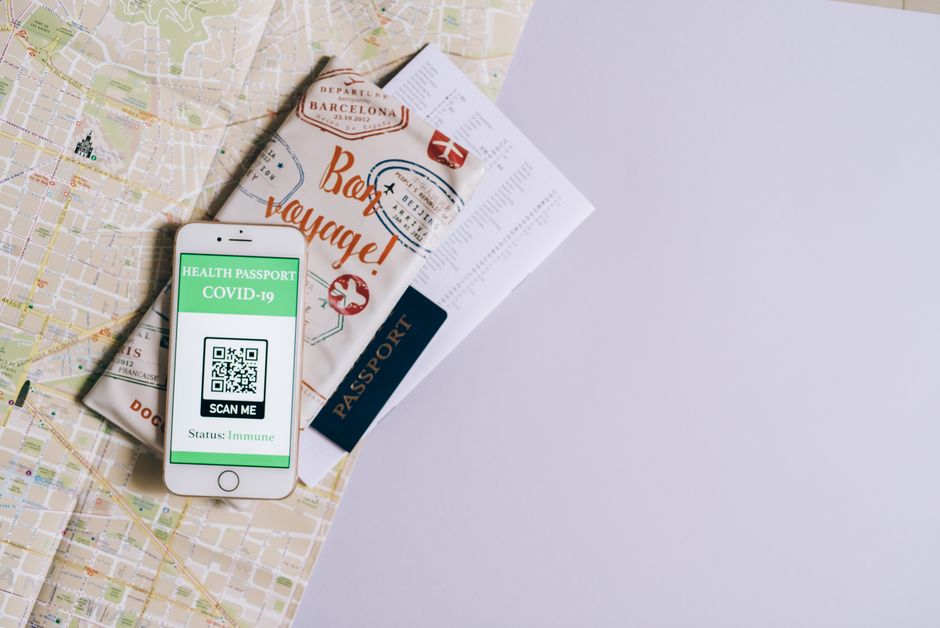
Just when you thought Europe’s new entry requirements were complete, there is one more layer arriving later in 2026. ETIAS — the European Travel Information and Authorization System — is expected to launch in Q4 2026. It is Europe’s equivalent of the American ESTA program: a pre-travel authorization that visa-exempt travelers, including Americans, must apply for and receive before they board a flight to any Schengen country.
ETIAS is separate from EES. EES is what happens at the border. ETIAS is what you do before you leave home. The application is entirely online, costs approximately 7 to 10 euros per person — roughly $8 to $11 — and once approved is valid for three years or until your passport expires, whichever comes first. Most applications are expected to be approved within minutes, according to the official ETIAS website at etias.com.
The launch is expected in Q4 2026 — meaning it may affect holiday travel later this year or early 2027. As of the time of writing, you cannot yet apply for ETIAS and no applications are being accepted. However, you should sign up for notifications at the official EU travel-europe.europa.eu portal so you receive an alert the moment applications open. If you have a Europe trip planned for early 2027, you will almost certainly need an ETIAS before you fly.
What to Do Right Now Before Your Europe Trip

Despite the friction, Europe is absolutely still worth visiting. Millions of Americans travel there every summer without incident. But the era of breezing through European border control the way you breezed through it five years ago is over, at least for the next year or two while the system matures. Here is your practical action list.
First, add time. Arrive at European airports at least three hours before international departure flights, and more during peak summer weeks. If you are entering Europe, assume immigration will take at least an hour as a floor estimate — not a worst case. Second, protect your connections. Avoid any Schengen layover shorter than 2.5 to 3 hours, especially if you are a first-time EES enrollee. Third, book on single tickets wherever possible so missed connections fall under airline rebooking obligations rather than leaving you stranded. Fourth, buy travel insurance that specifically covers missed connections and trip interruptions caused by border control delays — standard policies vary, so read the fine print before you buy.
Fifth, do not confuse EES with ETIAS. There is nothing to pre-register for with EES — it happens at the border. ETIAS will require online pre-approval when it launches; watch for announcements. And finally, check your passport expiration date. Most Schengen countries require your passport to be valid for at least three months beyond your planned departure date from the region. Some travelers are still getting flagged at airline check-in for passports expiring too soon. Renew now if your passport expires within six months of any planned Europe travel.