Devils Tower Became America’s First National Monument in 1906. 7 Reasons to See It in Late Fall
We may earn money or products from the companies mentioned in this post. This means if you click on the link and purchase the item, I will receive a small commission at no extra cost to you ... you're just helping re-supply our family's travel fund.
On September 24, 1906, President Theodore Roosevelt proclaimed Devils Tower the first national monument in the United States. More than a century later, the tower still rises abruptly over the Belle Fourche River valley in northeastern Wyoming, standing 867 feet from base to summit and about 1,267 feet above the river. If you visit Devils Tower in late fall, you get it with far fewer people than in summer.
Roosevelt used the Antiquities Act, signed earlier in 1906, to protect the landmark. It was a new tool at the time, and Devils Tower was the first place to receive that protection. Today it is a sacred site for many Plains tribes, including the Lakota, who call it Mato Tipila, or Bear Lodge.
Summer brings the biggest crowds, especially around the Sturgis Motorcycle Rally in nearby South Dakota in August. By late October and November, the parking lot empties and the tower takes on a different feel. Here are seven reasons that window works.
Why visit Devils Tower in late fall
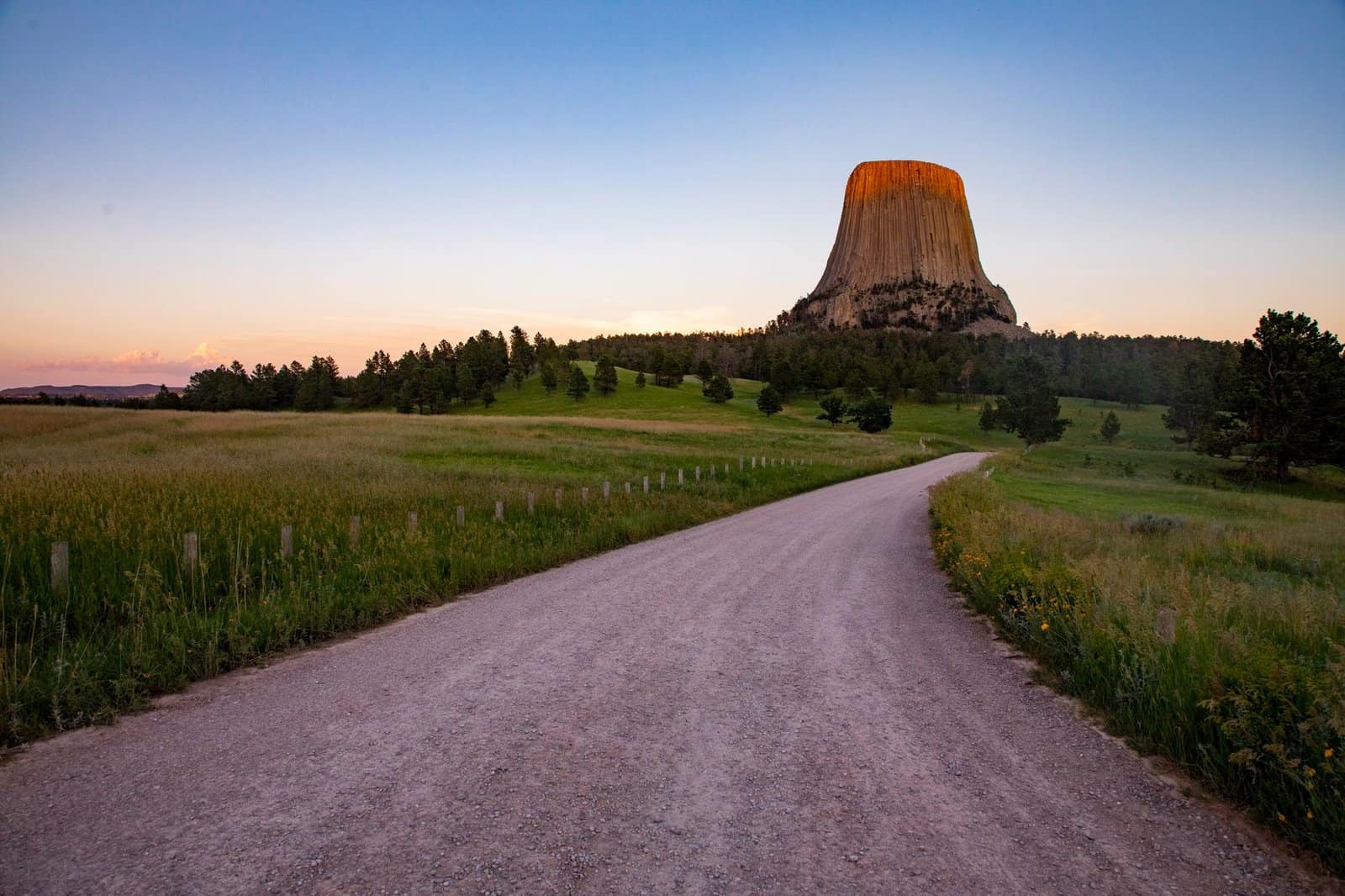
Devils Tower sits at the edge of the Black Hills, where pine-covered ridges meet open prairie. Late-fall weather here is unpredictable. You can get a calm 50-degree afternoon or a cold, windy day with snow flurries. That variability is part of the appeal, but it also means you should check the forecast and road conditions before you go.
1. The crowds are gone
Summer at Devils Tower can mean lines at the entrance, full parking lots, and a steady stream of people on the main trail. By late fall, most of that disappears. School is in session, the summer road-trip season is over, and the Sturgis rally crowds are long gone.
That means easier parking at the visitor center lot, quieter trails, and more space at viewpoints. You can stop on the trail, look up at the columns, and hear the wind in the pines instead of conversations.
2. Low-angle light makes the columns stand out
The tower is made of igneous rock that cooled and fractured into tall, mostly six-sided columns. In late fall, the sun sits lower in the sky, and that low-angle light throws shadows across the columns. The grooves look deeper, and the tower changes color throughout the day, from gray to gold to warm orange near sunset.
Photographers often find late-fall afternoons especially good for this. Bring a camera or a phone with a zoom lens, and plan to stay until sunset if the weather allows.
3. The trails are comfortable to hike
The main Tower Trail is a paved loop of about 1.3 miles around the base of the tower. It is mostly level and gives views of the tower from all sides, plus the boulder field of broken columns that have fallen over time. In summer, the trail can get hot in the afternoon sun. In late fall, temperatures are usually cooler and more comfortable for walking.
For a longer hike, the Red Beds Trail loops about 2.8 miles through red sandstone and pine forest with views of the tower and the river valley. The Joyner Ridge Trail offers a quieter perspective from the north. Wear shoes with good grip in case of frost or snow.
4. Wildlife is active and easy to spot
On the drive in, you pass a large black-tailed prairie dog town along the road. Prairie dogs stay active on sunny fall days, popping in and out of their burrows and calling to each other. White-tailed and mule deer move through the area, especially near dawn and dusk. Wild turkeys are common in the Black Hills.
Fall is also a good time to watch birds of prey hunting over the prairie. Bring binoculars and keep your distance from all wildlife. Do not feed prairie dogs, which can carry disease.
5. Climbing routes are quieter
Devils Tower is one of the best-known crack-climbing destinations in North America, with hundreds of routes up its columns. Climbers must register with the park before climbing. Late fall can offer good conditions on mild, sunny days, and routes are far less crowded than in summer.
The park has a voluntary climbing closure each June, out of respect for tribes that hold ceremonies at the tower during that month. Fall climbing does not conflict with that closure. If you are not a climber, watching teams on the columns through binoculars from the Tower Trail is still a highlight.
6. Nearby towns and the Black Hills are calmer
Devils Tower sits near the small towns of Hulett and Sundance in Crook County, Wyoming. In summer, the whole region is busy with travelers heading to the Black Hills, Mount Rushmore, and Badlands National Park. In late fall, lodging is easier to find, and the region’s scenic drives feel more open.
You can pair a Devils Tower visit with a drive through Spearfish Canyon in South Dakota, about an hour away, or continue to Mount Rushmore and Custer State Park. Check which seasonal businesses are open before you go, since some close after the summer.
7. You might see the tower with snow
Late fall can bring early snow to the Black Hills. A dusting on the tower’s ledges and the pine trees around it makes for dramatic views, with the dark columns contrasting against the white ground. Snow does not usually last long in early-season storms, so the roads often clear quickly afterward.
If you want the best chance of snow, aim for November. If you prefer milder weather, late October is often a better bet. Either way, pack warm layers, gloves, and a hat.
What makes Devils Tower geologically unusual
Geologists agree that Devils Tower formed from molten rock that pushed up into overlying sedimentary layers and cooled underground. As it cooled, it contracted and cracked into columns, similar to the way mud cracks when it dries. Over millions of years, erosion removed the softer rock around it, leaving the harder igneous rock standing above the landscape.
Exactly how the tower formed is still debated. Some geologists think it was part of a larger igneous intrusion. Others think it may have been the neck of a volcano. The park’s exhibits lay out the different theories.
The tower’s cultural significance
More than 20 tribes have cultural connections to Devils Tower. Many tribes have traditional stories about how the tower formed, often involving a giant bear clawing at the rock, which explains the vertical grooves. The name Devils Tower came from an 1875 expedition interpreter’s mistranslation, and some tribes have asked for the name to be changed to reflect its sacred status.
When you visit, you may see colorful prayer cloths or bundles tied to trees near the trail. These are religious offerings. Do not touch, move, or photograph them closely.
How to fit Devils Tower into a road trip
Devils Tower is remote, which is part of its appeal. The closest commercial airports are in Rapid City, South Dakota, about two hours away, and Gillette, Wyoming, about an hour away. Most visitors arrive by car as part of a longer Black Hills or northern plains trip.
A few common routes work well in late fall:
- Rapid City loop: Fly into Rapid City, drive to Devils Tower via Spearfish and Sundance, then return through the Black Hills past Custer State Park and Mount Rushmore.
- I-90 detour: If you are driving across Wyoming on Interstate 90, leave the highway at Moorcroft or Sundance and loop up to the tower. It adds a few hours, not a full day.
- Bighorn to Black Hills: Pair Devils Tower with Sheridan and the Bighorn Mountains to the west for a longer Wyoming trip.
Plan your driving for daylight hours. Deer are common on rural roads around the Black Hills at dawn and dusk, and collisions are a real risk in fall. Late-fall days are short, so a sunset at the tower means a drive back in the dark. Slow down and watch the shoulders.
How much time you need
Most visitors spend two to three hours at Devils Tower: enough time to walk the Tower Trail, stop at the prairie dog town, and visit the visitor center if it is open. Add a couple of hours if you want to hike the Red Beds Trail or watch climbers. Photographers who want sunrise or sunset light should plan to stay overnight in Hulett, Sundance, or Moorcroft.
Practical tips for a late-fall visit
A few practical notes help make the trip smoother:
- The monument is open year-round, but visitor center hours shrink outside summer. Check the NPS website for current hours.
- There is an entrance fee per vehicle, and the America the Beautiful pass covers it.
- The Belle Fourche River Campground is seasonal. If you want to camp, check whether it is open on your dates.
- Food options inside the monument are limited, so bring snacks and water. The small trading post outside the entrance has seasonal hours.
- Cell service can be limited. Download maps ahead of time.
The Close Encounters factor
For many visitors, the image of Devils Tower comes from Steven Spielberg’s 1977 film Close Encounters of the Third Kind, which used the tower as the setting for its climax. The movie brought a wave of new visitors and made the tower a pop-culture landmark.
That fame still draws people, but the tower itself is the real reason to come. Stand at the base on a quiet late-fall afternoon, look up at those columns catching the last light, and it is easy to see why Roosevelt chose it as the first national monument in 1906 and why so many tribes consider it sacred.