Only One Yellowstone Road Stays Open to Cars All Winter. Here’s What You Can See Along It
We may earn money or products from the companies mentioned in this post. This means if you click on the link and purchase the item, I will receive a small commission at no extra cost to you ... you're just helping re-supply our family's travel fund.
Most of Yellowstone closes to regular cars in early November, but one Yellowstone winter road stays open all season. It runs from the North Entrance at Gardiner, Montana, through Mammoth Hot Springs and the Lamar Valley to Cooke City, Montana. Along it, you can see the Roosevelt Arch, Mammoth’s travertine terraces, and the park’s northern range, where bison, elk, and wolves spend the winter.
The National Park Service says this route, from the North Entrance through Tower Junction to the Northeast Entrance and on to Cooke City, is the only road generally open year-round to regular vehicles. Most other park roads close to cars from early November to late April and open only to commercially guided snowmobiles and snowcoaches from mid-December to mid-March.
That makes this roughly 50-mile drive the main way to see Yellowstone in winter without booking an oversnow tour. Here is what is along it and how to drive it well.
What you can see along the Yellowstone winter road
Think of the drive as five sections, each with its own payoff. You can do it as a long day trip from Gardiner, but many winter visitors spend two or three days, focusing on wildlife at dawn and dusk.
Gardiner and the Roosevelt Arch
Gardiner sits at the park’s North Entrance at about 5,300 feet, one of the lowest and mildest spots around Yellowstone. In winter, elk and sometimes bison wander right through town, and pronghorn graze in the flats just inside the park.
The Roosevelt Arch, the stone gateway at the North Entrance, was dedicated in 1903 with Theodore Roosevelt laying its cornerstone. Its inscription reads “For the Benefit and Enjoyment of the People.” It makes a good first photo stop, especially with snow on the arch and Electric Peak in the background.
Mammoth Hot Springs
Five miles into the park, Mammoth Hot Springs is the park’s headquarters area and the center of winter activity. The terraces are built from travertine, a form of limestone deposited by hot water rising through the ground. In cold air, steam rises off the terraces, and frost coats nearby trees.
Boardwalks lead through the Lower Terraces, and the Upper Terrace Drive often becomes a ski and snowshoe route in winter. The Albright Visitor Center has exhibits and rangers who can tell you where wildlife has been seen. Elk often bed down on the lawns of the Mammoth area, a reminder to give them space. The park requires you to stay at least 25 yards from elk and bison and at least 100 yards from wolves and bears.
Mammoth is also the starting point for many winter snowcoach tours into the park interior, so if you want to see Old Faithful or the Grand Canyon of the Yellowstone in winter, this is where many of those trips begin.
Blacktail Plateau to Tower Junction
East of Mammoth, the road climbs across open, rolling country toward Tower Junction. This stretch is good for spotting elk, coyotes, and sometimes bighorn sheep on rocky slopes. The road gains elevation here, so expect more snow and colder temperatures than in Gardiner.
Tower Junction is where the road meets the route south toward Tower Fall and Canyon, which closes to cars in winter. Stay on the road toward the Northeast Entrance.
The Lamar Valley
The Lamar Valley is the reason many people make this drive. The National Park Service calls Yellowstone’s northern range one of the best places in the world to watch wolves. The valley holds some of the largest wild herds of bison and elk in North America, and that prey supports several wolf packs in winter.
Winter makes wildlife easier to spot. Snow cover pushes animals into lower, open valleys, and dark shapes stand out against white ground. Early morning and late afternoon are the best times. You will often see groups of wildlife watchers with spotting scopes at pullouts. If you see a cluster of scopes, pull fully off the road, keep your voice down, and ask politely what they are watching. Many regulars are happy to share.
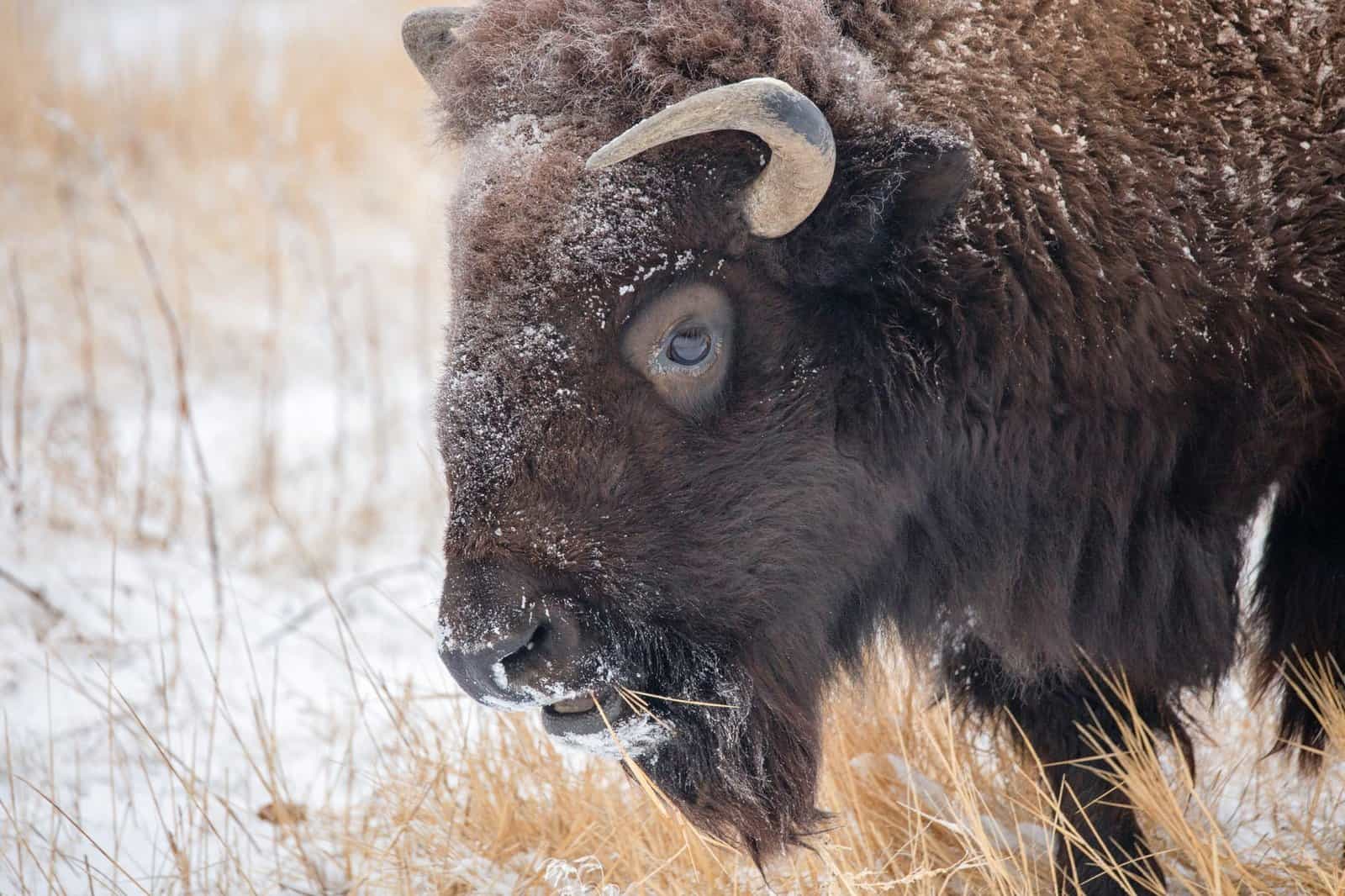
Bison often walk on the road itself in winter because plowed pavement is easier than deep snow. Slow down, stop, and wait for them to move. Do not honk or try to drive through a herd.
Soda Butte, Silver Gate, and Cooke City
Past the Lamar Valley, the road follows Soda Butte Creek toward the Northeast Entrance. Mountains rise steeply, and snowfall increases. Just outside the entrance are the small towns of Silver Gate and Cooke City.
In winter, Cooke City is effectively a dead end for cars. The Beartooth Highway to Red Lodge closes for the season, and a section of road east of Cooke City toward the Chief Joseph Scenic Byway also closes to wheeled vehicles in winter. That means the only way to drive in or out of Cooke City in winter is through the park from Gardiner. The town becomes a base for snowmobiling and backcountry skiing, with a handful of lodges and restaurants serving winter visitors.
Why only this road stays open
The road through the northern range serves a practical purpose. It connects Cooke City and Silver Gate to the rest of Montana when the high mountain routes around them are buried in snow. Keeping it plowed is the only way for residents and businesses there to have a winter road connection.
The northern range is also lower and drier than much of Yellowstone’s interior, so plowing it is more manageable than routes over higher passes. The rest of the park’s roads are groomed for oversnow vehicles instead.
How to drive the Yellowstone winter road safely
Plowed does not mean easy. Winter conditions on this road can include blowing snow, black ice, and whiteouts, especially in the higher stretches east of Tower. Keep these rules in mind:
- Check the NPS park roads page and current conditions before leaving. Temporary closures can happen during storms.
- Use winter tires or four-wheel or all-wheel drive with good tread, and carry chains if you are not sure.
- Fill your gas tank in Gardiner. Fuel options inside the park and in Cooke City are limited in winter.
- Pack a winter emergency kit: blankets, extra layers, water, food, a shovel, and a flashlight.
- Drive slowly and watch for wildlife on the road, especially at dawn and dusk.
- Never stop in a travel lane to watch animals. Use pullouts.
Cell coverage is spotty in parts of the drive, so download maps ahead of time and let someone know your plans.
A realistic winter day on the northern range
A good plan starts in Gardiner before sunrise. Drive into the park in the dark and be in the Lamar Valley at first light, when wolves and other predators are most active. Spend the morning scanning the valley from pullouts.
Late morning, head back west to Mammoth, walk the Lower Terraces boardwalks, and stop at the Albright Visitor Center. Have lunch in Gardiner or the Mammoth area. In the afternoon, return toward the Lamar Valley for a second round of wildlife watching as the light fades, or take a guided snowshoe walk if one is running.
Many visitors also book a guided wildlife tour out of Gardiner. Guides know the valley well, carry high-quality spotting scopes, and track where animals have been seen in recent days, which raises your odds of seeing wolves.
Where to stay
Gardiner has the widest choice of winter lodging, from motels to cabins and vacation rentals. Inside the park, lodging at Mammoth has had seasonal schedules and renovation-related closures in recent years, so check what is open for your dates before you count on it.
Cooke City and Silver Gate have small motels and lodges catering to snowmobilers and backcountry skiers. Staying there puts you closest to the Lamar Valley at dawn, but you are committed to the drive back through the park when you leave.
What to pack for a northern range wildlife day
Wildlife watching in Yellowstone in winter means standing still in the cold for long stretches, which is very different from hiking. Temperatures on the northern range can drop well below zero at dawn, and wind across the Lamar Valley makes it feel colder. Pack more than you think you need:
- Insulated boots rated for deep cold and thick wool socks.
- A heavy parka, insulated pants, and a warm hat that covers your ears.
- Mittens or heavy gloves, plus thin liner gloves for handling cameras and scopes.
- Binoculars at a minimum, and a spotting scope if you have one.
- A thermos of hot coffee or tea and high-calorie snacks.
- Hand and toe warmers for long waits at pullouts.
Keep camera batteries in an inside pocket. Cold drains them fast, and you do not want a dead battery when a wolf pack appears on a ridge.
When to go
The northern road is open all winter, but the experience shifts through the season. Early winter in November and December brings shorter days and the start of heavier snow. January and February usually offer the deepest snow and some of the most reliable wildlife viewing as animals concentrate in the valleys. March brings longer days and the first signs of spring.
No matter when you go, the payoff is the same: a version of Yellowstone that very few summer visitors ever see, with steam rising off the terraces, bison crusted with frost, and the chance to watch wolves cross a white valley. The rest of the park may be closed to cars, but this one road keeps the door open.