Detroit’s Midtown Population Grew While the City Overall Kept Shrinking. That Split Tells the Real Comeback Story.
We may earn money or products from the companies mentioned in this post. This means if you click on the link and purchase the item, I will receive a small commission at no extra cost to you ... you're just helping re-supply our family's travel fund.
Detroit’s population has declined in nearly every census since 1950, dropping from a peak of roughly 1.85 million to under 630,000 by the 2020 count, a statistic that dominates national coverage of the city and obscures a more complicated, more interesting reality happening inside specific neighborhoods. Midtown, Corktown, and Eastern Market have each seen genuine population growth, new investment, and rising property values over the past fifteen years, even as the city’s overall trajectory continued downward, producing a Detroit recovery story that is intensely real in a handful of square miles and largely absent everywhere else.
That split, concentrated revival inside a broader shrinking city, is the actual shape of Detroit’s comeback, and it explains why national coverage oscillates so wildly between declaring Detroit dead and declaring it reborn depending on which three-block radius a reporter happened to visit.
Midtown’s Institution-Driven Recovery
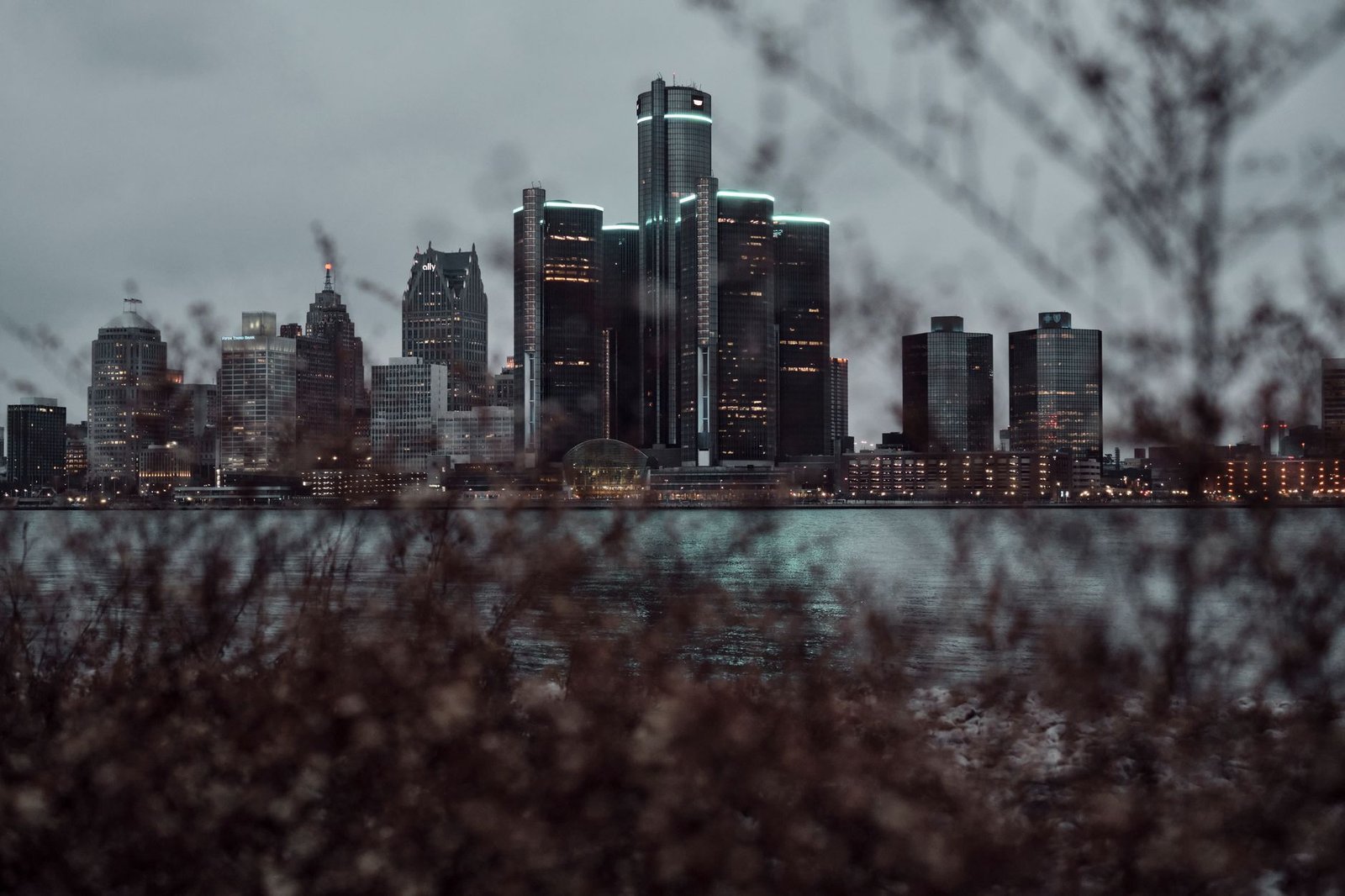
Midtown Detroit’s revival traces substantially to the anchor institutions that never left the neighborhood even during the city’s worst decades: the Detroit Institute of Arts, Wayne State University, and the Detroit Medical Center all maintained a continuous presence through the population collapse of the late 20th century, providing a base of employment, foot traffic, and institutional investment that gave Midtown a foundation other emptied-out Detroit neighborhoods never had to build a recovery around in the first place.
Dan Gilbert’s Bedrock real estate company, along with his broader Rock Ventures investment in downtown and Midtown properties starting in the 2010s, added a massive private capital injection on top of that institutional base, restoring dozens of historic buildings and relocating thousands of Quicken Loans, now Rocket Mortgage, employees into downtown offices, a deliberate strategy to rebuild density and daytime population in the urban core.
The result is a Midtown that today features a mix of restored historic apartment buildings, new restaurants, and a genuinely walkable streetscape anchored by the DIA and the Detroit Public Library’s main branch, presenting a version of Detroit that looks almost nothing like the ruins-focused imagery that dominated national coverage of the city through the 2000s and early 2010s.
Corktown’s Different Path Through Ford
Corktown, Detroit’s oldest surviving neighborhood and historically an Irish immigrant enclave, took a different route to revival centered on Ford Motor Company’s decision to redevelop the long-abandoned Michigan Central Station, an iconic ruin that had become an unofficial symbol of Detroit’s decline, into a mobility-focused corporate campus completed and opened to the public in 2024.
- Michigan Central Station sat vacant and stripped for scrap metal for nearly three decades before Ford’s redevelopment began in 2018
- Ford’s investment in the Corktown campus reportedly exceeded $900 million including the station renovation and surrounding development
- Corktown’s Michigan Avenue commercial corridor has added dozens of new restaurants and bars over the past decade, drawing comparisons to other historic neighborhood revivals nationally
- Home prices in Corktown have risen substantially faster than the citywide Detroit average over the past ten years
Eastern Market’s Working Food Economy
Eastern Market, one of the oldest and largest public markets in the country, never fully declined the way much of Detroit did, maintaining its role as a working wholesale produce distribution hub even through the city’s worst population loss years, which gave the surrounding neighborhood a functioning economic base to build newer restaurant and retail investment around rather than starting from complete vacancy.
The market’s Saturday farmers market now draws tens of thousands of visitors weekly during peak season, drawing both Detroit residents and suburban day-trippers in a pattern that has helped Eastern Market avoid the isolation that limited recovery in neighborhoods without a comparable draw to bring outside visitors and spending into the area regularly.
Why the Rest of the City Didn’t Follow
The neighborhoods that have not seen comparable recovery, large sections of the east side and parts of northwest Detroit, generally lacked the anchor institutions, historic building stock, or geographic proximity to downtown that made Midtown, Corktown, and Eastern Market attractive targets for the concentrated wave of investment that reshaped Detroit’s urban core, leaving vast stretches of the city with continued vacancy, population loss, and municipal service challenges that never benefited from the same attention.
Detroit’s city government and philanthropic community, including the Kresge Foundation, have directed some resources toward neighborhood-level revitalization beyond the urban core, but the scale of investment remains far smaller than what downtown and Midtown received, and the gap between the recovering core and the rest of the city has become one of the defining features of Detroit’s post-bankruptcy identity.
What This Means for How to Understand Detroit
A visitor spending a weekend entirely within Midtown, Corktown, and downtown will encounter a genuinely vibrant, rapidly changing American city, while a visitor who drives even a few miles further out will often see block after block of vacant lots and boarded structures that look consistent with the city’s population statistics rather than its investment headlines.
Both experiences are accurate representations of Detroit as it actually exists in 2025, and understanding the city requires holding both simultaneously rather than picking whichever narrative, revival or ruin, happens to fit a predetermined storyline about American urban decline or American urban comeback.
The Population Numbers That Complicate the Comeback Narrative
Census data released after the 2020 count showed Detroit’s population decline had slowed dramatically compared to previous decades, and some neighborhood-level data even suggested modest growth in specific census tracts overlapping with Midtown and downtown, a genuinely notable shift after seventy years of continuous citywide decline. Detroit officials celebrated this data point extensively, though demographers cautioned that citywide population stabilization, let alone growth, remained a longer-term proposition still dependent on whether the concentrated investment in the urban core could eventually expand outward into the neighborhoods that have not yet seen comparable change.
Mayor Mike Duggan’s administration made neighborhood-level revitalization a central policy focus specifically in response to criticism that downtown and Midtown investment had left most of the city behind, funding blight removal, streetlight replacement, and targeted housing programs in neighborhoods outside the urban core, though the scale of that investment still lags well behind what reshaped the areas closest to downtown over the same period.