Decatur, Georgia Is Four Square Miles. It Might Be a Better Hang Than Atlanta Right Now
We may earn money or products from the companies mentioned in this post. This means if you click on the link and purchase the item, I will receive a small commission at no extra cost to you ... you're just helping re-supply our family's travel fund.
Decatur is a separate incorporated city from Atlanta, technically its own municipality with its own school district, sitting just six miles east of downtown Atlanta and connected by MARTA rail. It covers roughly four square miles and has around 25,000 residents. And increasingly, people who live in the metro area treat a Saturday in Decatur as a genuine alternative to a Saturday in Atlanta proper, not a consolation prize.
What Decatur Actually Has Packed In
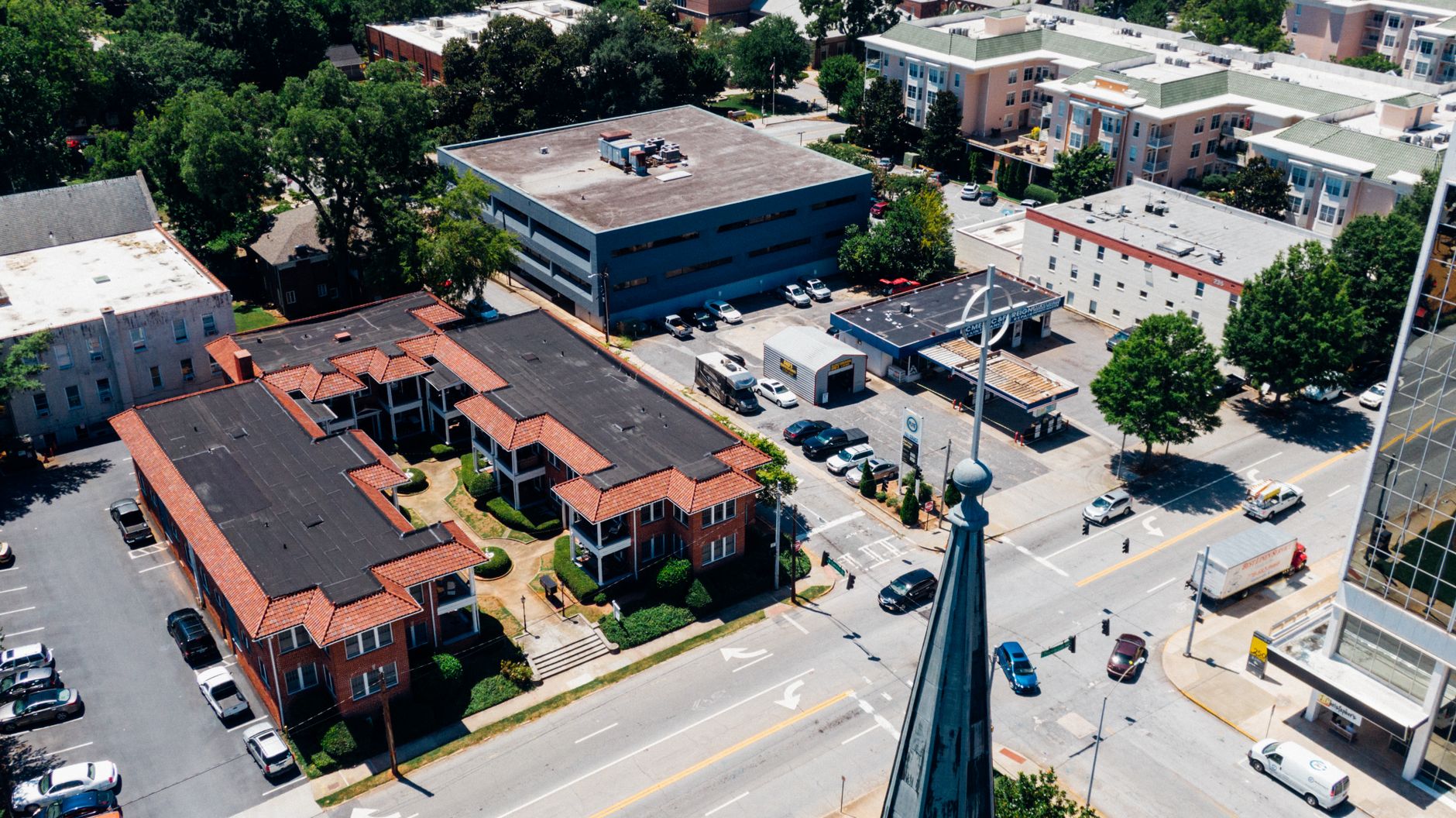
The old DeKalb County Courthouse anchors a walkable downtown square lined with restaurants, independent bookstores, and bars, all within a few blocks of a MARTA station, meaning residents and visitors alike can leave a car at home entirely. The Decatur Book Festival, one of the largest independent book festivals in the country at its peak, and a busy year-round farmers market culture give the town a cultural calendar disproportionate to its size.
Why It Got This Way
- Decatur’s own school system, separate from Atlanta or DeKalb County schools, became a major draw for families willing to pay a premium to live inside the small city limits
- Walkability: nearly the entire downtown core is walkable from residential streets, unlike most of sprawling metro Atlanta
- MARTA rail access puts downtown Atlanta and the airport within a direct, no-transfer train ride
The Price of Being the Cool Suburb

Decatur’s desirability shows up directly in its housing costs, which run well above the metro Atlanta median and above many comparable-sized Atlanta neighborhoods. Bungalow-style homes that would be considered starter homes elsewhere in DeKalb County routinely sell well into the $500,000s to $700,000s, pricing out many of the working- and middle-class families who made the town what it was a generation ago.
The same walkability and small-town square that make Decatur appealing to visitors have made it a magnet for young professionals and families who could just as easily afford intown Atlanta neighborhoods like Grant Park or Old Fourth Ward, but choose Decatur specifically because it offers city-adjacent culture without full-city scale, crime statistics, or traffic patterns.
Atlanta’s Trade-Off
Downtown Atlanta and Midtown offer scale that Decatur simply cannot match — major sports venues, big-name touring concerts, corporate density, and a much larger restaurant scene overall. But scale comes with sprawl: getting from one part of Atlanta to another routinely means a 30- to 45-minute drive on some of the most congested interstates in the country. Decatur’s whole appeal is that you can park once and not think about a car again for the rest of the day.
A Pattern Playing Out Nationally

Decatur is not unique in this dynamic — Evanston, Illinois outside Chicago and Hoboken, New Jersey outside Manhattan follow a similar script: a small, historically distinct municipality bordering a major city, offering walkability and a defined downtown core that the larger city’s individual neighborhoods often cannot replicate at the same density. In each case, the trade is the same one Decatur residents make: less scale, more coherence, and a price tag that has climbed to reflect exactly how many people have figured that out.
The visitors who spend a weekend in Decatur instead of downtown Atlanta are not settling. They are making the same calculation as the people who moved there permanently — that a four-square-mile city with a train station, a square, and a school district worth paying for beats fighting Atlanta traffic for a comparable night out.
What Atlanta Loses When Talent Moves to the Suburb

Atlanta’s own intown neighborhoods, including Grant Park, Old Fourth Ward, and Inman Park, have worked hard over the past two decades to build exactly the kind of walkable, small-business-driven density that draws people to Decatur. Those neighborhoods have succeeded in patches, but they remain part of a much larger, more sprawling city where a resident’s daily experience is shaped as much by traffic and scale as by any single walkable pocket.
Decatur’s advantage is that its entire footprint is small enough to be walkable end to end, with a unified school district and city government making coordinated decisions about zoning, transit access, and downtown investment at a scale Atlanta’s city government simply cannot replicate across its much larger geography. That coordination advantage is a big part of why Decatur consistently outperforms comparably sized Atlanta neighborhoods on measures like walkability rankings and small-business density per capita.
The trade-off city officials in Atlanta have had to accept is that some of the demand for walkable, small-scale urban living will keep flowing to independent municipalities like Decatur rather than to Atlanta’s own neighborhoods, no matter how much investment Atlanta puts into replicating the formula within its own borders.
Visitors who spend a day in Decatur rather than downtown Atlanta often come away surprised at how much a four-square-mile city can pack into a single afternoon, and that surprise is exactly the reaction that keeps drawing both new residents and weekend visitors to a town most people outside Georgia have never heard of.