Chattanooga’s Southside and North Shore Are Changing Fast—Who’s Arriving, Who’s Being Priced Out, and What Visitors Will Notice
We may earn money or products from the companies mentioned in this post. This means if you click on the link and purchase the item, I will receive a small commission at no extra cost to you ... you're just helping re-supply our family's travel fund.
Chattanooga used to be known as a gritty Southern factory town that people drove through on the way to somewhere else. Today the riverfront is polished, the Tennessee Aquarium is a headline attraction, and the neighborhoods on either side of the Tennessee River are some of the fastest-changing places in the state. The Chattanooga Southside and North Shore districts show the change in two different ways.
The Southside has turned old rail and industrial land into apartments, breweries, and event venues. The North Shore, across the river, has turned a once-sleepy commercial strip into a pedestrian-friendly district with parks and restaurants. Both are drawing new residents and visitors, and both raise a question: who benefits, and who gets left behind?
Chattanooga Southside and North Shore: Who’s Arriving and Who’s Priced Out
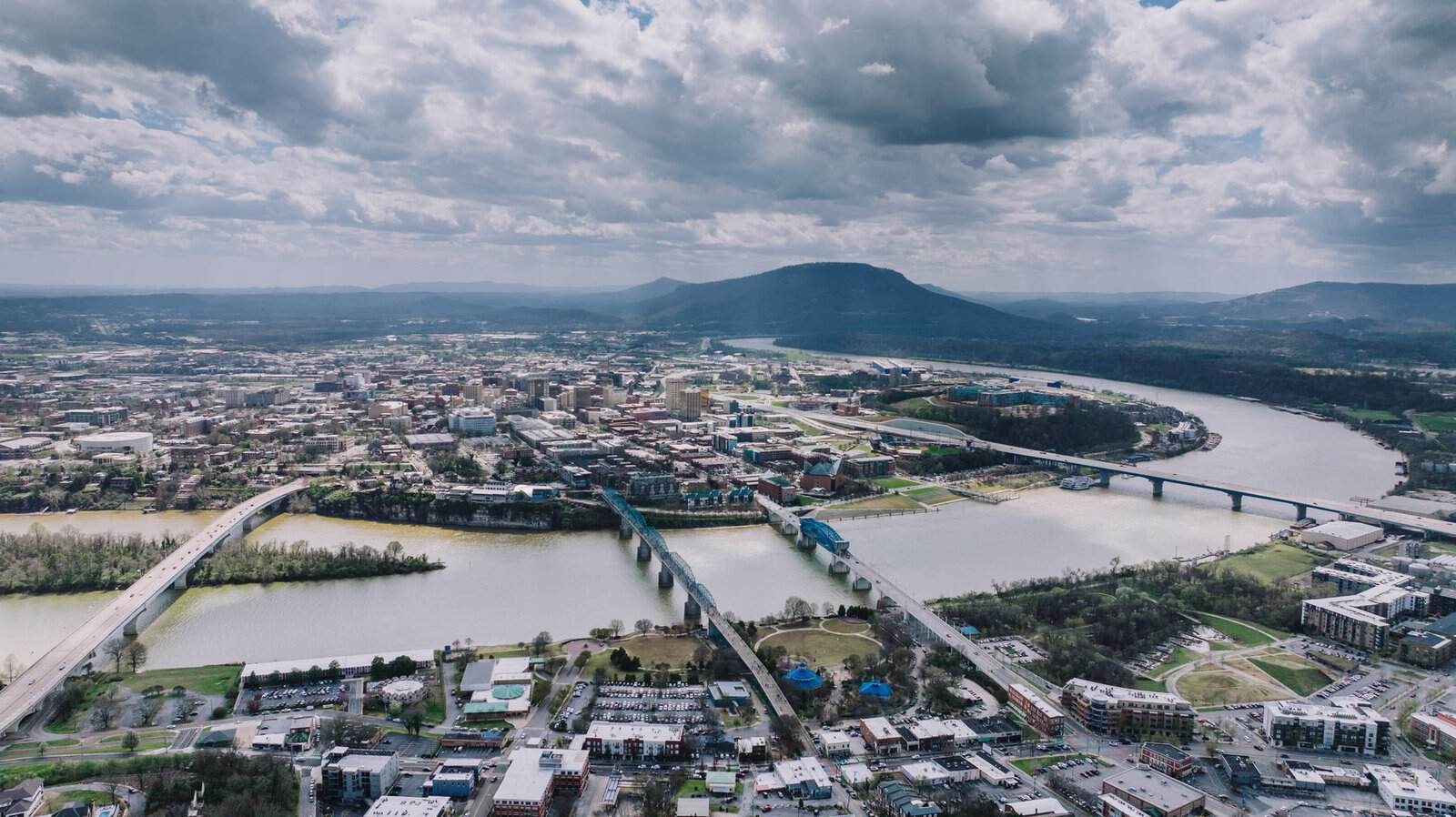
The short answer is that younger professionals, remote workers, investors, and visitors are arriving, while longtime renters, small businesses, and lower-income neighborhoods nearby are feeling the squeeze. The details differ between the two districts, so here is how each looks on the ground.
The Southside: From Rail Yards to Nightlife
The Southside is the stretch south of downtown, anchored by the old Chattanooga Choo Choo terminal. For decades the area was a mix of warehouses, railyards, and low-rent housing. In the last fifteen years, investment has turned it into one of the city’s busiest districts.
Today you will find the Chattanooga Choo Choo complex, which houses a hotel and entertainment spaces in the former Terminal Station, along with breweries, restaurants, galleries, and new apartment buildings. AT&T Field, home of the Chattanooga Lookouts, and the Chattanooga FC soccer team’s home at Finley Stadium nearby, bring sports crowds. Main Street, which runs through the neighborhood, has a growing stretch of cafes and small shops, and the city has promoted the area as a place for creative businesses and startups.
Who is arriving: young professionals, graduate students, remote workers, and small-business owners drawn to the walkable grid, loft apartments, and nearby downtown jobs. Developers and investors have followed, building new multifamily housing and mixed-use projects.
Who is being priced out: longtime renters and small businesses that occupied older, cheaper buildings. Rents in new buildings are higher, and nearby neighborhoods such as Alton Park, Highland Park, and St. Elmo have seen pressure from rising prices and redevelopment interest. These communities have long histories, including Black neighborhoods that were shaped by segregation, industrial pollution, and disinvestment, and they are now watching investment move in around them.
The North Shore: Parks, Walkability, and Weekend Crowds
The North Shore sits across the Tennessee River from downtown, reached by the pedestrian Walnut Street Bridge, one of the longest pedestrian bridges in the country. The district centers on Frazier Avenue, with restaurants, boutiques, and independent shops, and on Coolidge Park, a riverfront park with a carousel, a fountain, and a large lawn.
For years the North Shore has been popular with families and weekend visitors. It has attracted new housing, boutique hotels, and businesses that cater to people who want a walkable, scenic setting. Its proximity to downtown and the river has made it one of the more expensive places in Chattanooga to rent or buy.
Who is arriving: families, professionals, retirees, and tourists who want to be close to the water and parks. Some buy homes in the surrounding Hill City and Stringers Ridge neighborhoods, where prices have climbed.
Who is being priced out: residents who rely on lower-cost housing and small business owners who struggle with rising commercial rents. Because the North Shore is compact and desirable, there is limited room for new affordable housing, and many workers in local restaurants and shops commute from other parts of the city.
The Neighborhoods Around the Edges
The story is not only about the two headline districts. Just outside them, other neighborhoods feel the effects. St. Elmo, at the foot of Lookout Mountain, has a historic village feel with its incline railway, small shops, and older homes, and it has become a target for buyers priced out of the North Shore and Southside. Highland Park and Ridgedale, near downtown, are older residential areas where investors have bought and renovated houses. Alton Park and Piney Woods, farther south, have long been working-class neighborhoods with limited investment, and redevelopment in the Southside raises the question of whether the benefits will reach them.
A drive through these areas shows how fast the contrast can be. A few blocks can separate a new apartment tower from a street of modest bungalows and corner stores that have been there for decades. For longtime residents, the change can mean higher property taxes, rising rents, and the arrival of neighbors with very different incomes.
Small Businesses Feel It First
Commercial rents often rise before housing prices do. A building that once rented cheaply to a barbershop, a repair shop, or a small restaurant can become attractive to a developer or a bigger business as the neighborhood changes. Longtime owners who rent, rather than own, are the most vulnerable. Some close, some move to cheaper areas, and some reinvent themselves to serve a new customer base.
Others thrive. A coffee shop or bakery that arrived early may find a growing customer base, and a restaurant on a busy corner can benefit from foot traffic. The difference often comes down to whether the owner holds the property or leases it.
What’s Driving the Change
Several forces explain why these neighborhoods have changed so quickly.
- Downtown revitalization: decades of investment in the riverfront, the aquarium, and public spaces made the city more attractive.
- Remote work and migration: people from larger metros have moved to Chattanooga seeking lower costs and outdoor recreation.
- Fiber internet: the city’s municipal electric company built a fast fiber network early, which helped draw tech workers and startups.
- Outdoor tourism: rock climbing, hiking, paddling, and mountain biking nearby have made the region a draw for active travelers.
- Developer interest: land near downtown, with views and walkability, became a target for apartments and mixed-use buildings.
What Visitors Will Notice
If you visit, the change is visible. You will see cranes and new construction, particularly in the Southside. Old industrial buildings have been converted into restaurants and event spaces, and new apartment buildings stand next to older homes and churches. On weekends, the North Shore and Southside can fill with visitors, and parking can be difficult.
Some things to look for as you explore:
- Contrast in buildings: renovated brick warehouses beside vacant lots and older homes.
- Public art: murals and sculptures in both districts, often tied to local history.
- Event days: baseball, soccer, and concerts bring crowds to the Southside, while the North Shore fills during festivals and farmers markets.
- Walkability: both areas are easy to explore on foot or by bike, with a bike share system and the free electric shuttle downtown.
- Prices: hotel rooms and restaurant menus often reflect the premium location.
A Day Between the Two Districts
You can connect the Southside and North Shore in a single day on foot and by shuttle, and the route itself tells the story. Start with breakfast in the Southside, then walk or ride north through downtown, where the Tennessee Aquarium and the riverfront park anchor the city’s tourism economy. Cross the Walnut Street Bridge into the North Shore, a walk of about a third of a mile over the water with views of the downtown skyline and the river.
On the North Shore, spend the morning in Coolidge Park, then walk Frazier Avenue for lunch and shopping. In the afternoon, head back across the river and visit a brewery or the Choo Choo grounds in the Southside. If a baseball game is on, the Lookouts’ ballpark is a fun, inexpensive way to spend an evening, with tickets that often cost less than $20.
Along the way, notice who you see: families on the bridge, remote workers in cafes, construction crews, and longtime residents running errands. The mix is the clearest picture of what is changing.
Where to Eat, Walk, and Stay
You can enjoy both districts without a long itinerary. In the Southside, tour the Chattanooga Choo Choo grounds, visit a local brewery, and walk along Main Street for coffee and lunch. In the North Shore, cross the Walnut Street Bridge on foot, spend time in Coolidge Park, ride the carousel, and browse Frazier Avenue for lunch.
Lodging options range from historic hotels to chain properties and short-term rentals. Rooms near the riverfront and downtown tend to cost more, often $180 to $300 a night on busy weekends, while hotels farther from the center cost less. Check event calendars, since festivals and games can push prices higher.
Supporting the Community While You Visit
Visitors can help ensure that tourism benefits residents, not just developers. A few simple choices make a difference.
- Eat at locally owned restaurants and shop at independent stores.
- Visit neighborhoods beyond the main tourist areas, such as Highland Park, St. Elmo, and the historic Black neighborhoods, and support local businesses there.
- Stay in locally owned lodging, or choose hotels with strong community ties.
- Learn about local history through museums and tours that include perspectives from long-standing communities.
- Tip well. Workers in restaurants and hotels often live far from the central districts because of housing costs.
The Bigger Picture
Chattanooga’s growth is a success story in many ways. The city has a more diverse economy, a lively cultural scene, and a downtown that draws visitors. Yet the same growth has raised housing costs, and the benefits have not reached everyone equally. Local leaders have debated affordable housing, zoning, and policies to help longtime residents stay in their neighborhoods, and these debates continue.
For visitors, it helps to see Chattanooga as a city in motion. The shiny parts are real, and so are the pressures. If you spend time on both sides of the river, you will see a place that is working out how to grow without leaving people behind.