Madison, Wisconsin Gets More Snow Than Most Cities That Call Themselves Winter Destinations. Here’s What You Get for It
We may earn money or products from the companies mentioned in this post. This means if you click on the link and purchase the item, I will receive a small commission at no extra cost to you ... you're just helping re-supply our family's travel fund.
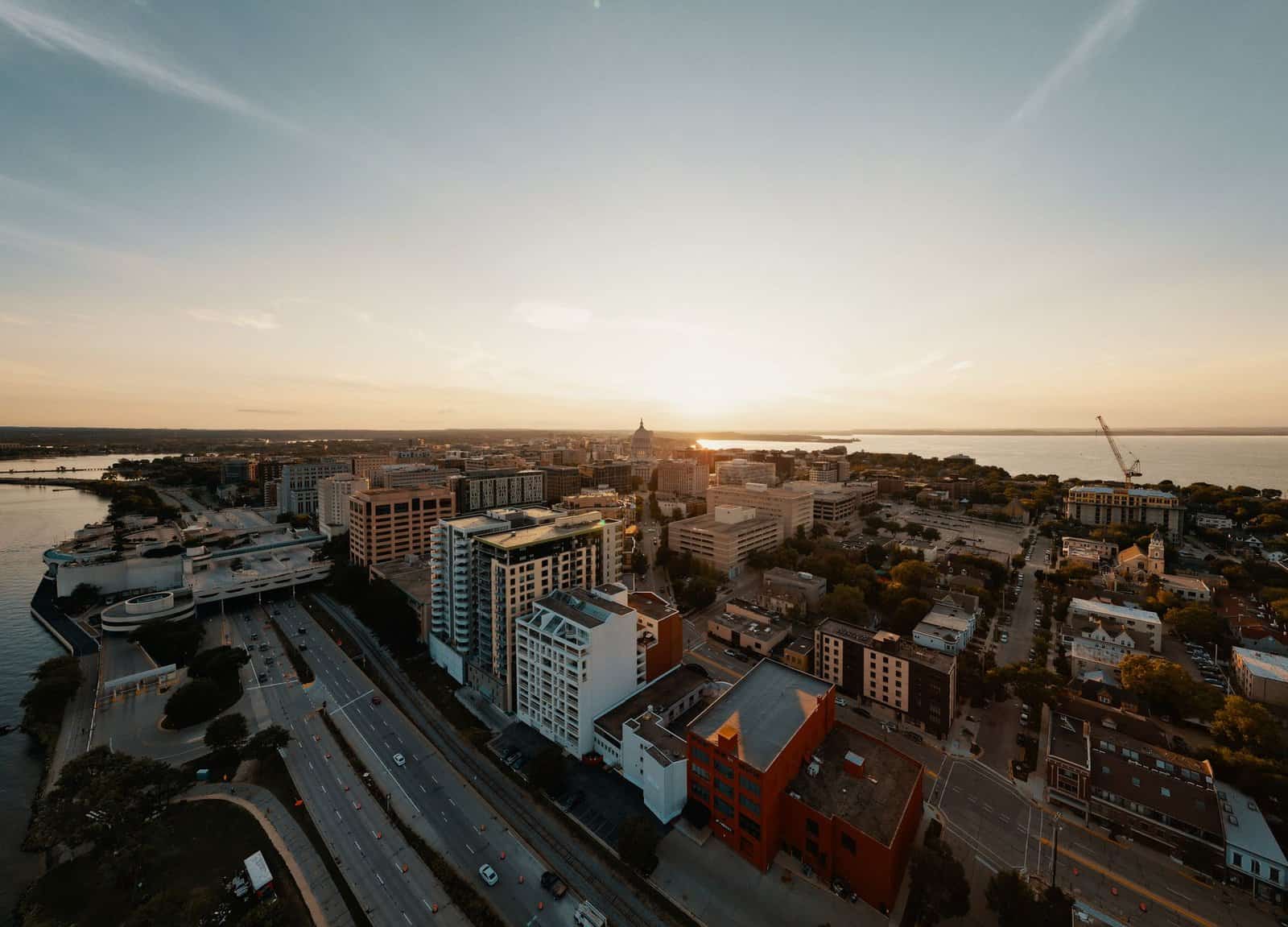
Madison, Wisconsin gets 42 inches of snow a year. It sits between two lakes. It has a Big Ten university and a progressive political culture. It keeps winning livability rankings. And it keeps growing despite the winters that drive away a predictable percentage of people who tried it for one February and decided never again. The people who stay — and more keep arriving — have found something in the Madison year-round that the February departure crowd never discovered.
What Madison Looks Like Across All Four Seasons
Winter (December–March):
Madison’s lakes freeze reliably and the culture around frozen lakes is part of what distinguishes the city. Ice fishing shanty towns appear on Lake Mendota by January. Cross-country ski trails on the Military Ridge State Trail (40 miles of trail accessible from the city) and at Governor Nelson State Park are maintained by the parks department. The Frozen Assets Festival celebrates the lakes. This is not performative coping — it’s genuine adaptation to a season that many American cities treat as something to survive rather than participate in.
Summer (June–September):
Madison’s summers are exceptional — lake access from dozens of public beaches, the Dane County Farmers’ Market (one of the largest in the country, running on the Capitol Square on Saturday mornings from April through November), and a social life organized around the lakes, the bike paths, and the outdoor restaurant patios that run along the waterfront. The university is the source of a continuous cultural program: concerts, speakers, sporting events, and a student-driven social scene that keeps the city younger than its demographics would suggest.
The Housing Market in 2026
Madison’s median home price is approximately $380,000 — up from pre-pandemic levels and consistent with the general appreciation across Midwestern university towns. The city has seen population growth driven partly by remote workers and partly by the ongoing strength of the university and biotech/medtech employment sector. Rent for a two-bedroom apartment runs $1,500–$2,000 depending on proximity to the isthmus and campus.
Wisconsin tax context:
- State income tax: progressive, up to 7.65% on higher incomes
- Property taxes: Dane County runs above Wisconsin average, but below comparable Illinois suburbs
- Wisconsin doesn’t tax Social Security income — relevant for retirees comparing Madison to other Midwest cities
The Food and Cultural Scene That Madison Underplays
Madison consistently punches above its weight in food. The Willy Street Co-op is an institution. The food cart scene on Library Mall and along State Street is a legitimate lunch culture in its own right. L’Etoile, Madison’s flagship fine dining restaurant, has maintained consistent national recognition for decades. The craft brewery culture — Great Dane Pub and Brewing, Ale Asylum, Funk Factory Geuzeria — is what you’d expect from a progressive university city with long winters and a culture that treats food and drink as community activity.
Madison works for people who either accept winter as part of the deal and engage with it (cross-country skiing, ice skating, winter festivals) or who are genuinely drawn to the summer-and-fall experience and treat winter as a cost. It doesn’t work for people who want mild weather year-round — the winter is real and long. But for everyone else, the combination of lake access, university energy, food culture, and livability metrics that keep Madison near the top of rankings reflects something real about what the city offers over 12 months.
Madison’s Specific Qualities as a Travel Destination
The Madison experience for visitors breaks into two separate modes: the university culture (UW–Madison is a Big Ten research university with 48,000 students, a chemistry Nobel laureate every few years, and a campus that borders Lake Mendota and Lake Monona) and the outdoor access (the Ice Age Trail passes through the Kettle Moraine country within 90 minutes, Devil’s Lake State Park is 90 minutes south, and the Wisconsin River corridor to the west has some of the best kayaking in the Midwest). The two modes don’t compete — they build the context that makes Madison one of the more complete mid-sized cities in the Upper Midwest.
State Street — the pedestrian mall connecting the Wisconsin State Capitol to the University campus — is the organizing spine of Madison’s retail and restaurant culture. The farmers market on the Capitol square (Saturday mornings, April through November) is one of the best in the United States, rings all four sides of the Capitol building, and has operated at that location since 1972. The Memorial Union Terrace on Lake Mendota — a lakeside terrace that’s been the unofficial social center of the University since 1928 — serves beer and food at outdoor tables overlooking the lake from May through September and is free to access for non-students. The combination of the farmers market, the State Street food corridor, the Terrace, and a bike ride on the 40-mile Capital City Trail circuit through Madison’s lake parks provides a complete Madison day.