Glacier National Park Is Melting Faster Than Any Projection Said It Would. Here’s What the Trip Looks Like Now
We may earn money or products from the companies mentioned in this post. This means if you click on the link and purchase the item, I will receive a small commission at no extra cost to you ... you're just helping re-supply our family's travel fund.
When Glacier National Park was named, the park had approximately 150 glaciers. As of 2026, scientists count 25 active glaciers, down from about 37 a decade ago. The glaciers that remain are significantly smaller than the ones visitors were seeing as recently as 2015. This is not a future scenario — it’s the current reality of visiting a park whose defining feature is disappearing on a visible timeline. Here’s what you actually see when you go, and why the park still belongs on your list.
What’s Actually Visible in the Park in 2026
Grinnell Glacier is the most accessible named glacier in the park and the most commonly visited. The hike to the Grinnell Glacier Overlook is 11 miles round trip with 1,600 feet of elevation gain — achievable by fit hikers in a full day. What you see at the overlook is still extraordinary: a genuine glacier, though smaller than historical photos document, above an aquamarine glacial lake. The recession is visible in the exposed rock beneath where the glacier previously extended, and the interpretive signage at the overlook documents the timeline. It’s affecting in a way that a data point cannot replicate.
Jackson Glacier, visible from the Going-to-the-Sun Road without hiking, is the easiest glacier to see in the park. A pullout on the road’s east side has a telescope viewpoint. The glacier has receded to the point where it takes some effort to distinguish from the remaining snowfields, but it’s still classified as an active glacier and is visible to visitors who know where to look.
What Glacier National Park Offers Beyond the Glaciers
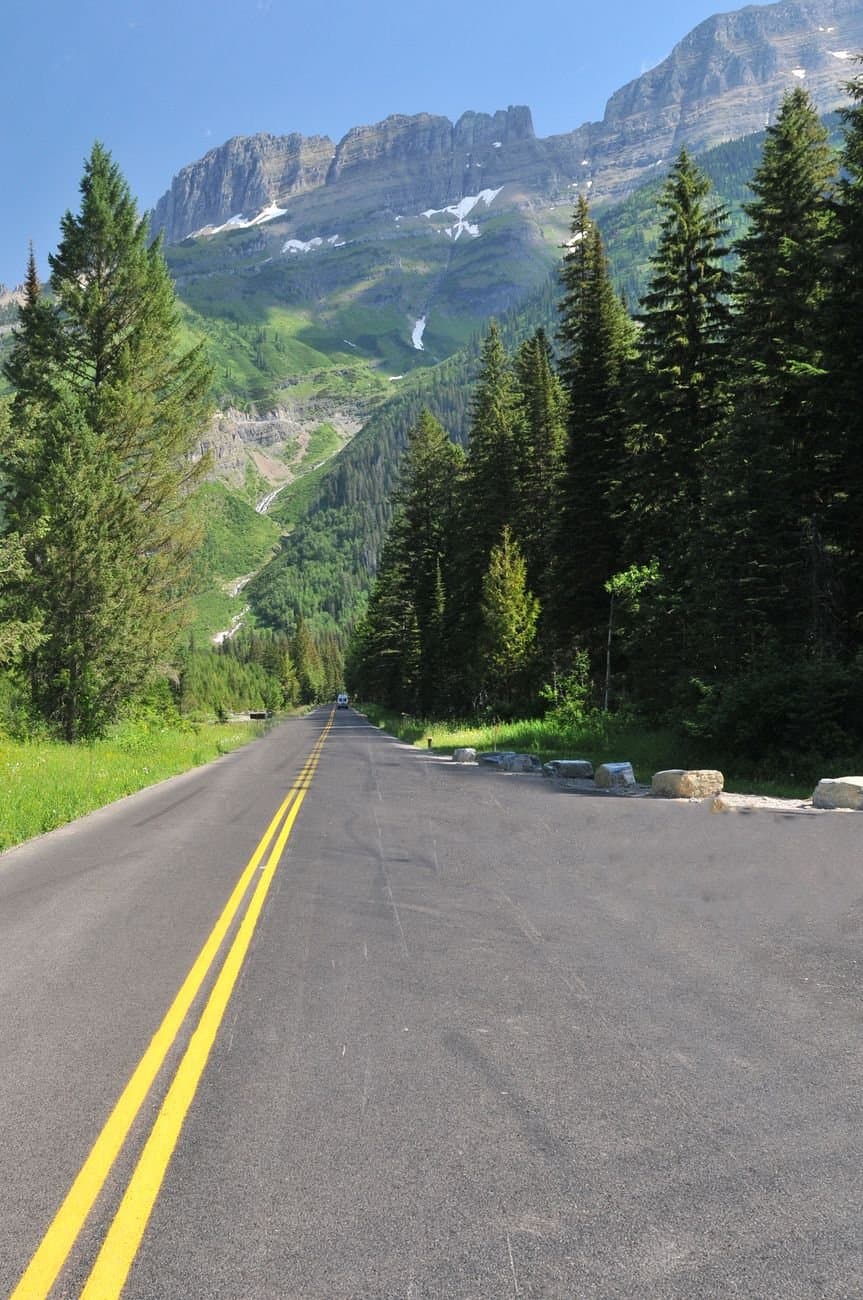
The glaciers made the park’s name, but they’re not the only reason Glacier belongs on any serious national parks list. The Going-to-the-Sun Road — a 50-mile mountain road that crosses the Continental Divide through Logan Pass — is arguably the most scenic road in the United States. The 6.7-mile Highline Trail from Logan Pass traverses a cliff-edge path with views of the main range that make it one of the most dramatic maintained trails in the country. Grizzly bears, moose, mountain goats, and mountain lions all inhabit the park, and wildlife sightings are common.
The Logistics That Determine How You Experience the Park
The Going-to-the-Sun Road vehicle reservation:
- Required for vehicles between Apgar and St. Mary from late May through early September
- Reservations released on recreation.gov in batches — check the release dates and book immediately
- Alternatives: park shuttles are free and operate from Apgar and St. Mary visitor centers to Logan Pass
Best times to visit:
- July–August: full access to Going-to-the-Sun Road, all trails open, but reservation requirements and crowds at maximum
- September–early October: no vehicle reservations, dramatically fewer crowds, wildflowers replaced by fall color, some services closing
- June: partial road access as snow clears, variable — some years open earlier, some years not until mid-July
The reason to visit Glacier National Park in 2026 is not to chase a diminishing resource before it disappears — though that’s a real part of the motivation for many visitors. It’s to experience a landscape that’s still among the most spectacular in the continental United States, with trails and views that deliver independently of the glaciers. Go while the glacier you hike to is still a glacier. That window is still open, and the park still rewards every person who makes the drive to northwestern Montana.
What Glacier Looks Like With the Remaining Ice
Glacier National Park’s 26 remaining named glaciers are a fraction of the 150 counted in 1910 when the park was established. The Grinnell Glacier, accessible via a 10-mile round-trip hike from the Many Glacier area, is the most visited remaining glacier — a hike that passes through wildflower meadows, along turquoise lakes fed by glacial meltwater, and up to the remnant of a glacier that covered 525 acres in 1900 and now covers approximately 100 acres. The experience of standing on the moraine above where the glacier used to extend — with the recession markers placed by the park service showing retreat from 1938 to the present — is one of the most visceral climate change encounters available in any US national park.
The Going-to-the-Sun Road — the 50-mile trans-mountain highway through Glacier that’s the park’s primary corridor — is typically open from late June through mid-October. The road’s highest point at Logan Pass (6,646 feet) provides trail access to the Hidden Lake Overlook (5-mile round trip) and the beginning of the Highline Trail (11.4 miles one-way, one of the most spectacular trail routes in the continental United States). Vehicle reservations for the Going-to-the-Sun Road are required for passenger vehicles between 6am and 4pm from late May through mid-September. Booking these at recreation.gov as early as possible — reservations open 120 days in advance and the peak dates sell out within hours.