Cape May Has More Than 600 Victorian Buildings. Here’s Why Christmas Is the Best Time to See Them
We may earn money or products from the companies mentioned in this post. This means if you click on the link and purchase the item, I will receive a small commission at no extra cost to you ... you're just helping re-supply our family's travel fund.
Most people see Cape May in July, when the beaches are packed and the Victorian houses are just a backdrop to traffic. Cape May at Christmas is a different town. The decorations go up on more than 600 Victorian buildings, many of the inns and homes open their doors for candlelight tours, and you can walk the gaslit streets without dodging beach carts.
The building count is the reason Cape May exists as a destination. The entire city is a National Historic Landmark, with more than 600 Victorian-era buildings, many of them rebuilt after a devastating fire in 1878, according to AAA Northeast. AAA calls it the second largest collection of Victorian structures in the country, behind only San Francisco. Cape May MAC, the nonprofit that runs the town’s historic tours, describes Cape May as America’s only National Historic Landmark City.
That density is what makes December special. The houses sit close together on a small grid, so a 20-minute walk takes you past dozens of painted ladies in full holiday dress.
Why Cape May at Christmas Is the Best Time to See the Victorians
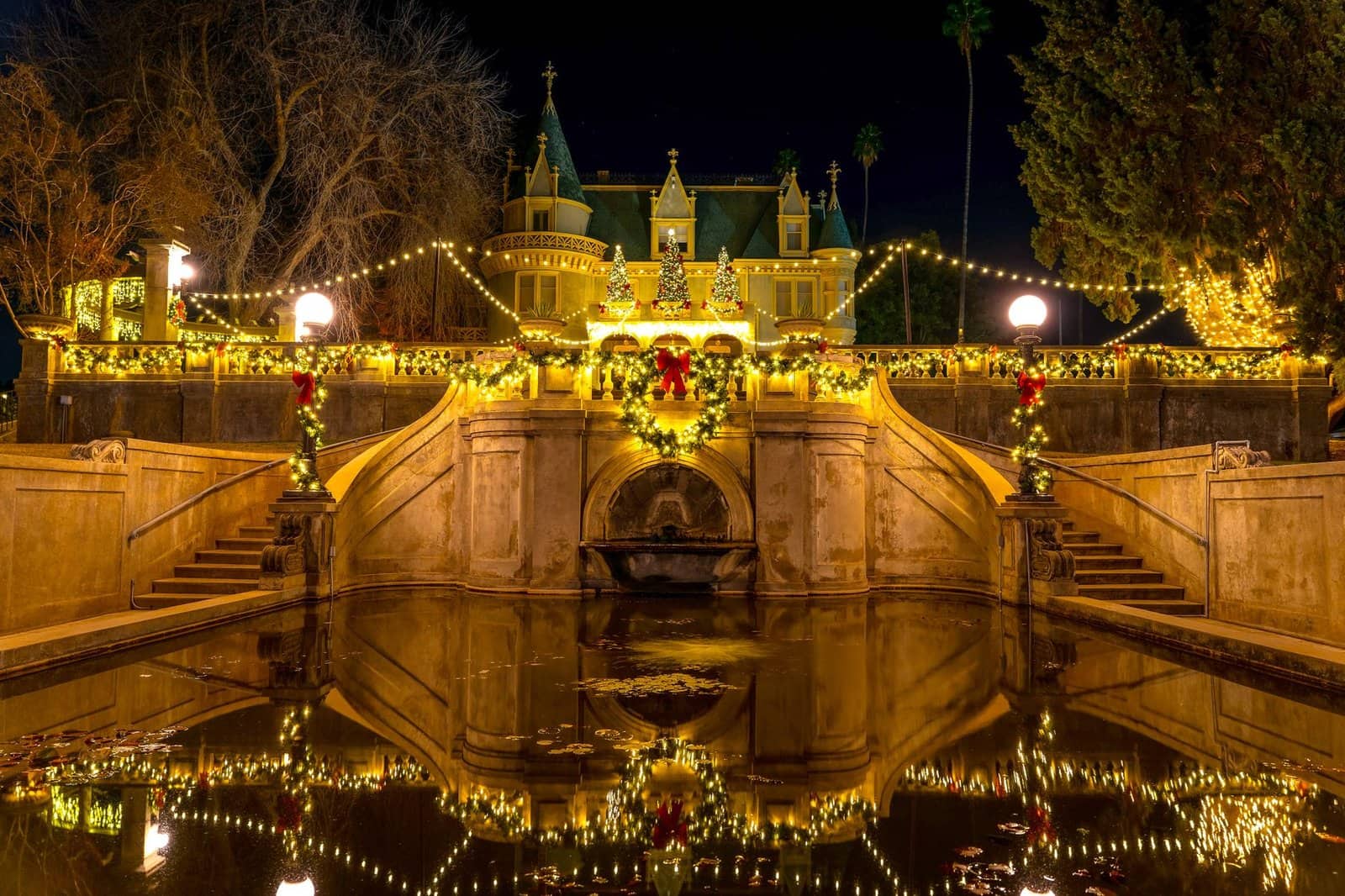
The answer is access. In summer you see the houses from the sidewalk. At Christmas, you often get to go inside, with hosts, carolers, and decorations that match the period.
Four things make December better than July:
- Interiors open up. The Christmas Candlelight House Tours let you step inside homes, inns, B&Bs, churches, and hotels that are private the rest of the year.
- The decorations fit the buildings. Garland, wreaths, and candlelight look right on 1870s and 1880s architecture in a way they do not on modern beach houses.
- The crowds are gone. Parking is easy, restaurants take walk-ins on weeknights, and Washington Street Mall is calm.
- Rooms cost less. Many inns charge far less in December than in summer, even with holiday packages.
Why Cape May Looks the Way It Does
The town’s Victorian character is partly an accident of disaster and timing. Cape May was one of America’s first seaside resorts, drawing visitors from Philadelphia and beyond in the early and mid-1800s. Then, in 1878, a fire destroyed a large part of the town’s center, including many of its big wooden hotels.
Cape May rebuilt fast, and it rebuilt in the fashionable style of the moment. That is why so many of its buildings date from the late 1870s and 1880s and share the same ornate look: steep roofs, gingerbread trim, wide porches built for sea breezes, and towers.
In the 20th century, the resort business shifted to newer shore towns with easier rail and car access, and Cape May’s economy slowed. That slowdown meant fewer of the old houses were torn down. By the 1960s and 1970s, preservationists began restoring them, the town won its National Historic Landmark status in 1976, and Cape May MAC began the house tours that now define the holiday season. The houses you see decorated in December survived because the town was, for a while, too quiet to replace them.
The 2026 Christmas Calendar
Cape May MAC runs most of the season’s signature events. Its 2026 listings include these:
- Christmas Tree Lighting at the Physick Estate: November 21, 2026. Santa lights the tree, and the John Walter Community Band plays a free holiday concert.
- Christmas Candlelight House Tours: Three Saturday nights in December. This is the 52nd annual edition of the tour, which Cape May MAC launched in 1974.
- Physick Estate holiday tours: The 1879 Emlen Physick Estate is decorated for the season and offers guided tours inside one of the town’s most important Victorian houses.
- Trolley tours: Holiday trolley rides through the historic district run on many nights in the season.
How the Candlelight House Tour Works
The candlelight house tour is the event to plan around. According to Cape May MAC, it is a self-guided walking tour centered in a three-quarter-square-mile area of the Historic District. You buy tickets in advance, then pick up a map and wristband at the Physick Estate the day before or the day of the tour.
From there, you walk between properties, which might include a private home with Victorian furniture, an inn decorated top to bottom, or a church with musicians. Most stops are within a 20-minute walk of each other, and an express shuttle has run between the Physick Estate and the farthest points in recent years.
- Book early. It is the town’s longest-running Christmas tour and Cape May MAC’s largest annual fundraiser, and dates sell out.
- Wear flat shoes. Sidewalks are brick and uneven in places, and you will walk two to three miles.
- Dress warm. December nights at the shore are raw, often in the 30s with wind off the ocean.
- Expect stairs. Many houses have narrow staircases and porches.
The Streets to Walk
If you only have an afternoon, walk these streets. They have the highest concentration of decorated Victorians.
- Columbia Avenue: Some of the town’s grandest inns, with deep porches and towers.
- Jackson Street: A short, dense block of Victorian guest houses near the beach.
- Hughes Street: Quieter and residential, with smaller gingerbread cottages and gas lamps.
- Washington Street: The Washington Street Mall is a pedestrian shopping street, and the stretch toward the Physick Estate has large Victorian homes.
- Beach Avenue: The oceanfront hotels and the view back toward the town.
Look for the details that make Cape May’s buildings distinctive: wraparound porches, gingerbread trim, mansard roofs, cupolas, and three- or four-color paint schemes that highlight the trim. The term “painted lady” applies to Victorian houses painted in three or more colors.
Where to Stay and What It Costs
Cape May has more historic inns and B&Bs than almost any town on the East Coast, and many are in Victorian buildings.
- Victorian B&Bs: In December, rooms often run $175 to $350 a night, with breakfast and afternoon tea. Weekends with the house tour cost more, and two-night minimums are common.
- Historic hotels: The town’s large Victorian hotels on the oceanfront often host holiday dinners and decorate their lobbies heavily. Rates vary widely but are usually well under summer levels.
- Summer comparison: The same rooms frequently run $350 to $600 or more a night in July and August.
Book a room on a street you want to walk. Staying inside the historic district means you can leave the car parked for the whole stay.
Getting There
Cape May sits at the southern tip of New Jersey at the end of the Garden State Parkway, Exit 0.
- From Philadelphia: About 90 miles, usually 1 hour 45 minutes via the Atlantic City Expressway and the Parkway.
- From New York: About 160 miles, typically three hours or more via the Parkway.
- From Delaware: The Cape May-Lewes Ferry crosses Delaware Bay in about 85 minutes. Winter schedules are reduced, so check sailings.
What Is Closed in Winter
Some things do shut down. Many beachfront snack bars, rental shops, and seasonal restaurants close after the fall. Whale-watching trips stop for the season. Check opening days for any restaurant you care about, since some close early in the week.
The essentials stay open: inns, many Washington Street Mall shops, a solid group of year-round restaurants, the Physick Estate, and the Cape May Lighthouse in Cape May Point, which keeps reduced off-season hours (check before you drive out).
How to Spend a Christmas Weekend in Cape May
Here is a simple two-day plan that covers the highlights without rushing.
- Saturday morning: Walk the Washington Street Mall and the residential streets south of it while the light is good for photos. Grab coffee and a pastry at a local bakery.
- Saturday afternoon: Tour the Physick Estate, the 1879 house that anchors Cape May MAC’s holiday programs. The decorations and period furniture give you the context for everything else you will see.
- Saturday evening: Join the Christmas Candlelight House Tour if it is one of the three tour nights. If not, take a holiday trolley ride through the historic district, then have dinner at a year-round restaurant.
- Sunday morning: Drive or bike to Cape May Point. Walk the beach at Sunset Beach, where the remains of the concrete ship Atlantus sit just offshore, and climb the lighthouse if it is open.
- Sunday afternoon: Visit the Cape May Point State Park area for winter birding. The peninsula is one of the most important migration points on the East Coast, and late fall brings waterfowl, raptors, and northern gannets offshore.
Cape May for Birders in Late Fall
Cape May is famous among birders, and the late fall and early winter season is a strong time to visit. The peninsula funnels migrating birds south toward Delaware Bay, which makes it one of the best-known birding spots in North America.
- Where to go: Cape May Point State Park, the South Cape May Meadows preserve, and the Cape May Bird Observatory’s sites nearby.
- What you might see: Ducks, loons, northern gannets over the ocean, and hawks on clear days with northwest winds.
- What to bring: Binoculars, a windproof layer, and waterproof shoes for the marsh trails.
The Bottom Line
A town with more than 600 Victorian buildings is a good place to visit any time. But the Victorian era invented much of the modern American Christmas, from decorated trees to Christmas cards, and Cape May is built entirely in that style. In December, the buildings and the holiday finally match, and you get to see them from the inside.