Vermonters Call November Stick Season. 7 Stops on Route 100 That Are Better Without the Leaves
We may earn money or products from the companies mentioned in this post. This means if you click on the link and purchase the item, I will receive a small commission at no extra cost to you ... you're just helping re-supply our family's travel fund.
The leaves are gone, the leaf-peepers went with them, and Vermont gets quiet. Locals call this stretch between foliage and snow “stick season,” and driving Vermont Route 100 in November is one of the better-kept pleasures in New England: lower rates, open roads, and views you cannot see when the trees are full.
Route 100 is the long north-south spine of the state. It runs about 217 miles from Stamford at the Massachusetts line to Newport near the Canadian border, and Seven Days describes it as the only state highway that traverses the length of Vermont. In October, it is clogged with tour buses and rental cars. By mid-November, you can drive long stretches of it without another car in sight.
Stick season has a reputation problem. The trees are bare and gray, the fields are brown, and snow has not arrived to cover it all. But bare trees open up long views of ridgelines, barns, and rivers, and the towns along Route 100 relax after their busiest weeks of the year.
What Stick Season Actually Means in Vermont
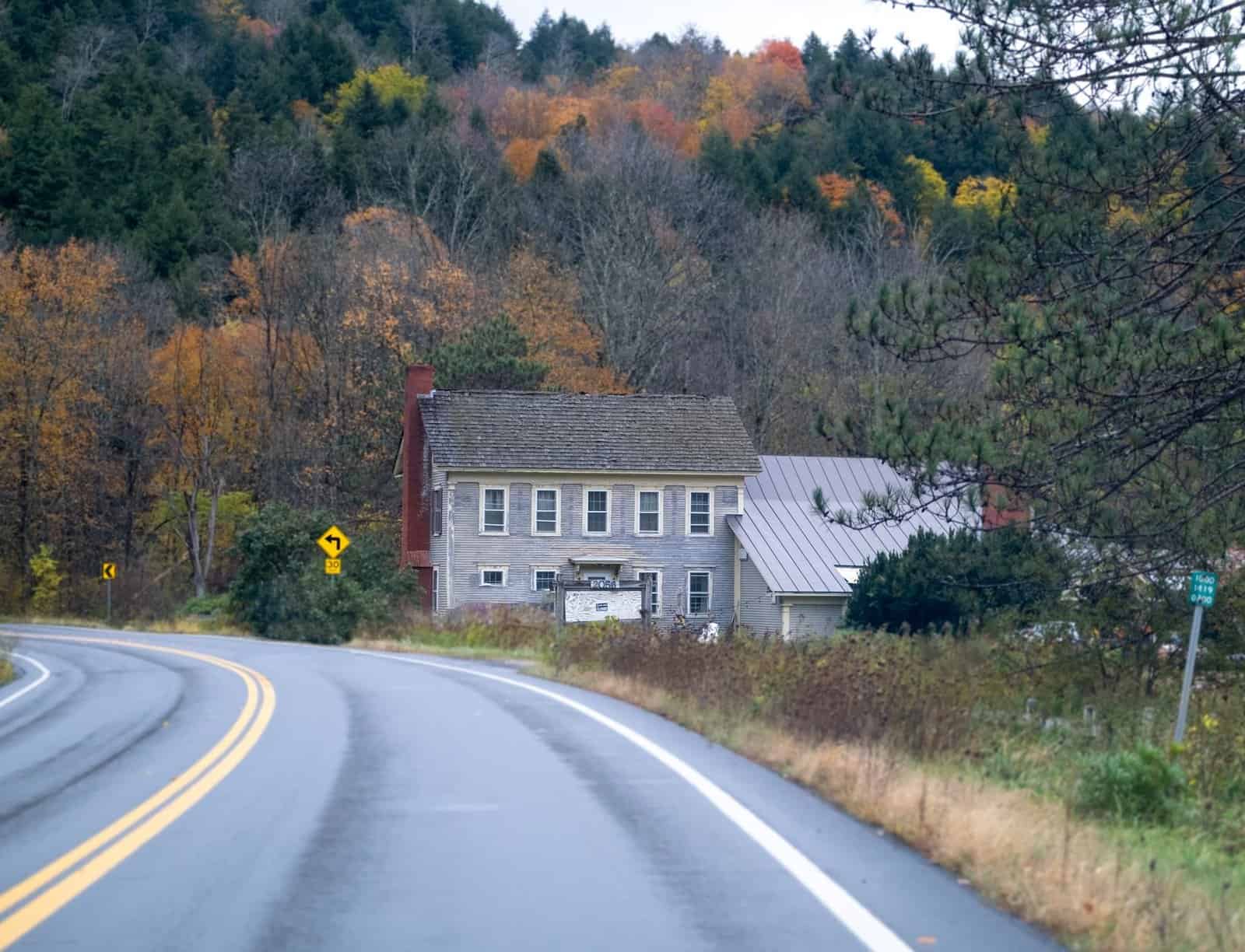
Stick season is the period from roughly late October to the first lasting snow, usually in December, when the trees are bare sticks. The term became widely known outside Vermont after Noah Kahan’s 2022 song “Stick Season,” but Vermonters used it long before that. It describes a mood as much as a landscape: the gap between the tourist rushes of fall and winter.
For visitors, it means a few concrete things:
- Lower prices: Inns and rentals along Route 100 often drop rates sharply between foliage and ski season.
- Limited hours: Some restaurants and shops close for a few weeks in November for staff vacations. Call ahead.
- Variable weather: Expect anything from 50 degrees and sunny to the first snow, often in the same week.
- Hunting season: Vermont’s rifle deer season runs for about two weeks in November. Wear bright colors if you hike.
7 Stops on Route 100 That Are Better Without the Leaves
These stops are listed from south to north, so you can drive them in order over two or three days.
1. Wilmington
Wilmington sits where Route 100 meets Route 9, the main east-west road across southern Vermont. In foliage season the intersection backs up for blocks. In November, you can park on West Main Street and walk the small downtown, with its riverside shops, cafés, and the Deerfield River running through the village. Mount Snow, a few miles north on Route 100 in West Dover, starts making snow in November and usually opens for the season when temperatures cooperate.
2. Weston and the Vermont Country Store
Weston is the postcard: a village green with a bandstand, white clapboard buildings, and the West River. The Vermont Country Store, owned by the Orton family since 1946, sits right on Route 100 and is the main draw. It sells hard-to-find household goods, penny candy, cheese, and old-fashioned clothing. In October, the parking lot fills by midmorning. In November, the store is calm, the holiday stock is in, and the village is quiet enough to hear the river.
3. Ludlow and Okemo
Ludlow is a former mill town at the base of Okemo Mountain Resort. In November, the town is in pre-season mode, with lodging prices that are often much lower than in February. Lake Rescue and Echo Lake, just north on Route 100, are beautiful in bare-tree season, when you can see the whole shoreline and the hills behind it. Stop at a Main Street café and watch the snow guns on Okemo if the nights are cold.
4. Killington
Killington Resort is famous for opening early, and the resort’s own guidance says it does not set an opening date: it opens as soon as temperatures allow snowmaking, often in early to mid-November. If you ski, you can catch early-season turns on a few trails while the valleys below are still brown. If you do not, the Killington Road area is less crowded than it will be in January, and the views from Route 100 north of the Route 4 junction toward Pittsfield are some of the most open on the drive once the trees are bare.
5. Moss Glen Falls in Granville Gulf
Granville Gulf Reservation is a six-mile stretch of Route 100 between Rochester and Warren with no towns, just forest and a steep, narrow valley. Moss Glen Falls, about 30 feet high, drops right beside the road on the west side, with a small pullout. In summer and fall, the falls are partly hidden by foliage, and the pullout is jammed. In November, you see the whole cascade from the road, and the flow is often stronger after fall rains. Be careful on the boardwalk and rocks, which ice up early.
6. The Mad River Valley: Warren and Waitsfield
North of the gulf, Route 100 enters the Mad River Valley. Warren village sits just off the highway, and the Warren Store is a local institution: a general store, deli, and bakery with a deck over the river. Waitsfield, a few miles north, has the valley’s main shops, a covered bridge on Bridge Street, and farms with long views west to the Green Mountains. Sugarbush and Mad River Glen are up the side roads. With the leaves down, you can see the ridgeline the whole way through the valley.
7. Waterbury and Waterbury Center
Waterbury is where Route 100 meets I-89, and it is home to two of the most visited stops in the state. Cold Hollow Cider Mill in Waterbury Center presses cider and sells cider doughnuts year-round. In October, the line for doughnuts can run out the door. In November, you can walk right up. Ben and Jerry’s original factory is just north on Route 100, with a “Flavor Graveyard” for retired ice cream flavors on the hill behind it. Check the factory’s current tour schedule before you go, since hours change seasonally.
How to Plan a Drive on Vermont Route 100 in November
A full drive of Route 100 takes about five to six hours without stops, but nobody does it that way. A better plan is two nights.
- Night one: Weston or Ludlow, after a morning drive up from Wilmington.
- Night two: The Mad River Valley or Waterbury, after a day through Killington and the Granville Gulf.
- Day three: Waterbury to Stowe, or back south on I-89 and I-91.
Expect to pay roughly $130 to $250 a night for an inn or B&B along Route 100 in mid-November, compared with $250 to $450 at the same properties during peak foliage. Ski-town lodging near Killington and Okemo is often at its cheapest of the year before Thanksgiving.
What to Pack and Watch For
Weather is the main variable. Route 100 crosses several gaps and passes, and the first snow often arrives in November.
- Tires: All-season tires with good tread are fine for most November days. If snow is in the forecast, consider waiting or renting a car with winter tires.
- Layers: A warm jacket, hat, and waterproof boots. Morning temperatures are often below freezing.
- Bright clothing: During rifle deer season, wear blaze orange on any trail walk. Hunting is legal on much of Vermont’s private and public land unless posted.
- Cash: Some farm stands and small stores still take cash only.
- Phone signal: Coverage is spotty in the Granville Gulf and parts of the southern mountains. Download offline maps.
Where to Eat Along the Way
Food is part of the appeal of Route 100, and November is a good month for it because the harvest is in and kitchens are less rushed.
- Cheese: Vermont has dozens of cheesemakers, and many general stores along the route sell local cheddars by the pound. The Vermont Country Store in Weston carries a big selection, and several cheese shops sit just off the highway.
- Cider and doughnuts: Cold Hollow Cider Mill in Waterbury Center is the classic stop, but small orchards and farm stands in the southern half of the route sell cider through November as well.
- General stores: The Warren Store and similar village stores along the road serve sandwiches, soups, and baked goods, often better and cheaper than restaurant meals.
- Maple: Sugarhouses sell syrup year-round, even though sugaring season itself is in late winter and early spring. Look for grade labels, which describe color and taste.
- Brewpubs: Waterbury and the Mad River Valley both have well-known breweries and taprooms that stay open in stick season, though some cut hours early in the week.
Expect a lunch for two at a general store to run about $25 to $40, and dinner for two at a sit-down restaurant to run about $70 to $130 before drinks.
Driving Safely on Route 100 in November
Route 100 is a two-lane road for almost all of its length, with sharp curves, narrow shoulders, and a lot of wildlife. A few habits make the November drive safer.
- Watch for deer at dusk. November is the peak month for animal collisions nationally, and Vermont’s rural roads see plenty of them.
- Slow down through villages. Speed limits drop sharply in towns like Weston and Warren, and they are enforced.
- Expect logging trucks and farm equipment. Pull over where it is safe to let local traffic pass.
- Respect black ice. Shaded curves in the Granville Gulf can stay icy long after the sun comes up.
Why Stick Season Works
Fall foliage is beautiful, but it is also the most crowded and expensive time to be on Route 100. Stick season trades color for space. You get full views of the ridges and waterfalls, short lines at the cider mill and the country store, and inn rooms at fair prices. The trees are bare, but the road is yours.