Bannack Was Montana’s First Territorial Capital. 7 Things to Know Before Visiting the Ghost Town in Winter
We may earn money or products from the companies mentioned in this post. This means if you click on the link and purchase the item, I will receive a small commission at no extra cost to you ... you're just helping re-supply our family's travel fund.
Bannack, now a ghost town in southwestern Montana, was the first capital of Montana Territory. When Congress created the territory in 1864, the first territorial legislature met at Bannack, a gold rush camp that had sprung up two years earlier along Grasshopper Creek. The capital moved to Virginia City, Montana, in 1865, and Bannack slowly emptied out. Today it is preserved as Bannack State Park, and visiting Bannack State Park in winter means snow on weathered rooftops and very few other visitors.
Gold was found on Grasshopper Creek in July 1862, setting off a rush that brought thousands of miners to the area within months. Bannack became one of the first major towns in what would become Montana. More than 50 buildings remain standing, and many are open for visitors to walk through.
The park is open year-round, and in winter it offers ice skating on a pond in town. Here are seven things to know before you go.
What Bannack State Park in winter is like
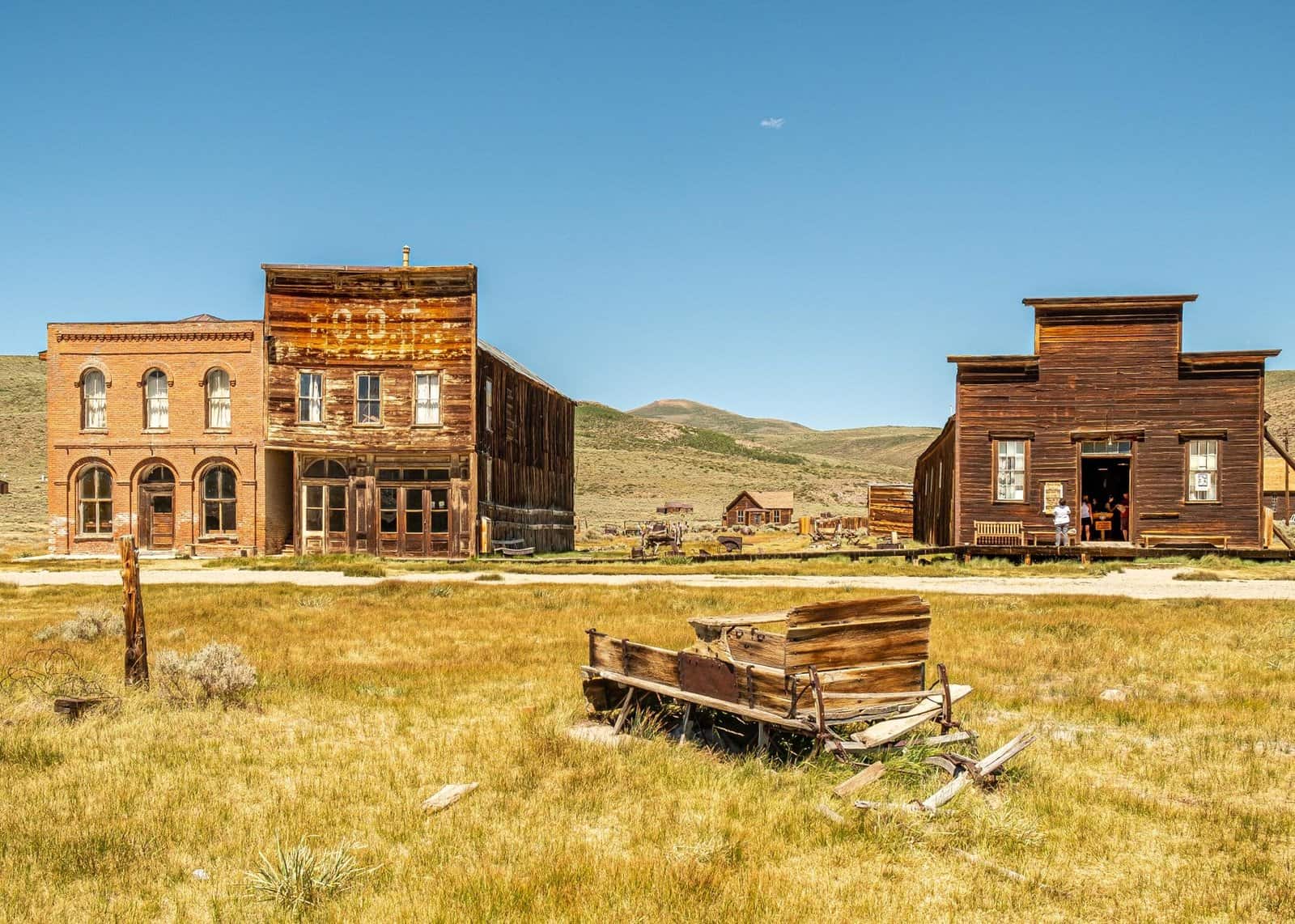
In winter, Bannack is quiet. Snow often covers the ground, the creek freezes, and the wooden buildings stand out against white hills. The townsite is generally open during daylight hours, though the visitor center has limited hours in the off-season. You will likely have much of the town to yourself on a weekday.
1. It was Montana’s first territorial capital, briefly
Montana Territory was created in May 1864, carved out of Idaho Territory. The first territorial legislature met in Bannack in December 1864. Because the gold rush had shifted to Alder Gulch, the capital moved to Virginia City in 1865, and later to Helena.
Bannack’s time as capital was short, but it gave the town a lasting place in Montana history. The building where the first legislature met is often pointed out to visitors, though many accounts note that the original structure did not survive. Ask park staff about what you are looking at.
2. The 1862 gold strike started it all
Prospectors found gold on Grasshopper Creek in July 1862. Word spread fast, and by the next year, Bannack had a population of several thousand. Miners worked the creek with pans, sluices, and later dredges and hard-rock mines.
As gold production declined, the population dwindled. By the mid-20th century, Bannack was nearly abandoned. It became a state park in 1954, and it has been preserved in a state of arrested decay, meaning buildings are stabilized but not restored to look new.
3. The Henry Plummer story is part of the tour
Bannack is tied to one of the most famous episodes in Montana history. Henry Plummer was elected sheriff of the Bannack mining district in 1863. Vigilantes accused him of leading a gang of road agents who robbed and killed travelers. In January 1864, vigilantes hanged Plummer in Bannack without a trial.
Historians still debate whether Plummer was guilty. Some argue he was a gang leader, and others say he was a victim of vigilante justice. Park interpretive materials explore the story, and a reconstructed gallows marks the site associated with the hanging.
4. You can walk through more than 50 buildings
Bannack’s buildings include homes, a church, a schoolhouse with a Masonic lodge upstairs, a jail, and the Hotel Meade, which began as the Beaverhead County courthouse before being converted to a hotel. Many buildings are open, and you can walk inside to see old wallpaper, stoves, and furnishings.
Watch your step on old floors, especially in winter when snow and ice can make thresholds slippery. Some buildings may be closed for safety or preservation work.
5. Ice skating has a set winter schedule
Bannack offers ice skating on a pond in town during winter. According to the Bannack Association’s events page, ice skating for the 2026 to 2027 season runs every day from 10 a.m. to 4 p.m. from December 26, 2026, to January 4, 2027, then on weekends and holidays from 10 a.m. to 4 p.m. through February 2027.
Skating among ghost town buildings is an unusual experience. Check conditions before you go, since ice depends on weather. Bring your own skates or check whether any are available at the park.
The association also lists an annual Wreath Walk, where local groups decorate wreaths that hang on doors around the park, with 2026 dates to be announced.
6. Getting there means a gravel road from Dillon
Bannack is about 25 miles southwest of Dillon. The last few miles are on a gravel road, which can be snowy, icy, or muddy in winter. Check road conditions and weather before you go, and allow extra time.
Dillon is the nearest town with gas, food, and lodging. Fill up your tank there, since there are no services at Bannack.
7. Pack for cold and few services
Winter in southwestern Montana can be very cold, with temperatures well below freezing and strong winds. Bring warm layers, insulated boots, gloves, hats, and hand warmers. Pack food and water, since there are no restaurants at the park.
Restroom facilities may be limited in winter. Cell service can be spotty. Tell someone your plans if you are traveling alone.
Why Bannack matters
Bannack is one of the best-preserved ghost towns in the American West. Its buildings show how quickly a gold rush camp could rise, become a town with schools and churches, and then fade away. The Plummer story adds a dramatic layer about law, justice, and violence on the frontier.
Unlike some ghost towns that have been heavily restored or commercialized, Bannack retains a raw, authentic feel. In winter, that feeling is even stronger.
Other things to do near Bannack
- Dillon: A ranching town with restaurants, shops, and the Beaverhead County Museum.
- Virginia City and Nevada City, Montana: The historic gold rush towns that succeeded Bannack, about two hours east. Many attractions close in winter.
- Hot springs: Southwestern Montana has several hot springs resorts, a welcome stop after a cold day.
- Clark Canyon Reservoir: South of Dillon, popular for fishing and winter ice fishing.
Photography tips
Bannack is a favorite for photographers. In winter, try:
- Shooting in early morning or late afternoon light, which brings out the texture of weathered wood.
- Capturing snow on rooftops and wooden sidewalks.
- Framing buildings against blue skies or dramatic clouds.
- Photographing interiors with natural light from windows.
Respect fragile structures. Do not climb on buildings or move artifacts.
A sample winter visit
Drive from Dillon in late morning after roads have warmed. Stop at the park entrance for maps and information. Walk the main street and explore the Hotel Meade, the schoolhouse, and the church. Read about Henry Plummer at interpretive signs and visit the gallows site. If skating is open, spend an hour on the pond. Have a packed lunch in your car or a sheltered spot, then head back to Dillon before dark.
Understanding the vigilante era
The Plummer story is part of a wider period of vigilante justice in Montana’s gold camps. In late 1863 and early 1864, vigilance committees formed in Bannack and Virginia City, Montana, in response to robberies and killings along the roads between mining camps. Over a few weeks, vigilantes hanged a number of men they accused of being road agents, usually without trials.
Supporters at the time saw the vigilantes as bringing order to lawless camps. Critics, then and now, point out that the accused had no chance to defend themselves in court, and that some may have been innocent. Bannack’s interpretive displays and park programs help visitors think about both sides of that history. Standing in the snow near the gallows site, it is easy to see why the story still stirs debate more than 160 years later.
Bannack’s buildings in winter light
Winter is one of the best seasons to appreciate Bannack’s architecture. Without summer crowds, you can stand inside the Hotel Meade and hear only the wind. Low sun angles bring out the grain in old wood and the cracks in plaster. Snow outlines rooflines and porches. Many of the structures are log or frame buildings built quickly during the rush, and the mix of styles shows how the town grew over decades, from rough cabins to more substantial brick and frame buildings.
Fees and passes
Bannack State Park charges a day-use fee for nonresidents, while Montana residents typically have access through their vehicle registration fee. Check current fees with Montana State Parks before you go. Bring a card or cash, since payment options can be limited in winter, and keep your receipt visible in your vehicle.
Staying safe in old buildings
Old floors, steps, and doorways can be uneven, and some interiors are dark in winter. Bring a small flashlight, watch for ice at thresholds, and keep children close. Respect closed doors and roped-off areas, which protect both visitors and the buildings.
The bottom line
Bannack was Montana’s first territorial capital, founded after the 1862 gold strike on Grasshopper Creek, and it is now one of the West’s best-preserved ghost towns. In winter, you will find snowy buildings, a dramatic vigilante story, ice skating on a set schedule, and few visitors. Plan for the gravel road from Dillon, pack for cold, and bring everything you need.