Asheville’s Tourism Economy Nearly Collapsed After Helene—A Year Later, Here’s What the Recovery Numbers Mean for Visitors
We may earn money or products from the companies mentioned in this post. This means if you click on the link and purchase the item, I will receive a small commission at no extra cost to you ... you're just helping re-supply our family's travel fund.
Hurricane Helene’s remnants devastated western North Carolina in late September 2024, causing catastrophic flooding along the French Broad River that destroyed much of Asheville’s River Arts District and left the broader region without reliable water service for weeks, a disaster that hit a local economy deeply dependent on tourism precisely during the region’s crucial autumn leaf-viewing season.
The initial economic damage was severe and immediate, with hotel occupancy and restaurant revenue collapsing in the weeks after the storm as the region focused entirely on emergency response and infrastructure repair rather than hosting visitors, but the recovery trajectory in the following year revealed a more layered story than the initial disaster coverage suggested.
What Actually Happened to the River Arts District
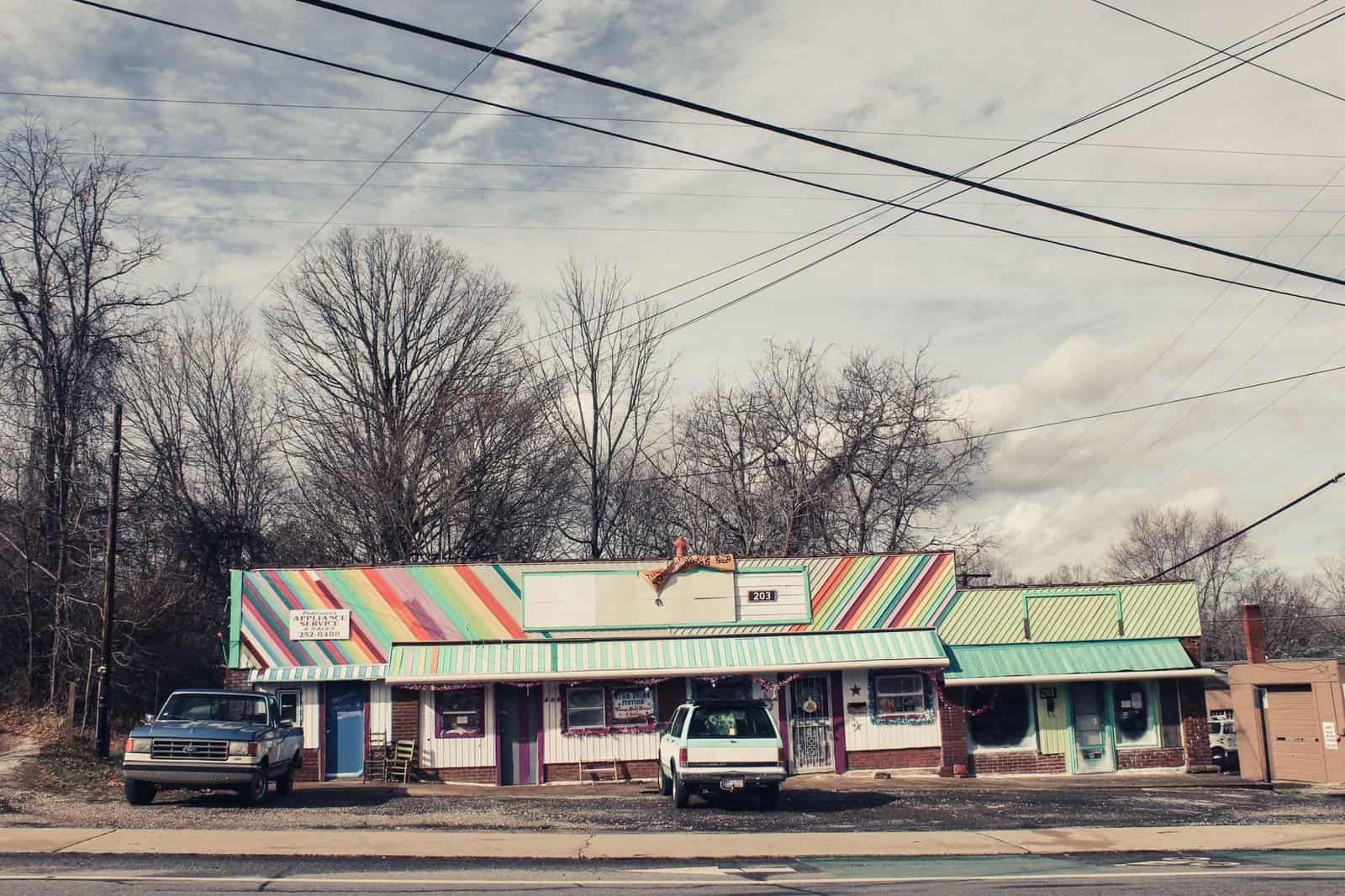
Asheville’s River Arts District, a cluster of galleries and studios built largely in converted industrial buildings directly along the French Broad River, sustained some of the most severe damage in the entire city, with floodwaters submerging ground-floor studios and destroying inventory, equipment, and in some cases entire buildings that artists had spent years establishing.
Recovery efforts in the district have moved at dramatically different speeds depending on individual building ownership and insurance situations, with some galleries reopening within months while others remain shuttered more than a year later, creating a patchwork district where fully restored spaces sit beside still-damaged buildings, a visible reminder of how uneven disaster recovery can be even within a single small neighborhood.
How Quickly Tourism Actually Came Back
Downtown Asheville, situated on higher ground than the riverside districts, avoided the most severe flooding and was able to reopen to visitors considerably faster than initial national news coverage suggested, though the broader narrative of a devastated region kept many visitors away well after downtown businesses were fully operational again.
Local tourism officials spent much of the following year specifically working to correct public perception that all of Asheville remained inaccessible or unsafe, a messaging challenge complicated by the fact that some surrounding mountain communities did in fact remain in long-term recovery, making blanket statements about the region’s status difficult to communicate accurately without downplaying real ongoing hardship elsewhere in the region.
The Uneven Recovery Across the Wider Region
Smaller mountain towns surrounding Asheville, including Chimney Rock and parts of the Swannanoa Valley, experienced damage considerably more severe and longer-lasting than Asheville’s own downtown core, with some communities losing essential infrastructure that took the better part of a year to fully restore.
This uneven damage pattern created a genuinely confusing situation for prospective visitors trying to plan a trip to the region, since a broad regional label like ‘western North Carolina’ concealed enormous variation in actual conditions between neighboring communities separated by only a few miles.
What the Storm Revealed About Tourism-Dependent Local Economies
The disaster underscored how quickly a single climate event can disrupt an economy built substantially around visitor spending, prompting renewed regional discussion about economic diversification beyond tourism, even as most local officials acknowledge tourism will remain the region’s primary economic driver for the foreseeable future given the mountains’ enduring appeal.
Asheville’s experience has become something of a case study cited by other tourism-dependent mountain and coastal communities nationally, both as a cautionary example of climate vulnerability and, eventually, as evidence that a well-marketed recovery campaign can meaningfully accelerate a return to pre-disaster visitor numbers once physical infrastructure is actually restored.
What Federal and State Recovery Funding Actually Covered
Federal disaster relief funding flowed into the region in the months following Helene, covering emergency infrastructure repair, but local business owners in hard-hit districts like the River Arts District have described a slower, more bureaucratic process for securing funds specifically earmarked for private business recovery, a gap that left many small gallery and studio owners covering rebuilding costs out of pocket well before any reimbursement arrived.
North Carolina’s state government also established dedicated recovery funding streams targeting the tourism sector specifically, recognizing how central visitor spending is to the entire regional economy, though the scale of damage across the broader mountain region meant funds had to be spread across many communities competing for the same limited pool of recovery dollars.
What the Storm Revealed About Regional Water Infrastructure
Asheville’s water system suffered catastrophic damage during Helene, leaving the city without reliable potable water for weeks in a disruption that affected not just tourism but every resident and business in the city, a crisis that underscored how vulnerable even a mid-size American city’s basic infrastructure can be to a single severe weather event.
The lengthy water outage became a national story in its own right, drawing attention to aging water infrastructure that officials acknowledged had been overdue for upgrades well before the storm, prompting renewed state and federal investment specifically targeting water system resilience across the broader western North Carolina region in the aftermath.
The scale of the water infrastructure failure has become a case study cited nationally in discussions about aging American infrastructure, illustrating how a single storm can expose vulnerabilities that had been accumulating unnoticed for decades before the disaster finally forced the issue into public view.
Regional officials have said the rebuilding effort, while far from complete in every affected community, has already produced meaningfully more resilient infrastructure than existed before the storm struck the region in 2024.
That resilience investment, while it came at enormous cost and disruption, may ultimately leave the region better prepared for whatever future climate events eventually test its infrastructure again.
City and regional leaders have also used the recovery period to review emergency communication protocols, aiming to give both residents and visitors clearer, faster information should another severe weather event strike the region in the future, a planning effort officials describe as directly shaped by specific communication gaps identified during the chaotic first days after Helene made landfall.