Amazon Moved Into South Lake Union. The Rent Followed It Everywhere Else
We may earn money or products from the companies mentioned in this post. This means if you click on the link and purchase the item, I will receive a small commission at no extra cost to you ... you're just helping re-supply our family's travel fund.
In 2007, a two-bedroom apartment in South Lake Union rented for around $1,400 a month, and Capitol Hill was still the neighborhood where Seattle’s musicians, line cooks, and grad students lived within walking distance of downtown. By 2018, Business Insider was documenting what locals had started calling “Amageddon” — the price of a South Lake Union home had climbed from roughly $195,000 in 2009 to $445,000 in under a decade, and two-bedroom units in the new high-rises were listing above $3,000 a month (Business Insider). The neighborhood itself had barely existed as a place people lived before Amazon arrived. It was low-rise warehouses, a biotech cluster, and parking lots. Amazon didn’t gentrify South Lake Union so much as build it from scratch, then export the pressure outward.
What South Lake Union Actually Looks Like Now
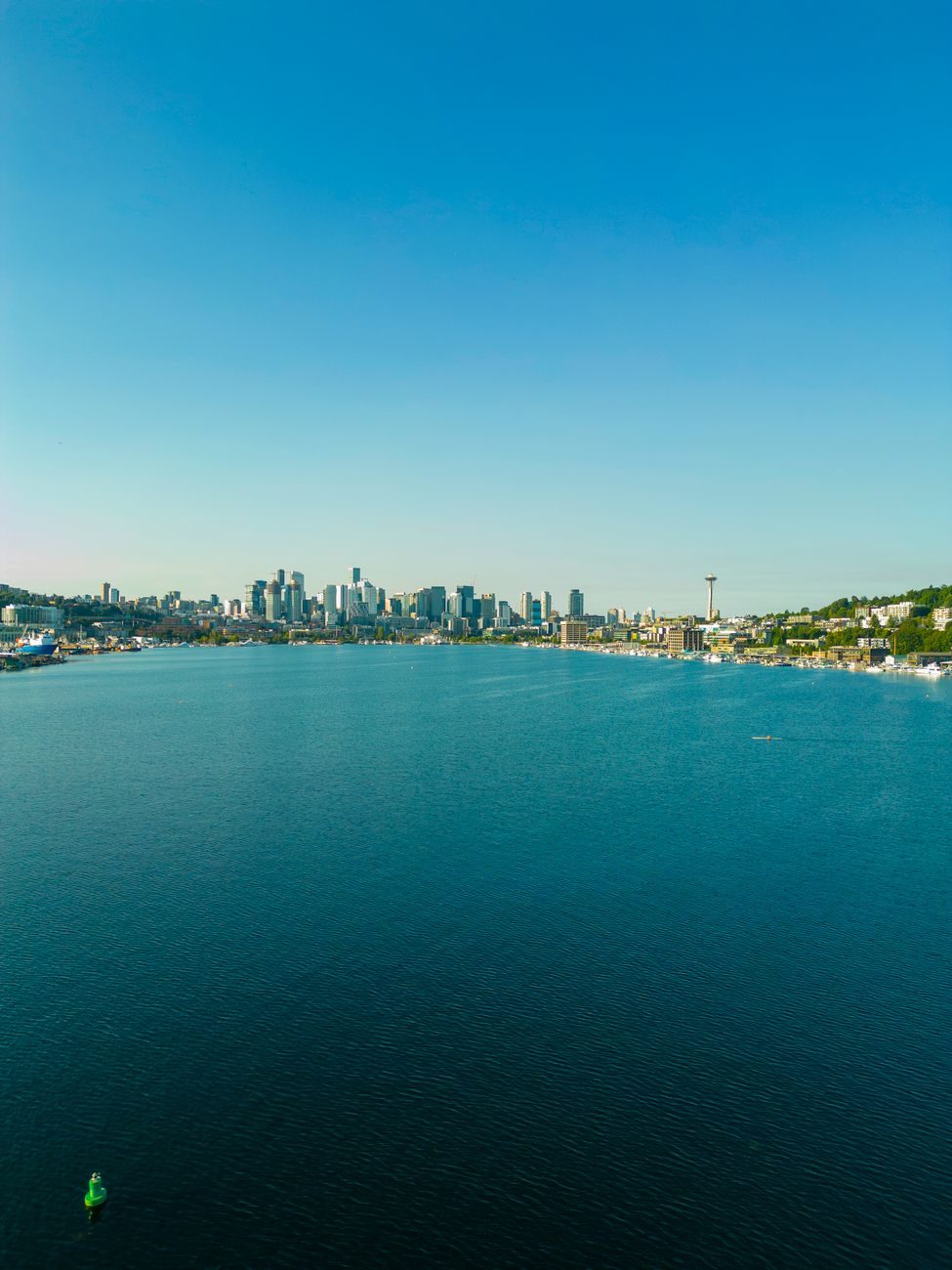
Walk through South Lake Union today and you’re walking through a corporate campus disguised as a neighborhood. The biospheres — the three glass domes filled with rainforest plants that anchor Amazon’s headquarters — draw tourists who wander in expecting a park and find a lobby. Streatery seating and coffee shops cater almost entirely to badge-wearing employees on lunch break. Zillow’s own data now shows median home prices in South Lake Union hovering around $751,000, with condos closer to $469,000, according to Prop:Metrics tracking of the ZIP code. The rental market has cooled slightly from its 2022 peak, but median rent in the immediate area still sits above $2,000 a month for what used to be one of Seattle’s cheaper corners.
Capitol Hill Absorbed the Overflow
Capitol Hill was Seattle’s counterculture neighborhood for three decades — the center of the city’s LGBTQ+ community, its punk and grunge scenes, and its most walkable strip of independent bars and record stores. It couldn’t stay that way once South Lake Union’s tech workers needed somewhere to live that wasn’t a glass tower. Rising rents pushed out longtime tenants, and the neighborhood’s small businesses started facing the same commercial rent increases that hit the residential market. According to AskDoss’s 2026 cost-of-living breakdown, anything in Capitol Hill or nearby Queen Anne with any kind of view now blows past $1 million without much drama, a figure that would have been unthinkable for the neighborhood fifteen years ago.
The Numbers That Tell the Real Story
- South Lake Union median home price: roughly $195,000 in 2009 to $751,000 in 2025
- Seattle citywide median sale price: approximately $830,000 as of 2026
- Average days on market citywide: down from a five-day sprint in 2021-2022 to 15-20 days now
- South Lake Union median rent: approximately $2,070/month, down from pandemic-era peaks but still elevated
Beacon Hill Is Where the Displacement Landed
Beacon Hill, historically one of Seattle’s most diverse and affordable neighborhoods, has become the pressure valve. Its light rail station connection to downtown made it one of the few places renters priced out of Capitol Hill and the Central District could still find something workable. Real estate trackers now list Rainier Beach, South Park, and Georgetown as the last neighborhoods within city limits where single-family homes can be found under $550,000, and even those numbers are climbing. What happened in South Lake Union didn’t stay in South Lake Union. It moved south and east, neighborhood by neighborhood, following the same logic: whoever got priced out of one place became the reason prices rose in the next.
Why This Matters If You’re Visiting, Not Just Living There
Visitors experience almost none of this. You can walk from Pike Place Market to the biospheres in twenty minutes and never notice that the city around you has been rearranged by a single company’s growth. But it explains why a lot of the neighborhood charm guidebooks describe — the dive bars, the DIY venues, the affordable ethnic food spots that made Capitol Hill and the International District feel distinct from any other American downtown — has been thinning out for a decade. If you’re chasing the Seattle you saw in photos from 2010, you’re chasing something that’s mostly moved to Beacon Hill or left the city entirely.
The Second-Order Effects Nobody Priced In
Traffic congestion in Seattle worsened dramatically through the 2010s as Amazon’s headcount grew past 40,000 employees concentrated in a few square miles of South Lake Union, a density the city’s street grid and transit system weren’t originally built to absorb. Seattle responded with streetcar expansion and bus rapid transit investment, but the growth outpaced the infrastructure for most of the decade, and commute times in the corridor became a recurring subject of local news coverage and city council debate.
The commercial rent story mirrored the residential one. Retail spaces that once housed independent hardware stores, diners, and repair shops in South Lake Union and adjacent neighborhoods gave way to chain coffee shops, fast-casual lunch spots, and services explicitly built around a white-collar office population working nine-to-six shifts. Small business advocates in Seattle have spent years documenting how few of the original tenants in these corridors survived the transition, even accounting for the ones that received relocation support during redevelopment.
What Longtime Residents Actually Say About It
Ask someone who’s lived in Seattle since before 2010 what changed, and the answer rarely starts with rent. It starts with a sense that the city’s identity shifted from a scrappy, slightly damp Pacific Northwest town — grunge, Boeing, fishing industry roots — into a company town for several trillion-dollar corporations simultaneously. Microsoft’s Eastside presence had already been reshaping Bellevue and Redmond for two decades before Amazon’s downtown push, but Amazon’s decision to build in the urban core rather than a suburban campus meant the transformation happened somewhere residents could watch it happen, block by block, rather than somewhere they could ignore.
Seattle’s transformation is a useful case study for any American city currently courting a single dominant employer as an economic development strategy. The jobs and tax revenue are real, but so is the cost that gets distributed, often invisibly, to the people who lived there first and have the least power to negotiate the terms of the change happening around them.