Galveston Isn’t a Beach Town With a Past. It’s a City That Almost Died Once and Never Fully Recovered the Confidence
We may earn money or products from the companies mentioned in this post. This means if you click on the link and purchase the item, I will receive a small commission at no extra cost to you ... you're just helping re-supply our family's travel fund.
Galveston, Texas draws around 7 million visitors a year to a barrier island that sits, in places, less than nine feet above sea level. Most of those visitors come for the seawall, the beach houses, and the historic Strand District’s Victorian storefronts. Very few of them know that in 1900, Galveston was the wealthiest city per capita in Texas and one of the busiest ports in the country — until a hurricane killed an estimated 6,000 to 12,000 people in a single night, still the deadliest natural disaster in U.S. history. Houston took the port business after that. Galveston never got it back.
The City That Was Supposed to Be Houston
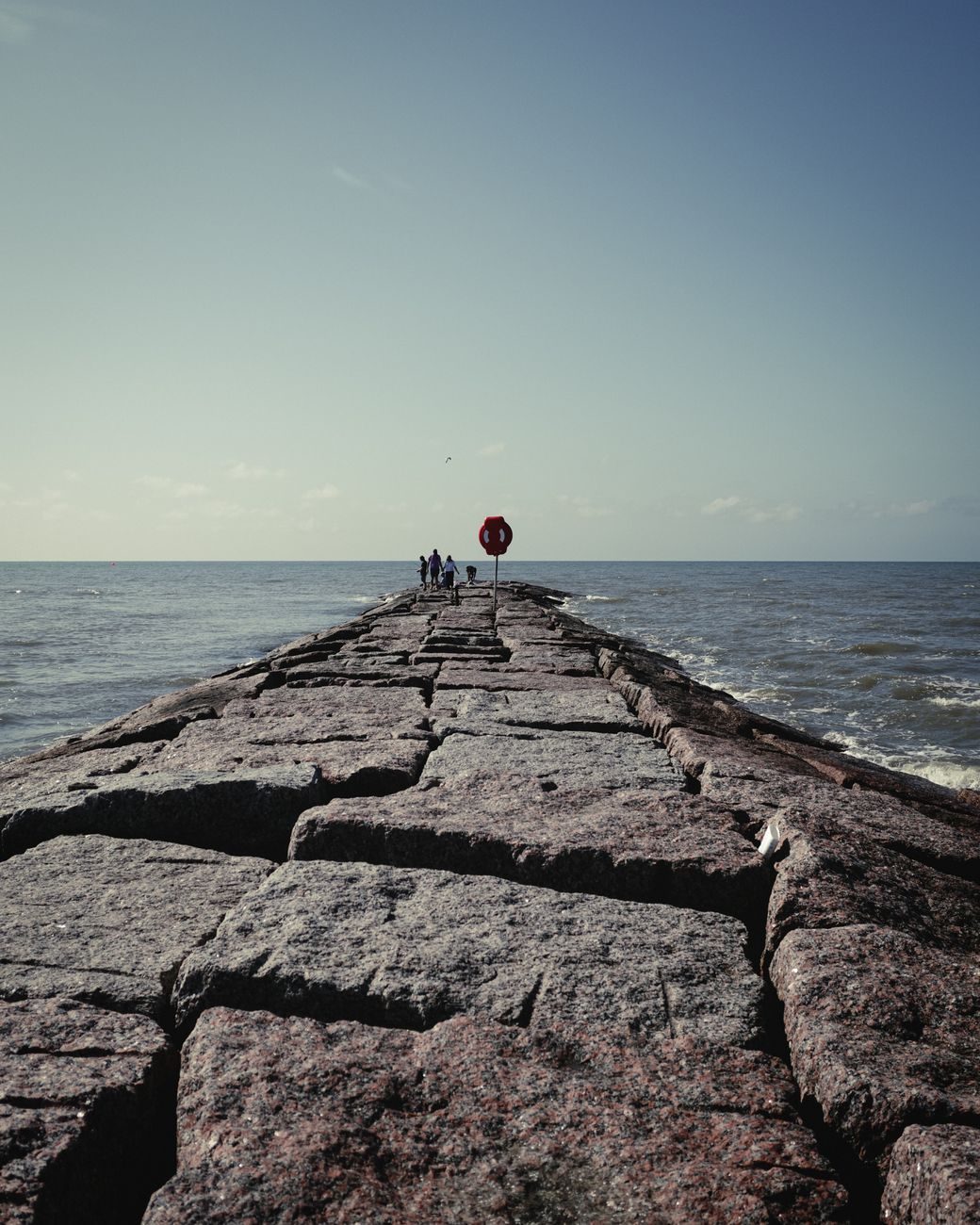
Before 1900, Galveston was positioned to become the dominant city in Texas — it had the deepwater port, the rail connections, and the banking infrastructure. The hurricane changed that calculus permanently. City engineers responded by raising the entire grade of the city by several feet and building a seventeen-foot concrete seawall that still defines the waterfront today. But the confidence of investors didn’t recover the way the infrastructure did. Houston built the Ship Channel instead, and by the 1920s the balance of economic power in the region had shifted fifty miles inland, where it has stayed ever since.
What the City Runs On Now
- Tourism: roughly 7 million annual visitors, the backbone of the local economy
- The Port of Galveston: primarily a cruise embarkation point now, not a cargo hub
- University of Texas Medical Branch: one of the largest employers on the island
- Historic preservation and hospitality: the Strand District’s restored 19th-century buildings
The Flood Risk Was Never Solved, Just Managed
Galveston’s flood risk is not a historical footnote — it’s an ongoing planning problem. FEMA flood zone maps show large sections of the island, including much of the West End where newer vacation rentals have been built, sitting in high-risk zones (FloodZoneMap.org). Climate risk analysts tracking the region note that Galveston faces compounding exposure from storm surge, sea level rise, and subsidence — the ground itself sinking in parts of the upper Texas coast due to groundwater and oil extraction over the past century (ClimateCheck). The seawall protects the historic core. It does much less for the beachfront developments built after it, on the assumption that a seventeen-foot wall from 1904 could handle a 21st-century storm.
What Tourists See vs. What Residents Deal With
The Strand District looks the way it does — restored cast-iron facades, gas lamps, a genuine sense of 19th-century wealth — because Galveston essentially froze in place after 1900 rather than tearing down and rebuilding the way most American port cities did. That’s a gift for tourism and a complicated inheritance for residents, many of whom rent to seasonal visitors for income that would otherwise be unavailable on an island with limited year-round industry. Insurance costs on the island have climbed sharply in the past five years, mirroring the rest of the Gulf Coast, and longtime residents increasingly talk about Galveston the way people in Miami Beach or the Outer Banks do: as a place they love that is steadily becoming harder to afford to insure, let alone live in permanently.
The Part of Galveston Most Visitors Skip
East Galveston’s historic neighborhoods, away from the seawall and cruise terminal, hold some of the best-preserved Victorian residential architecture in the South, largely because there was never enough money after 1900 to tear it down and build something newer. That lack of investment, which hurt the city for a century, is now an asset: nowhere else in Texas has a comparable concentration of pre-1900 homes still standing and occupied. Galveston’s identity isn’t the beach fantasy sold in vacation ads. It’s a wealthy port city that got knocked down by nature, never fully got back up, and built a tourism economy in the gap that opened up.
The Insurance Math That’s Reshaping the Island
Property insurance premiums along the entire Gulf Coast have climbed sharply since 2020, and Galveston has not been spared. Some homeowners on the island’s West End have reported premium increases of 30 to 50 percent within a few years, driven by insurers recalculating flood and wind risk after a string of costly Gulf hurricane seasons. Several national insurers have pulled back from writing new coastal Texas policies entirely, pushing more homeowners onto the state’s residual insurance pool, which tends to charge more for less comprehensive coverage.
This matters for tourism because so much of Galveston’s vacation rental economy depends on individual owners financing beach houses on the assumption that rental income will cover a mortgage and insurance. As insurance costs rise faster than rental rates, the math gets tighter, and some owners have begun selling rather than continuing to absorb the difference — a slow-moving pressure that could eventually thin out the vacation rental supply that currently keeps the West End’s tourism economy running.
Why the Seawall Isn’t the Full Answer
The 1904 seawall protects roughly the eastern third of the island, concentrated around the historic core and the section of beachfront closest to downtown. West of the seawall’s endpoint, homes sit on pilings directly exposed to storm surge, a design that trades daily ocean views for structural vulnerability during hurricane season. City and county planning documents acknowledge this gap explicitly, and it remains one of the more consequential unresolved questions in the island’s long-term development, since extending comparable protection down the full length of the island would cost far more than any current funding mechanism covers.
Galveston’s history offers a specific lesson for any coastal community weighing tourism against climate risk: infrastructure investment made in response to one disaster doesn’t automatically protect against the next one, especially as the baseline risk itself keeps shifting upward with sea level rise and stronger storm systems.