7 Things Americans Get Wrong About Christmas Market River Cruises
We may earn money or products from the companies mentioned in this post. This means if you click on the link and purchase the item, I will receive a small commission at no extra cost to you ... you're just helping re-supply our family's travel fund.
A Christmas market river cruise has become one of the most popular ways for Americans to see Europe in winter. Ships glide along the Rhine, Main, and Danube, docking in towns strung with lights and filled with wooden stalls. Passengers spend the afternoon touring a cathedral or castle, then walk to the market for mulled wine and gingerbread before heading back on board for dinner.
It is a genuinely lovely way to travel, and it solves real problems: you unpack once, someone else handles transportation between cities, and a warm cabin waits at the end of each cold evening. But many Americans book these trips with expectations shaped by summer river cruises, ocean cruises, or brochure photos. Rivers behave differently in late fall and winter, days are very short, and markets keep their own calendars.
Most of these cruises sail between mid-November and Christmas, with a few continuing to New Year’s. Here are seven things Americans often get wrong, and how to plan around each.
7 Things Americans Get Wrong About a Christmas Market River Cruise
1. Assuming River Levels Will Cooperate
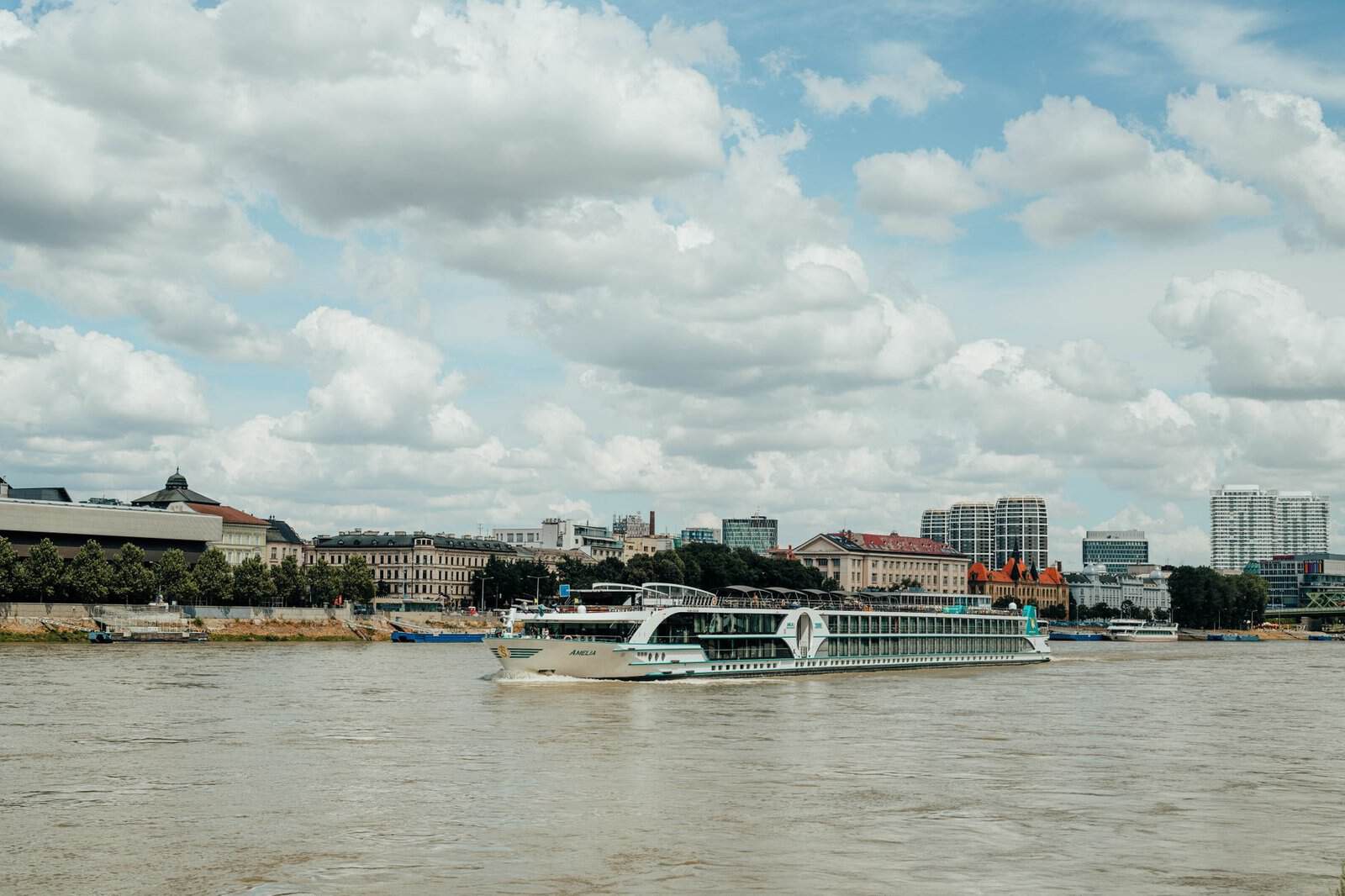
European rivers rise and fall with rain, drought, and snowmelt. After a dry summer and fall, stretches of the Rhine and Danube can run so low that fully loaded river ships cannot pass safely. A section of the middle Rhine near the town of Kaub is a well-known bottleneck, and its water gauge is watched closely by shippers and cruise lines. Low water has disrupted cruise schedules in several recent autumns.
High water causes problems too. Heavy rain or early snowmelt can raise rivers until ships no longer fit under low bridges. Either situation can lead to ship swaps, where passengers move from one vessel to a sister ship on the other side of a problem area, or to days spent on motorcoaches instead of on the water.
Read your cruise line’s policy on itinerary changes before you book, and understand what compensation, if any, applies. Travel insurance can help with costs if a disruption forces you to change flights. And keep your expectations flexible. On a river cruise in late fall, the river decides.
2. Expecting Long Days
Central Europe sits far north of most of the United States. Vienna is at about the latitude of northern Washington State, and Cologne is farther north than any city in the Lower 48. In mid-December, the sun sets around 4 p.m. in Vienna and around 4:30 p.m. in Cologne, and it rises after 7:30 a.m. in most of these cities.
That means daylight sightseeing is compressed into a short window. Guided walking tours often run in the morning, and by late afternoon the light is fading. Some ships also sail during daylight between ports, which can eat into time ashore.
The upside is that Christmas markets look their best after dark. Plan museums, churches, and city tours for the morning and early afternoon, then save the markets for evening. If you want scenery from the ship, look for itineraries that sail scenic stretches, like the Rhine Gorge or Austria’s Wachau Valley, during daylight.
3. Thinking Every Market Is Next to the Dock
Some ships dock just steps from the old town, as in many smaller Rhine and Main towns. Others dock at commercial piers outside the center, requiring a shuttle bus, a taxi, or a long walk. In big cities, markets are spread out. Vienna has a long list of markets in different districts, Budapest’s main market sits in a central square away from some docks, and Nuremberg’s Christkindlesmarkt is a short coach ride from the ship port on the Main-Danube Canal.
Ask your cruise line where the ship docks in each city and whether shuttles run in the evening. If you plan to go back to a market on your own after dinner, note the last shuttle time or know how to get back by taxi or public transit. Having the ship’s location saved on an offline map is a simple fix.
4. Underpacking for Cold
December evenings in central Europe often hover around or below freezing, and you will spend hours standing still outside, which feels colder than walking. Damp air near rivers adds a chill. Many Americans pack for a city break and end up shivering at the markets by the second night.
Pack the way you would for a cold football game:
- Thermal base layers for top and bottom.
- A warm, waterproof coat with a hood.
- Insulated, waterproof shoes with good grip for wet cobblestones.
- A hat, scarf, and gloves that let you handle a mug and a phone.
- Hand and toe warmers for long evenings.
- A small backpack or crossbody bag for purchases, since many stalls do not offer bags.
Ships have laundry options, but drying heavy layers takes time. Bring enough to rotate.
5. Expecting Markets to Stay Open Through Christmas
Many German Christmas markets close on December 23, and most are shut by Christmas Eve afternoon. Some cities keep markets open longer. Vienna’s markets often run until December 26, and some markets, including Budapest’s main market, continue toward New Year’s. Others reinvent themselves as winter or New Year’s markets.
That means cruises sailing between Christmas Eve and New Year’s may find fewer markets open in some ports, particularly in Germany. These “Christmas and New Year’s” sailings are still festive, with holiday celebrations on board and fireworks in cities like Vienna and Budapest on New Year’s Eve, but they are not the same experience as an early December market cruise.
If markets are your priority, book a departure between late November and mid-December, when nearly every market on the route is open.
6. Overpaying for Balcony Cabins
On a summer river cruise, a full balcony is a real asset. In December, you may barely use it. It is cold and dark by late afternoon, many ships sail at night, and when the ship docks, your view is often another ship moored alongside. River ships commonly dock side by side in busy ports, and passengers walk through each other’s lobbies to reach shore.
French balconies, which have floor-to-ceiling sliding doors without outdoor space, or standard window cabins often cost significantly less and offer much of the same light and view. Spend the savings on excursions, a pre-cruise hotel night, or extra time in a favorite city.
7. Assuming Every Itinerary Is Mostly About Germany
Germany has the most famous markets, but many Christmas market cruises cross several countries, each with its own traditions. Danube itineraries often include Budapest in Hungary, Bratislava in Slovakia, and Vienna and Salzburg-area excursions in Austria, along with German cities like Passau and Regensburg. Rhine itineraries may start in Basel, Switzerland, stop in Strasbourg, France, which calls itself the Capital of Christmas and has run a market since 1570, and end in Amsterdam.
The food, crafts, and atmosphere vary. Vienna’s markets lean toward elegant, with punch stands and glass ornaments. Strasbourg features Alsatian bredele cookies and mulled wine. Budapest offers chimney cake and stuffed cabbage. Read each itinerary carefully and choose the mix of countries that appeals to you.
Popular Christmas Market Routes
Most cruise lines offer some version of these itineraries:
- Danube: Budapest, Bratislava, Vienna, the Wachau Valley, Passau, Regensburg, and sometimes Nuremberg via the Main-Danube Canal.
- Rhine: Basel, Strasbourg, Heidelberg or Speyer, Rudesheim, Koblenz, Cologne, and Amsterdam.
- Main and Rhine combinations: Nuremberg, Bamberg, Wurzburg, Frankfurt, and the Rhine Gorge.
- Short sailings: some lines run four- or five-night market cruises on a single river segment.
How Much a Christmas Market River Cruise Costs
Prices vary widely by cruise line, cabin type, and date. River cruises are generally priced per person and include most meals, some excursions, and often wine and beer with lunch and dinner. Seven-night Christmas market sailings commonly run from a few thousand dollars per person for a standard cabin to much more for suites, before airfare. Early booking discounts and free-airfare promotions are common, so compare total cost, not headline fares.
Budget for extras such as gratuities, specialty excursions, travel insurance, and spending money at the markets. A mug of mulled wine costs a few euros plus a deposit, and handmade ornaments and crafts can add up quickly.
When to Book
Christmas market sailings are among the most popular river cruises of the year and often sell out, especially for the best cabins and dates in early December. Many travelers book a year or more in advance. If you want a specific sailing, booking early gives you the best choice of cabins and often better promotions.
Tips for Getting the Most From the Markets
- Visit the main market in each city on your first evening, then explore smaller neighborhood markets if you have time.
- Bring euros in small bills and coins, plus Swiss francs or Hungarian forints if needed, since some stalls are cash-only.
- Keep or return the mulled wine mug, which comes with a deposit.
- Try local specialties instead of the same sausage in every town.
- Use the ship as a base to warm up between outings.
The Bottom Line
A Christmas market river cruise can be the highlight of a lifetime of holiday seasons, as long as you go in with realistic expectations. Plan for short days and possible itinerary changes, check where your ship docks, dress for real cold, and book a departure that matches the markets you want to see. Then let the lights, the food, and the river do the rest.