This Tropical US Island Has the Airfield Where the Enola Gay Took Off for Hiroshima
We may earn money or products from the companies mentioned in this post. This means if you click on the link and purchase the item, I will receive a small commission at no extra cost to you ... you're just helping re-supply our family's travel fund.
That island is Tinian, and North Field is the airfield tied to the Enola Gay’s Hiroshima mission. The runway opened a path from a remote Pacific island to a moment that changed modern history. Today, its wartime remains sit beside an active restoration effort. Visitors can learn how the base was built, see surviving sites, and plan a visit with care. A hardstand is a designated aircraft parking and servicing area where ground crews can work and keep equipment.
Key Takeaways
- Tinian is part of the Commonwealth of the Northern Mariana Islands.
- North Field grew from a Japanese airstrip into a major U.S. bomber base.
- The Enola Gay departed from Tinian for Hiroshima in August 1945.
- Preserved bomb-loading pits and other historic sites remain at North Field.
- Military restoration work does not make North Field a public airport.
North Field’s story connects a remote Pacific island to a turning point in modern history.
Where Is North Field Tinian, and What Is Tinian’s U.S. Status?
Tinian lies in the Mariana Islands, 14 miles from Saipan by air. It is part of the Commonwealth of the Northern Mariana Islands (CNMI), a U.S. territory rather than a U.S. state. North Field sits on Tinian, south of Saipan and roughly 120 miles north of Guam by air.
Tinian covers about 39 square miles, or 101 square kilometers, and lies about 1,500 miles south of Tokyo. The island is small, but it has a year-round community: the 2020 Census counted 2,044 residents in Tinian Municipality. Tinian is governed as part of the United States, but it is not a state.
The CNMI’s establishing federal law passed in 1975, its constitution was adopted in 1977, and its first constitutional government took office in 1978.
The air distance from Saipan is 14 miles from Saipan by air, a useful measure of the islands’ closeness, not a travel-time estimate. Tinian’s compact size can make its wartime footprint seem surprising. North Field and the other military sites once served operations on a scale far larger than the island’s settled community.
The CNMI includes inhabited islands, local governments, and U.S. federal institutions. Tinian’s airport and historic sites are part of that lived-in setting, not isolated remnants on an empty island. Tinian is a small, inhabited U.S. territory, not an uninhabited military island.
How Did Tinian Become a World War II Air Base?
U.S. forces captured Tinian in July 1944, and Seabees began repairing Ushi Point Airfield before the fighting had ended. The Japanese name for the original strip was Ushi Point Airfield; its runway measured 4,380 feet before capture. The airfield became the starting point for a vast wartime construction effort.
From Ushi Point Airfield to a U.S. base
Tinian was invaded on July 24, 1944, and declared secure on August 1. U.S. forces took Ushi Point Airfield on July 26, while fighting continued elsewhere. Seabees repaired the runway at once, then turned the captured airfield into a large base for bomber groups.
North Field was built in 1944 and operated as a military airfield through 1946. Construction ran for more than 45 days and nights. A hardstand is a designated aircraft parking and servicing area where ground crews can work and keep equipment.
Four runways and a bomber landscape
The expansion gave North Field four parallel runways and hardstands for 265 B-29 bombers. Building three runways took nearly 1 million cubic yards of earth and coral, plus about 900,000 truck-miles. The completed site was the world’s largest airfield. West Field, a separate part of Tinian’s wartime base network, had two runways and 220 hardstands.
North Field’s four runways supported assigned bombardment groups, while West Field had two. Their hardstands spread aircraft and crews across the island rather than crowding one central area. The assignments show how the base was divided for large-scale operations.
| Runway | Assigned group or groups | Hardstand location |
|---|---|---|
| A | 505th Bombardment Group; 509th Composite Group | Northeast and northwest sides, respectively |
| B | 504th Bombardment Group | Between B and C |
| C | 9th Bombardment Group | Between C and D |
| D | 6th Bombardment Group | South side of D |
The table reflects how each runway served particular groups and aircraft areas. North Field’s four runways and 265 bomber hardstands made it a distinct airfield within Tinian’s larger wartime base network.
What Missions Flew From North Field?
North Field supported conventional B-29 raids and mining missions before becoming the departure airfield for the atomic missions. The 313th Bombardment Wing flew incendiary attacks and Operation Starvation, which mined Japanese harbors and sea lanes. These missions made the airfield a major part of the Pacific air war.
B-29 raids and Operation Starvation
B-29 crews flew from Tinian to attack targets across Japan. Incendiary raids used bombs designed to start fires, while Operation Starvation aimed to disrupt shipping. Air crews laid mines in harbors and sea lanes, threatening the movement of supplies by ship.
The 509th Composite Group arrived at North Field in May 1945. Its training and operations took place under exceptional security. The group had a distinct mission from the other B-29 groups based on Tinian.
The 509th Composite Group and the atomic missions
The Enola Gay departed North Field for Hiroshima on August 6, 1945, carrying Little Boy. The aircraft arrived at Tinian from Guam on July 6, before that mission. Three days later, Bockscar left Tinian for Nagasaki with Fat Man.
The two aircraft carried different atomic bombs on separate missions. Little Boy was used over Hiroshima, while Fat Man was used over Nagasaki. Their departures linked the island’s runways to the first wartime use of atomic weapons.
Wendover Airfield in Utah preserves runways, hangars, and exhibits about the 509th Composite Group’s training for its atomic missions. That history adds context to the aircrew and preparation behind the flights from Tinian. The 509th Composite Group’s flights made North Field a defining site in the history of the atomic age.
What Can Visitors See at North Field Today?
North Field remains part of a 21-site National Historic Landmark district with wartime structures, runways, and bomb-loading pits. The official district is called the Tinian Landing Beaches, Ushi Point Field, Tinian Island National Historic Landmark District. Its historic area reaches beyond the airfield itself.
A North Field tour documents 21 sites, including two preserved bomb-loading pits. The pits show where atomic bombs were transferred into B-29s. North Field is a connected historic district, not just a runway and two pits.
The surviving features range from wartime structures to older cultural remains. A map of Tinian Island gives the wider setting, while a North Field map helps locate separate sites across the district. Some landmarks may have limits on access during restoration work.
| Site | What remains | Why it matters |
|---|---|---|
| Runway Able | A surviving section of the runway system | The 509th used it |
| Bomb-loading pits | Two preserved pits | Bombs were lifted into B-29 bomb bays |
| Japanese-American Control Tower | A surviving control structure | Used before and after U.S. capture |
| Unai Chulu Latte Site | Ancient latte remains near the invasion beaches | The cultural landscape predates World War II |
The area shares a wider story with other preserved wartime places, such as Pearl Harbor National Memorial and Normandy American Cemetery. A guide to U.S. military history sites offers more examples of landscapes and structures tied to major conflicts.
Before setting out, use these steps to make the visit more practical:
- Orient yourself with a map of North Field on Tinian.
- Locate the separate parts of the landmark district.
- Check current access and site conditions.
- Stay outside any closed or restricted area.
Treat the historic district as a collection of connected sites, not as a single stop at the bomb pits.
How Do You Get to Tinian and Visit North Field?
Scheduled flights are the practical way to reach Tinian, with Saipan, Rota, and Guam among the connected islands. Micronesian Air Connection Services offers scheduled flights between those islands. Saipan is only 14 miles away by air, though that distance does not promise a travel time.
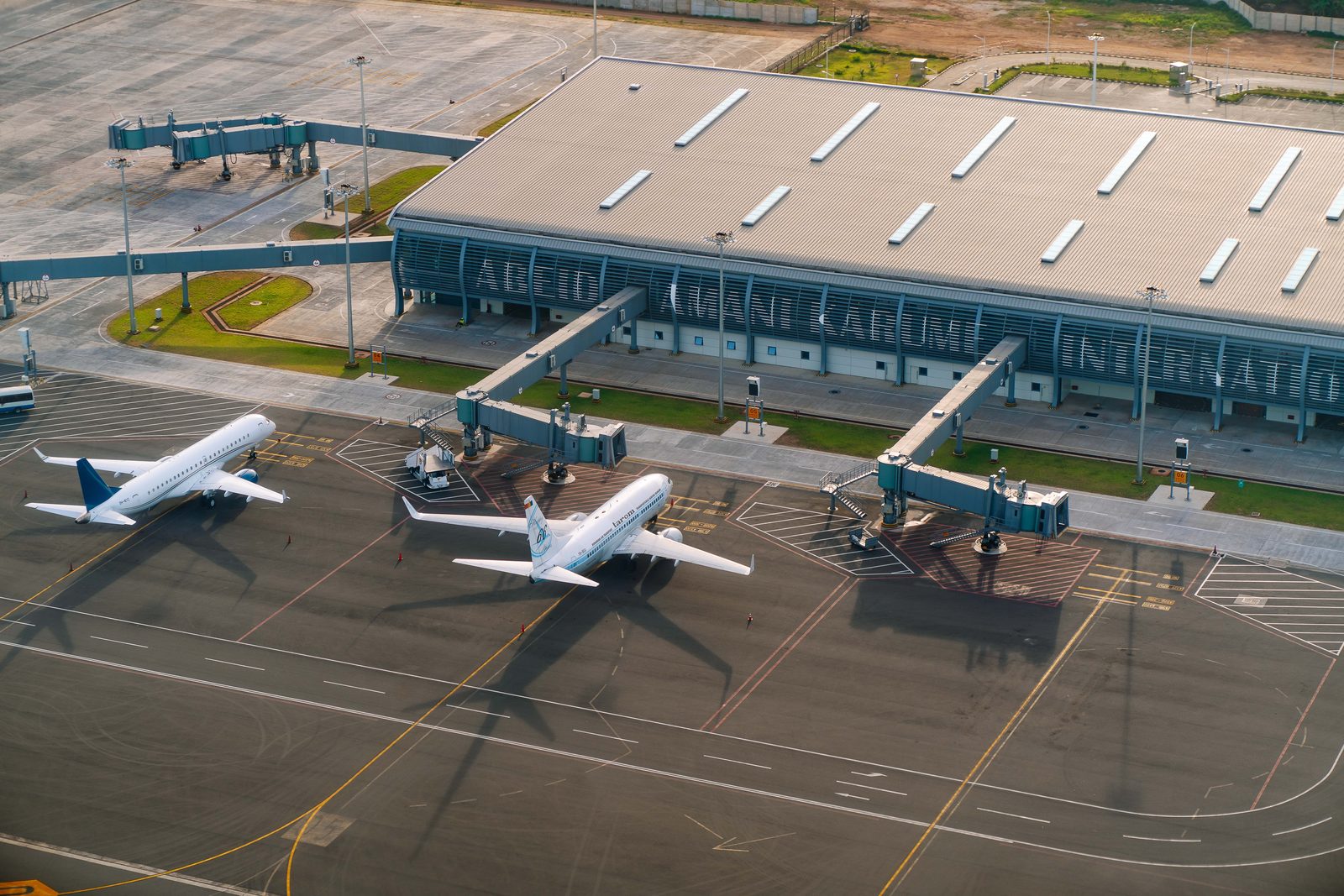
Tinian International Airport uses a runway at West Field, not historic North Field. The distinction matters: civilian flights arrive at the airport, while North Field is a separate historic and military site. Do not treat North Field as the island’s scheduled-flight airport.
Micronesian Air Connection Services provides online booking around the clock and takes phone reservations during business hours. Its scheduled service connects Tinian with Saipan, Rota, and Guam. Keep the airport name and the historic airfield name separate when arranging transport on the island.
Use these three steps when planning the trip:
- Check the current route schedule for your travel dates.
- Book online at any time or call during business hours.
- Confirm local access arrangements for the historic sites you plan to visit.
The short air distance from Saipan is a geographic fact, not a promise about flight duration or frequency. Travel plans need both a seat on a scheduled flight and a way to reach the sites. Confirm both the flight schedule and the day’s site access before setting an itinerary.
Is North Field Being Rebuilt?
Yes, North Field is being restored, with U.S. engineers working on its four long runways. The work began in 2023, 80 years after the wartime runways were first laid down. The project brings an old Pacific airfield back into use for military dispersal.
Engineers have been relaying the four 2,400-meter runways. A five-year, $409 million airfield upgrade contract was awarded in 2024. The restoration serves military operations, not scheduled civilian flights.
Restoration does not make North Field a public airport or guarantee public access to the site.
Initial operations began on May 31, 2026, when 250 personnel supported Army operations during Exercise Valiant Shield. Two of the four runways were scheduled for completion by 2027. The project gives the airfield a present-day military purpose while work continues on its pavement.
Tinian today remains an island community alongside a site shaped by both wartime history and new military work. Restoration can affect access to parts of the historic district, even when other sites remain open. Restoration renews North Field’s military role, but visitors should still verify access separately from flight arrangements.
Conclusion
North Field’s history is inseparable from Tinian, the island that became its wartime runway and remains its setting today. Its missions connected a small Pacific community to events with global consequences. The airfield’s surviving traces now sit beside military restoration and a living island.
For visitors, the best first step is practical: check scheduled flights, then confirm which historic places allow access during the visit. The island’s history is easier to understand when plans account for both its community and its restricted areas. Before traveling, check the current flight schedule and confirm which historic sites can be visited.