7 Things Airlines Do Right Before Boarding That Most Passengers Completely Misunderstand
We may earn money or products from the companies mentioned in this post. This means if you click on the link and purchase the item, I will receive a small commission at no extra cost to you ... you're just helping re-supply our family's travel fund.
Airline gate procedures follow logic that is invisible to most passengers — which creates friction, confusion, and delays that everyone experiences but few understand. Gate agents and flight attendants know what these procedures mean and why they happen. Passengers who understand them move faster, get better service, and eliminate most of the stress that comes from operating in an environment whose rules feel arbitrary.
The Boarding Procedures That Confuse Passengers Most
1. The Gate Change That Happens While You’re Waiting at the Original Gate
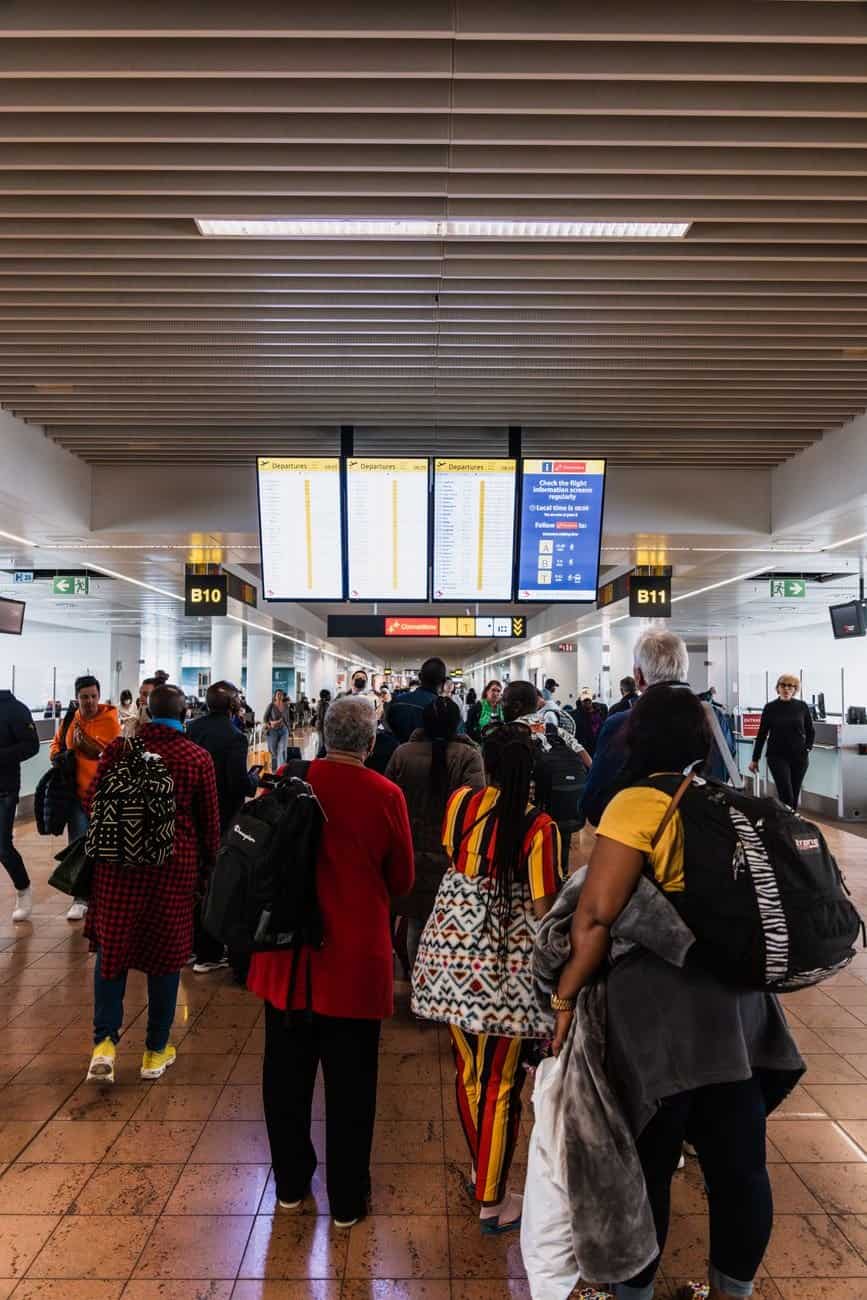
Gate changes happen for reasons that include aircraft swaps, runway assignment changes, and terminal congestion management. The announcement at the gate is made once — loudly — and then the gate agent moves to the new gate to set up for boarding. If you’ve been at the gate but stepped away for food or a bathroom break, you may miss the announcement entirely. The rule: always have the airline’s app with notifications enabled, and check your boarding pass gate assignment 20 minutes before boarding time, regardless of what was announced when you arrived at the airport.
2. Why Gate Agents Check Your ID Specifically at This Moment
On some flights, particularly international departures and flights with alcohol service, gate agents are required to verify passenger age or confirm identity against watch list data. The additional scan at the gate isn’t redundancy or inefficiency — it’s a specific procedure tied to either security requirements or alcohol service eligibility on short flights. Passengers who get frustrated by this and argue slow the process for everyone. Having your ID ready at the boarding gate — not buried in your bag — is worth the 30-second preparation.
3. The “Final Boarding Call” Is Shorter Than Passengers Assume
When a gate agent announces “final boarding call,” the door closes within 8–12 minutes at most major US carriers — not the 20–30 minutes passengers often assume. Airport doors are not held for passengers who are in the airport but haven’t boarded. The departure time on your boarding pass is the door close time, not the takeoff time. Wheels-up is typically 10–15 minutes after door close. If you hear final boarding call and you’re 10 minutes away, run.
4. Why They Dim the Cabin Lights During Takeoff and Landing
The cabin light dimming on night flights during takeoff and landing is a safety procedure: if evacuation is required immediately after landing or during a rejected takeoff, eyes that are adapted to darkness can see emergency lighting, exit signs, and the outside environment better than eyes adjusted to bright cabin lighting. It’s not ambiance or fuel-saving — it’s evacuation preparation. The same logic applies to the window shade-open requirement during takeoff and landing: crew members and passengers need to be able to see outside to assess conditions during an emergency.
5. The Overhead Bin “Random” Enforcement
Gate agents enforce carry-on size restrictions inconsistently, which appears random but is actually triggered by specific conditions: if the flight is full and overhead bin space is projected to be short, enforcement increases. On undersold flights, carry-on rules are often enforced loosely. The physical bag-sizer at the gate is only deployed when a specific agent or a specific flight requires it. If your bag is borderline-oversized, you’re more likely to be stopped on full flights than empty ones.
6. What “Standby” Actually Means in 2026
“Standby” has two different meanings at an airport gate that passengers frequently confuse. Revenue standby — passengers who voluntarily gave up their confirmed seat for compensation — gets priority over regular standby. Space-available standby — passengers trying to take an earlier flight — gets the lowest priority. Employees and retirees on non-revenue standby are on a separate list. When a gate agent says “there are five standbys ahead of you,” those may be a mix of all three categories. Understanding your position in that queue requires asking which type of standby you’ve been listed as.
7. Why the Door Re-Opens After You’ve All Boarded
Occasionally, after all passengers have boarded and the door has closed, it re-opens. This is almost always one of three things: a passenger who was listed as boarded but isn’t actually on the plane (the manifest doesn’t match the boarding scans), a crew member with a required documentation update, or a last-minute passenger who was allowed to board by an override from operations. None of these indicate anything wrong with the aircraft. Passengers who interpret a door re-opening as a safety signal and become agitated are misreading the situation.
Airline procedures are designed for high-volume, high-stakes operations. The things that seem arbitrary have reasons behind them — and travelers who understand those reasons move through the system faster, with less stress, and with better relationships with the airline staff who, ultimately, have significant discretion over your comfort from gate to destination.