12 Million People Visit the Great Smoky Mountains Every Year. In July, You Feel All of Them at Once.
We may earn money or products from the companies mentioned in this post. This means if you click on the link and purchase the item, I will receive a small commission at no extra cost to you ... you're just helping re-supply our family's travel fund.
Great Smoky Mountains National Park drew roughly 12.1 million visitors in a recent year, making it the most visited national park in the entire U.S. system by a wide margin — more than double Grand Canyon’s annual visitation and nearly triple Yellowstone’s. July is consistently one of the two or three busiest months, alongside October’s leaf season, and the combination of summer family travel schedules, the park’s free admission (it’s one of the only major national parks with no entrance fee, a condition tied to a historical land agreement from the 1930s), and its easy highway access from both Knoxville and Asheville means the crowding isn’t a mild inconvenience — it’s a defining feature of the visit.
What the crowding actually looks like
Cades Cove, the park’s most popular single destination, has an 11-mile one-way loop road that can take two to three hours to drive during peak summer weekends, not because of the distance but because of stop-and-go traffic caused by wildlife sightings, photography stops, and the sheer volume of cars attempting to move through a single-lane route simultaneously. Parking at popular trailheads like Laurel Falls or Alum Cave routinely fills by mid-morning, and rangers have had to manage overflow parking along shoulders that creates its own safety hazard on narrow mountain roads. The park has begun piloting a timed-entry parking tag system for Cades Cove and a few other high-demand areas during peak season, a direct acknowledgment that the traditional first-come, first-served model has broken down under this volume.
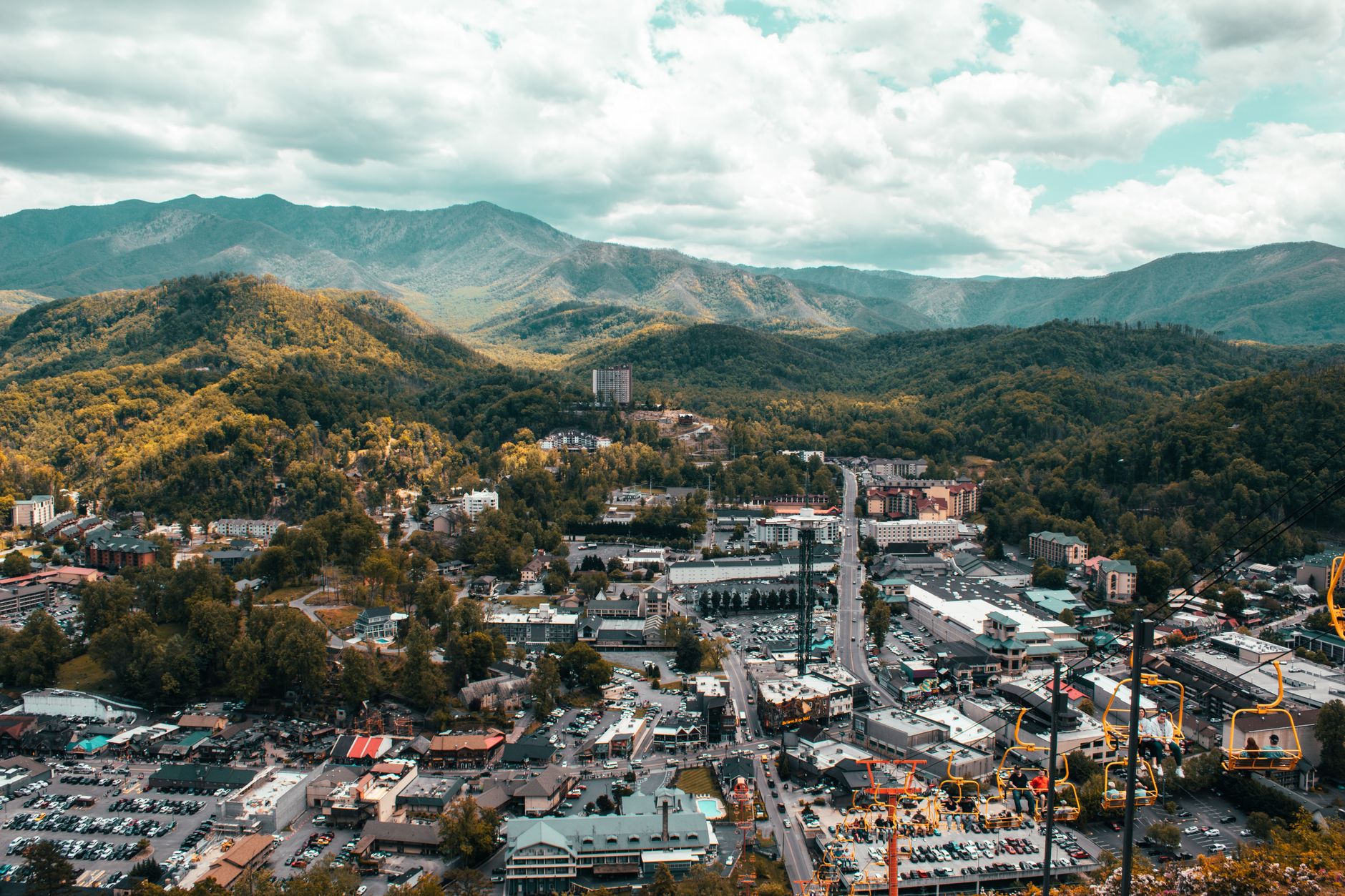
Gatlinburg and Pigeon Forge, the two gateway towns just outside the park’s main entrance, absorb a huge share of the overflow tourism infrastructure — go-kart tracks, dinner theaters, outlet malls, and a density of vacation rental cabins that has reshaped the surrounding Sevier County landscape dramatically over the past two decades. That development means visitors get a strange juxtaposition on a typical Smokies trip: an intensely commercial, almost Vegas-like strip in Pigeon Forge, immediately followed by genuinely wild, undeveloped national park land minutes away.
The synchronous fireflies phenomenon near Elkmont, one of the park’s most sought-after summer experiences, has had to move to a strict lottery system for vehicle access specifically because unmanaged demand became unsustainable — thousands of people wanted to view the same few-week window of firefly activity in the same small area, and the lottery, while frustrating for the many applicants who don’t get selected, was the park’s direct response to crowding that had begun damaging the sensitive habitat the fireflies themselves depend on. That single example captures the broader tension the park now manages constantly: preserving the exact natural phenomena that draw visitors while the sheer volume of interested visitors threatens the conditions that phenomena needs to keep happening.
Why it’s free and why that matters for crowding
The park’s lack of an entrance fee stems from the original land acquisition agreements made when the park was established in 1934, which included a stipulation, tied to a specific road-use agreement with the state of Tennessee, that no toll or license fee could ever be charged for through-traffic on certain roads within the park. That historical quirk means the Smokies function almost like a free regional attraction for the surrounding metro population — day-trippers from Knoxville, weekend visitors from across the Southeast, and RV travelers can access the park at zero marginal cost, which measurably increases casual, repeat visitation compared to fee-based parks like Zion or Grand Teton, where the entrance cost itself functions as a mild deterrent to spontaneous visits.
How to actually manage a July visit
- Arrive at trailheads before 8 AM — parking fills fast but the crowds haven’t caught up yet
- Skip Cades Cove Loop Road on weekends entirely; visit on a Tuesday or Wednesday if possible
- Consider the park’s quieter Cataloochee Valley or Cosby entrances, both far less trafficked than the Gatlinburg side
- Check current timed-entry parking tag requirements before planning a Cades Cove or Laurel Falls visit
The park underneath the traffic is still genuinely worth it
The park’s staffing and infrastructure haven’t scaled with the visitation growth, a mismatch that park rangers and advocacy groups have flagged repeatedly. The National Park Service overall has faced a well-documented maintenance backlog running into the billions of dollars system-wide, and the Smokies, despite being the single most visited park in the country, receives funding allocated more on a formula basis than one that reflects its outsized visitor load relative to peer parks. That gap shows up in small, cumulative ways for visitors: fewer staffed visitor centers than the crowd size would suggest are needed, restrooms that can’t keep pace with peak-season demand, and trail erosion in high-traffic areas like the approach to Chimney Tops that volunteer trail crews have had to address largely on their own.
Strip away the July gridlock and the Smokies remain one of the most biodiverse temperate forests on the planet, home to more tree species than all of Northern Europe and a population of black bears healthy enough that sightings are common rather than rare. The name itself comes from the natural fog that settles over the ridgelines, created by moisture transpiring off the dense forest canopy, a genuinely beautiful phenomenon that has nothing to do with pollution and everything to do with the park’s ecological density. The crowding is real, well-documented, and worth planning around — but it’s a crowding problem layered on top of a genuinely exceptional landscape, not a sign the landscape itself has been diminished by its own popularity.