You Can’t Drive to Juneau. Alaska’s Capital Gets Its Groceries by Barge and Its Milk Costs Twice What Yours Does.
We may earn money or products from the companies mentioned in this post. This means if you click on the link and purchase the item, I will receive a small commission at no extra cost to you ... you're just helping re-supply our family's travel fund.
Juneau is the only U.S. state capital with no road connection to the rest of its state’s highway system — no road links it to Anchorage, Fairbanks, or the rest of the continental network at all. Every car in Juneau arrived by ferry or barge. Every gallon of milk, every building material, every piece of furniture arrives the same way, or by air freight for anything time-sensitive, a logistics reality that shapes the city’s cost structure and daily rhythms in ways that make it function unlike almost any other American capital city.
Why Juneau Never Got a Road
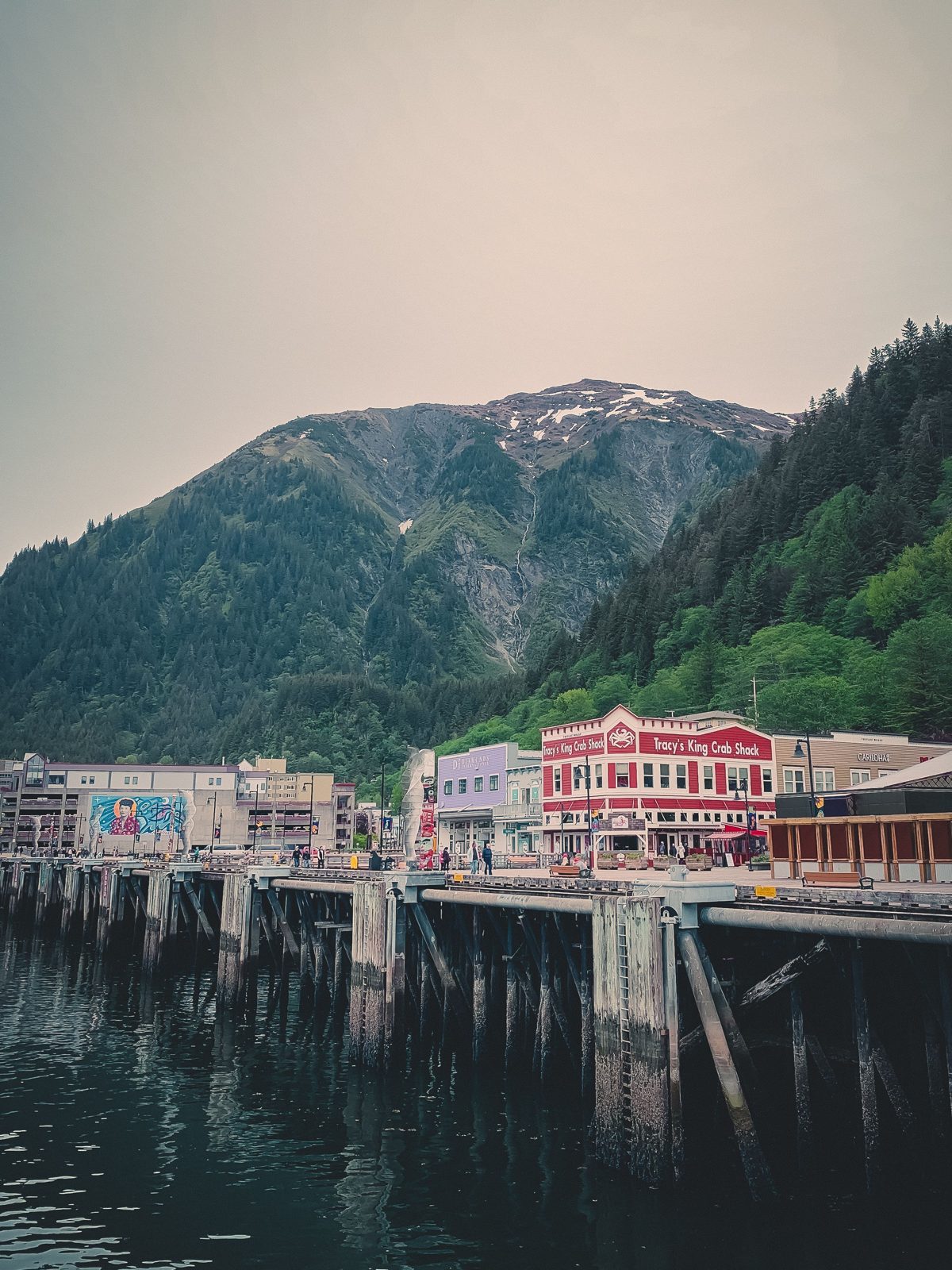
Juneau sits wedged between the Gastineau Channel and the Coast Mountains, with the Juneau Icefield and its glaciers occupying much of the terrain that would need to be crossed to connect the city to Alaska’s road network. Various road-connection proposals have been studied and debated for decades, running into a combination of enormous projected costs, environmental concerns tied to fragile glacial and forest ecosystems, and persistent local ambivalence — a meaningful share of residents actually prefer the isolation, viewing it as central to the city’s character rather than a problem to solve. The state has periodically studied extending Alaska’s ferry-based Marine Highway System instead of building roads, treating water and air, not asphalt, as Juneau’s permanent connective tissue.
What Life Actually Requires There
- Groceries and consumer goods arrive primarily by barge from Seattle, with air freight covering perishables and anything urgently needed
- Floatplanes and small aircraft serve as routine transportation to nearby communities and remote cabins, not just tourist scenic flights
- The city depends on the Alaska Marine Highway ferry system for vehicle transport in and out, a service that runs on a limited and sometimes unreliable schedule
- Costs for shipped goods, particularly fresh produce and dairy, run well above Anchorage’s already elevated prices, themselves well above the Lower 48 average
What the City Actually Runs On
Juneau’s economy centers on state government — as the capital, it houses the bulk of Alaska’s state bureaucracy — alongside tourism, heavily concentrated around cruise ship season, and commercial fishing. The cruise industry alone can bring several ships and thousands of day-visitors into the small downtown simultaneously during peak summer months, creating a strange rhythm where a city of roughly 32,000 year-round residents periodically hosts visitor crowds that temporarily rival or exceed its own population, then reverts to its quiet, isolated rhythm once the ships depart for the evening.
Why Some Alaskans Have Pushed to Move the Capital
Juneau’s isolation has fueled a recurring, decades-long political movement to relocate Alaska’s capital to a more centrally located and road-accessible city, given how difficult and expensive it is for legislators and state employees from Anchorage or Fairbanks to travel to Juneau for legislative sessions. Multiple ballot measures over the decades have proposed capital relocation, none successful, partly due to the enormous cost of rebuilding government infrastructure elsewhere and partly due to Juneau’s own economic dependence on remaining the seat of state government — losing that status would gut a significant share of the local economy overnight.
What Visiting Actually Requires You to Plan For
Visitors can only reach Juneau by air or sea — there’s no driving option under any circumstances, a detail that surprises people more often than Alaska’s tourism marketing tends to acknowledge upfront. Budgeting for a Juneau trip means accounting for elevated food and lodging costs relative to the continental U.S., and building genuine flexibility into any itinerary involving flights, since weather in the surrounding mountains and channels can delay or cancel small aircraft service with little notice. The reward for navigating that complexity is direct access to glaciers, whale-watching, and wilderness that require no additional driving once you’ve arrived, since almost everything worth seeing sits within a short boat or floatplane ride of a downtown you can walk end to end in under twenty minutes.
What Climate Change Is Doing to the Logistics
Warming trends affecting the Juneau Icefield and surrounding glaciers have added a new variable to the city’s already complex relationship with its environment — glacial retreat has been documented extensively at nearby Mendenhall Glacier, one of the region’s most visited attractions, changing the visitor experience there noticeably even within the past decade. Some studies have also examined whether warming could eventually make road-building through the Coast Mountains marginally more feasible, though the scale of engineering and environmental permitting required means this remains a distant hypothetical rather than an active plan.
What First-Time Visitors Underestimate
- Weather delays for flights and floatplanes are common enough that building at least one buffer day into any Juneau itinerary is standard local advice
- Cruise ship days can make downtown dramatically more crowded than non-cruise days; checking the port schedule in advance changes the experience significantly
- Bear safety awareness is a genuine practical consideration for hiking near Juneau, not just a tourist-brochure warning
The Bottom Line for Anyone Planning a Trip
Juneau’s isolation isn’t a flaw in the itinerary — it’s the entire reason the city feels the way it does, wedged between glaciers and channels with no road out. Planning around that reality, rather than fighting it, is what makes a Juneau trip work.