William Faulkner Lived at Rowan Oak for 32 Years. 6 Places in Oxford, Mississippi Literary Travelers Visit
We may earn money or products from the companies mentioned in this post. This means if you click on the link and purchase the item, I will receive a small commission at no extra cost to you ... you're just helping re-supply our family's travel fund.
William Faulkner bought the house he named Rowan Oak in 1930 and lived there until his death in 1962, a span of 32 years. During that time, he wrote many of his best-known novels and created Yoknapatawpha County, the fictional Mississippi county based on the area around Oxford. For literary travelers, an Oxford Mississippi Faulkner trip starts at that house but does not end there.
Oxford is a college town, home to the University of Mississippi, and it has kept a strong literary identity. The six stops below include Faulkner’s home, the trail he walked, the courthouse square that shaped his fiction, a famous independent bookstore, and his grave. Most are within a short drive of one another, and several can be reached on foot.
Planning an Oxford Mississippi Faulkner Trip
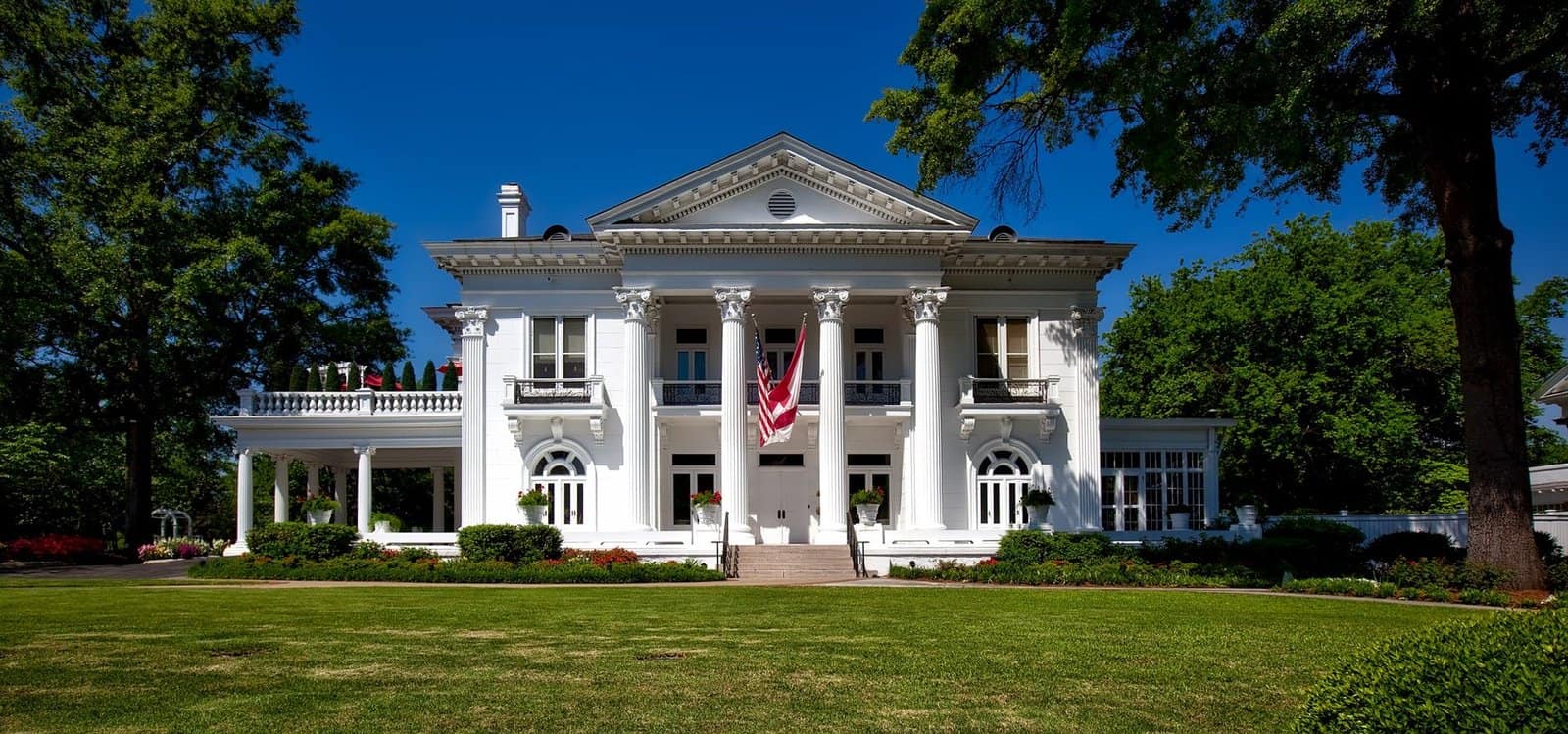
Rowan Oak is owned and operated by the University of Mississippi. According to the Rowan Oak website, the house is open Tuesday through Saturday from 10 a.m. to 4 p.m. and Sunday from 1 p.m. to 4 p.m. It is closed on Mondays. The grounds are open from dawn to dusk.
Starting September 1, 2026, admission to the house is $10 per person, cash only, with children 12 and under free. Entry to the grounds is free. Check the website for holiday closures and updates.
6 Literary Stops in Oxford
1. Rowan Oak
Rowan Oak is a Greek Revival house built in the 1840s by Robert Sheegog, an Irish settler. When Faulkner bought it in 1930, it was in poor condition, and he spent years restoring it, often doing the work himself. He named it Rowan Oak after the rowan tree, which in Scottish legend was believed to offer protection and peace.
Inside, visitors see Faulkner’s study, his typewriter, and the walls of his office where he wrote the outline of his novel A Fable in pencil and red grease pencil. The outline is still on the walls, and it is one of the highlights of a visit.
The house is surrounded by tall cedar trees, which Faulkner loved. The grounds include outbuildings, gardens, and walking paths. Faulkner received the Nobel Prize in Literature for 1949 while living here.
The address is 916 Old Taylor Road. Parking is limited, so arrive early on busy days, such as football weekends.
2. Bailey’s Woods Trail
Bailey’s Woods Trail connects Rowan Oak to the University of Mississippi Museum. The trail runs about 0.6 mile through a wooded area that Faulkner knew well. He walked these woods, and his family used them for recreation.
The trail is shaded and fairly easy, with some hills. It makes a pleasant walk between two of Oxford’s main Faulkner sites. Wear comfortable shoes, especially after rain, when the trail can be muddy.
3. University of Mississippi Museum
The University of Mississippi Museum, at the other end of Bailey’s Woods Trail, has a collection of art and artifacts. It sometimes hosts exhibits related to Faulkner and Southern literature. The museum also manages Rowan Oak.
The museum’s permanent collections include Southern folk art, Greek and Roman antiquities, and scientific instruments. It is a good stop for travelers interested in the broader culture of the region. Check the museum’s website for hours and current exhibitions.
4. The Courthouse Square
Oxford’s courthouse square is the heart of town and a key setting in Faulkner’s fiction. The Lafayette County Courthouse, at the center of the square, appears in many of his works in fictional form. The current courthouse was rebuilt after Union troops burned the original in 1864, during the Civil War.
The square is lined with shops, restaurants, and bars. It is a lively place day and night, especially when the university is in session.
Near the square, outside Oxford City Hall, a bronze statue of Faulkner sits on a bench. Visitors often sit next to him for photos. It is one of the most photographed spots in town.
5. Square Books
Square Books is one of the best-known independent bookstores in the country. It was founded in 1979 by Richard and Lisa Howorth and sits on the courthouse square. The store has grown to include several locations, including Off Square Books and Square Books Jr., a children’s store.
Square Books has a large selection of Faulkner’s works and books by other Southern writers. It hosts frequent author readings and signings, and its balcony overlooks the square. The store is also the home of Thacker Mountain Radio, a live radio show featuring authors and musicians.
6. St. Peter’s Cemetery
Faulkner is buried in St. Peter’s Cemetery, a short drive from the square. His grave is a simple marker, and visitors often leave bottles of whiskey, coins, or other tributes. The cemetery also holds the graves of other members of the Faulkner family.
The cemetery is quiet and shaded. Visitors are asked to be respectful of the site and other graves.
Literary Events in Oxford
Oxford hosts several literary events throughout the year. The Faulkner and Yoknapatawpha Conference, held at the University of Mississippi each summer, brings scholars and readers together to discuss his work. The Oxford Conference for the Book, held in spring, features readings and panels with writers.
Even outside these events, Oxford offers plenty of literary atmosphere. Bookstores, readings, and a strong local arts scene keep the town connected to its literary past.
Reading Before You Go
To get the most out of your visit, read some of Faulkner’s work before you go. Good starting points include:
- The Sound and the Fury (1929), one of his most famous and challenging novels.
- As I Lay Dying (1930), written in the year he bought Rowan Oak.
- Light in August (1932), which explores race and identity in the South.
- Absalom, Absalom! (1936), often considered his masterpiece.
- Go Down, Moses (1942), a collection of connected stories.
Faulkner’s short stories, such as A Rose for Emily, are another accessible entry point.
Getting to Oxford
Oxford is in north Mississippi, about 75 miles southeast of Memphis, Tennessee. The drive takes about an hour and a half. Memphis International Airport is the closest major airport.
Oxford is walkable in the center, but you will need a car to reach Rowan Oak and St. Peter’s Cemetery easily, unless you walk Bailey’s Woods Trail from campus.
Where to Stay and Eat
Oxford has a range of hotels, from chain properties to boutique inns. The Graduate Oxford is a popular hotel near the square. The Inn at Ole Miss is on campus.
Oxford’s food scene is strong for a small town. City Grocery, a restaurant on the square run by chef John Currence, is well known. Other options include Southern cooking, barbecue, and casual cafes. Football weekends bring large crowds, so book early if your visit falls on a home game weekend.
A One-Day Faulkner Walking Plan
Oxford’s literary sites are close enough to see in a single, full day. A practical route looks like this:
- Morning: Start at the University of Mississippi Museum, then take Bailey’s Woods Trail about 0.6 mile to Rowan Oak. Arrive after the house opens at 10 a.m. on Tuesday through Saturday, or after 1 p.m. on Sunday.
- Late morning: Tour the house, then walk the grounds and gardens under the cedars.
- Lunch: Head to the courthouse square, where many restaurants are within a few blocks.
- Afternoon: Browse Square Books and its sister shops, then stop for a photo with the Faulkner statue outside City Hall.
- Late afternoon: Drive to St. Peter’s Cemetery to visit Faulkner’s grave before dark.
Because Rowan Oak is closed on Mondays, avoid starting your trip that day. Bring cash for the $10 admission, since the house does not take cards under the new fee.
Visiting Oxford in Late Fall
November and December are good months for a literary visit. The heat of summer is gone, the trees on the Rowan Oak grounds turn color, and the woods along Bailey’s Woods Trail open up as leaves fall. The university’s fall semester keeps the square lively, and bookstore events continue through the season.
The one thing to watch is the football schedule. Ole Miss home games fill hotels and restaurants and can make parking near campus difficult. Check the university’s schedule and plan your visit for an off weekend if you want an easier trip.
Accessibility and Practical Notes
Rowan Oak is a historic house, so some areas may be harder to reach for visitors with limited mobility. The grounds include gravel and uneven paths, and Bailey’s Woods Trail has roots, slopes, and some muddy stretches after rain. Visitors who cannot walk the trail can drive to Rowan Oak and park near the house. Call ahead if you have questions about access inside the house. Photography rules can vary, so ask staff before taking pictures indoors.
Why Oxford Matters to Literary Travelers
Faulkner once described his small corner of Mississippi as his “little postage stamp of native soil.” Oxford and Lafayette County gave him the material for a body of work that changed American literature.
Visiting Oxford lets you see the places that shaped that work: the house where he wrote, the woods he walked, the square he turned into fiction, and the cemetery where he rests. For readers of Faulkner, it is a pilgrimage worth making.