Tucumcari, New Mexico Has Been Dying for 50 Years. The People Who Stopped There Last Summer Saw Something Different
We may earn money or products from the companies mentioned in this post. This means if you click on the link and purchase the item, I will receive a small commission at no extra cost to you ... you're just helping re-supply our family's travel fund.
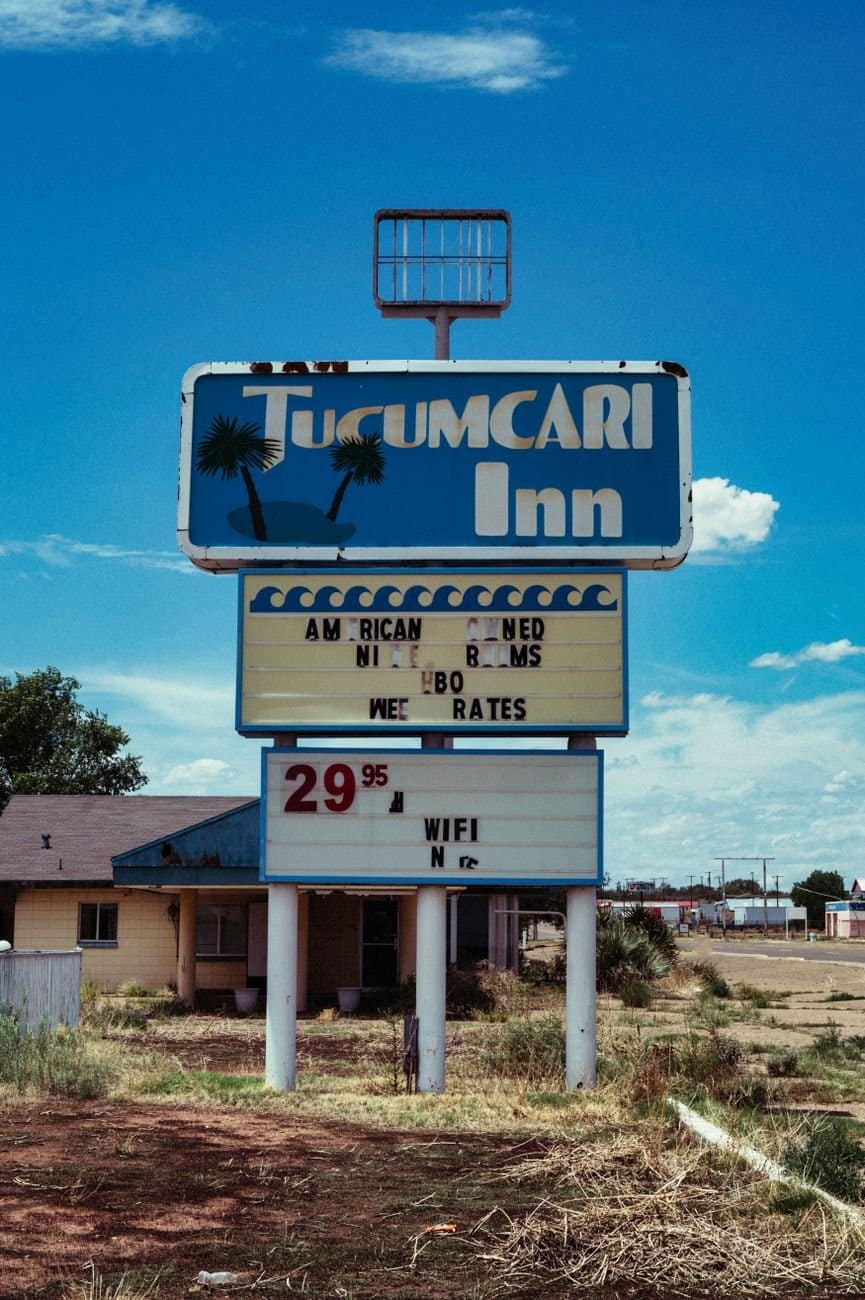
When Interstate 40 bypassed Tucumcari, New Mexico in the 1970s, the town that Route 66 had built over three decades began a slow decline that’s still ongoing. The population has dropped from over 8,000 to under 6,000. The motels that once lined Route 66 are a mix of operating, abandoned, and ruins. And yet, in 2026, something is happening in Tucumcari that Road Trip America travelers are noticing — not a revival exactly, but a stubborn persistence that’s found an audience.
What Route 66 Travelers Are Finding in Tucumcari Now
The Blue Swallow Motel on Route 66 in Tucumcari is one of the most photographed motels in America — a 1939 building with original neon signage, individually decorated rooms, and a carport attached to each unit that looks like 1955 stopped by to stay. The Blue Swallow was restored by a succession of owners who understood that what they had was irreplaceable, and it operates as a boutique motel with rates that hover around $100–$130/night. For anyone doing a serious Route 66 drive, staying at the Blue Swallow is the night that defines the trip.
The murals that cover downtown Tucumcari buildings have attracted national attention. Local artists and a community mural initiative have transformed blank building walls into a gallery that’s become the visual identity of a dying town that decided to look like something. The Tee Pee Curios shop, operating since 1944, sells authentic Southwestern pottery, jewelry, and Route 66 memorabilia that you can’t find at a highway gift shop. These things exist not because Tucumcari is thriving but because the people who stayed chose to fight back.
The Tucumcari Dining Scene: Limited but Genuine
Kix on 66 is the local dinner institution — a Route 66 diner that manages to be both authentically retro and genuinely good. The green chile cheeseburger, which Tucumcari has elevated to a local art form, is the thing to order. The town doesn’t have a food scene in the destination-city sense, but what it has is real — local, unhurried, and part of an experience that can’t be replicated at a chain restaurant off the interstate.
What Tucumcari Means as a Travel Stop
Tucumcari is not a destination in the conventional sense. It’s a stop — a place where the Route 66 journey becomes tangible in a way that the fully renovated and tourist-friendly parts of the road don’t provide. The ruins of what the road built and the remnants of what refused to die give Tucumcari a texture that Winslow, Gallup, and Santa Rosa lack. There’s genuine melancholy here, and there’s genuine determination, and both are worth experiencing as part of understanding what Route 66 was and what happened when the country moved on.
The overnight stop at the Blue Swallow, the green chile burger at Kix, the mural walk downtown, and the drive through town watching the neon come on at dusk — that’s about six hours of Tucumcari, which is the right amount. It’s a stop that pays off for the traveler who’s paying attention, and skips right past the one who isn’t.
Tucumcari’s Place in Route 66 History
Tucumcari’s Route 66 motel strip is the most intact surviving example of the neon sign culture that defined US highway tourism in the 1950s and 1960s. The Blue Swallow Motel — restored and operating, with its original neon sign still lit — is the most photographed accommodation on the historic Route 66 corridor and has been operating continuously since 1939. The Tee Pee Curios shop, the La Cita Mexican restaurant (in a building shaped like a sombrero), and the murals covering the building facades along Tucumcari Boulevard provide the specific visual density of Americana that Route 66 travelers pursue.
Tucumcari’s practical situation is that it’s a 2-hour drive from both Albuquerque and Amarillo on I-40, making it a natural overnight stop rather than a destination that justifies multiple nights. The Tucumcari Mountain south of town has a 4WD trail to the summit with views of the Canadian River canyon and the high plains in every direction. Conchas Lake State Park, 30 miles north on NM-104, is a reservoir with boating, fishing, and camping that provides the outdoor activity the town itself doesn’t have. Route 66 travelers who add Tucumcari specifically for the neon, the Blue Swallow, and the American highway culture rather than expecting a fully-resourced destination leave with exactly what they came for.